

Why in news?
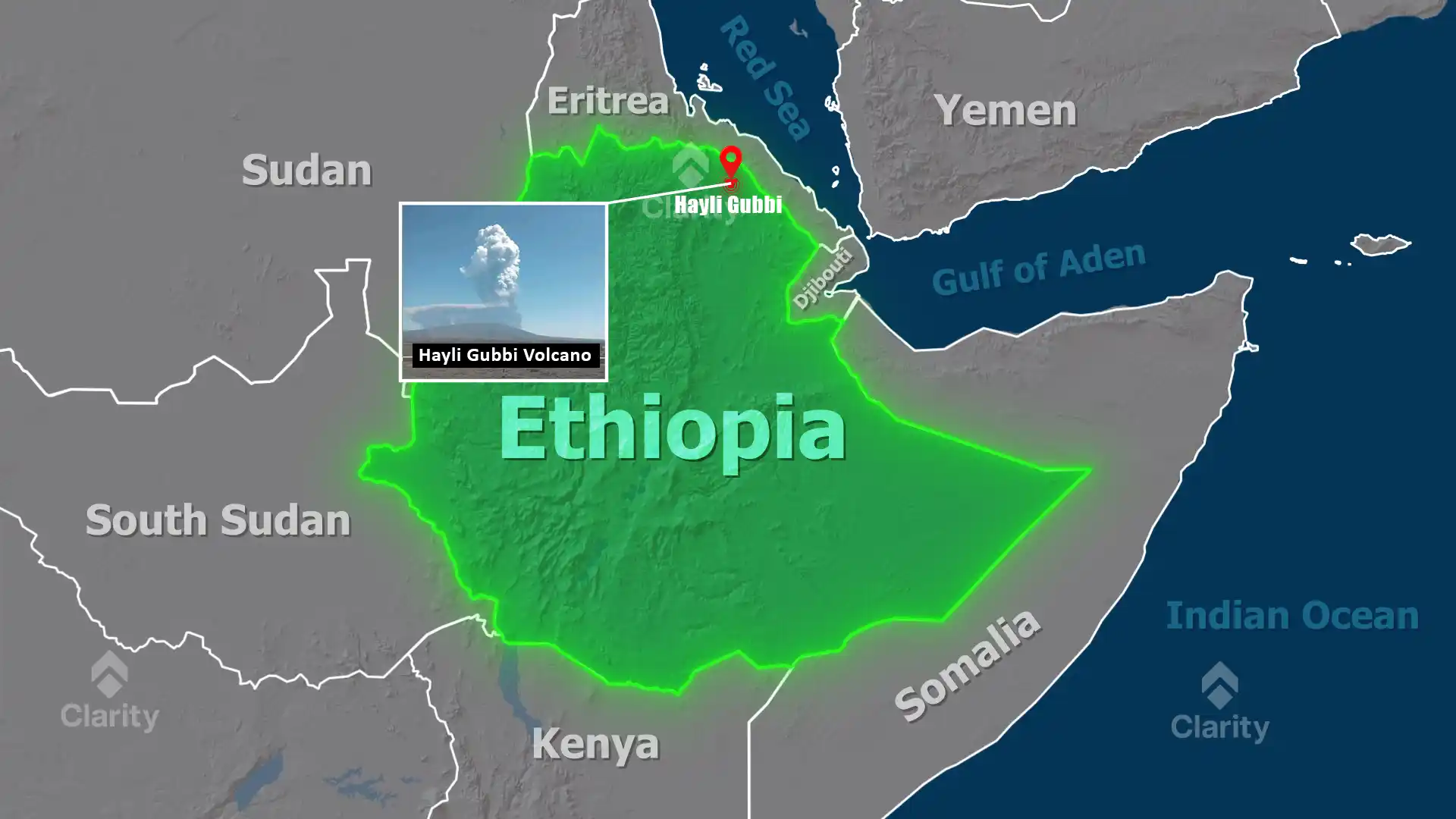
The shield volcano Hayli Gubbi in Ethiopia’s Afar region erupted on 23 November 2025, sending ash up to 15 kilometres into the sky. This is the first recorded eruption of the volcano in more than 12,000 years. The ash plume disrupted air travel and spread across Yemen, Oman and India, highlighting the far‑reaching impacts of volcanic events.
Background
Hayli Gubbi lies at the southern end of the Erta Ale volcanic range in the East African Rift System. It is classed as a shield volcano due to its broad, gently sloping profile, typically formed by low‑viscosity basaltic lava. Geological records suggest that the volcano had been dormant since the late Pleistocene, and there are no confirmed eruptions during the Holocene period. The surrounding Afar region is sparsely populated and geologically active, with several volcanoes and tectonic rifts.
Eruption details
- Plume height: Satellite observations recorded the ash cloud rising to around 13.7–15.2 kilometres and carrying an estimated 220,000 tonnes of sulphur dioxide into the stratosphere.
- Ash fallout: Nearby communities including the town of Afdera, located about 28 kilometres west of the volcano, were blanketed in ash. No casualties were reported, but livestock and water sources were affected.
- Air traffic disruption: Aviation authorities cancelled flights over northern Ethiopia, the Horn of Africa and parts of the Middle East. On 25 November, ash clouds reached northern India and parts of China, leading to flight diversions.
- Rare phenomenon: Shield volcanoes usually produce effusive lava flows rather than explosive ash plumes. Scientists suggest that an unusual combination of magma viscosity and trapped gases caused the explosive eruption.
Wider implications
- Volcanic monitoring: The eruption highlights the need for continuous monitoring of seemingly dormant volcanoes. Advances in satellite technology enable rapid detection and forecasting of ash clouds.
- Climate effects: Large eruptions can inject sulphur compounds into the stratosphere, temporarily cooling the planet. The Hayli Gubbi eruption is unlikely to have major climate impacts but serves as a reminder of volcanic influence on weather patterns.
- Human preparedness: Remote communities often lack resources to cope with ashfall, water contamination and livestock losses. Regional cooperation is essential for emergency response.
Conclusion
The awakening of Hayli Gubbi demonstrates that even long‑silent volcanoes can erupt unexpectedly. Continued research and monitoring will improve hazard assessments and help protect people and infrastructure in vulnerable regions.
Source: TH,