
Why in news?
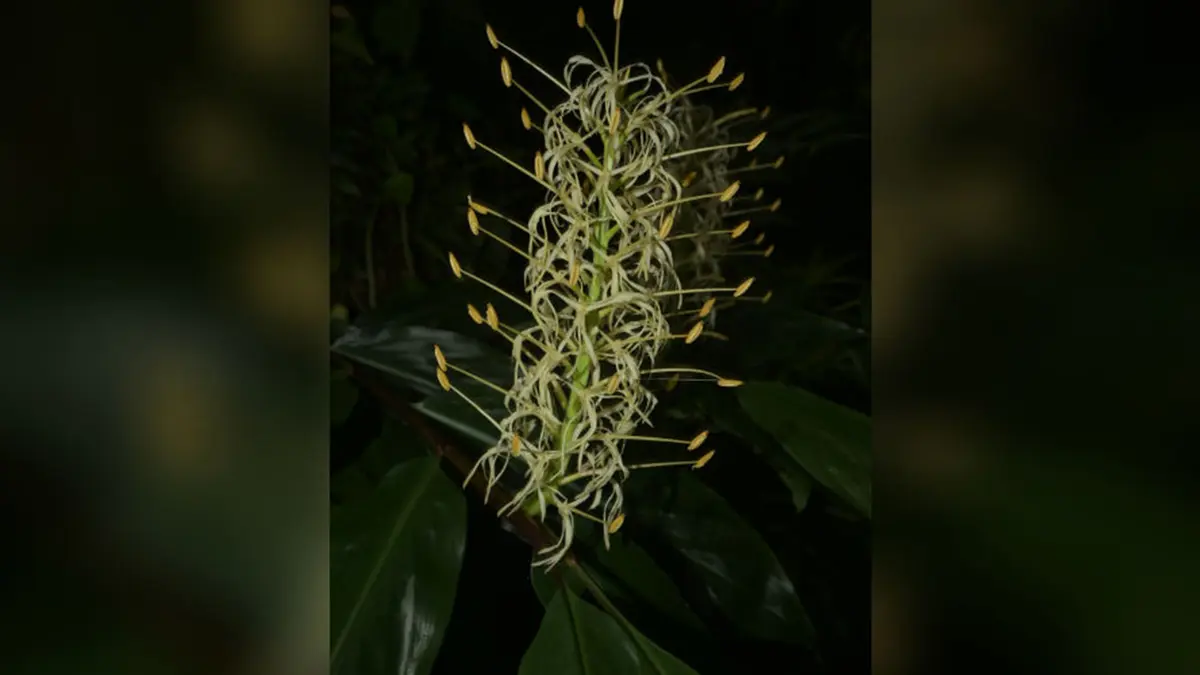
Indian botanists have described a new ginger lily species from Shillong. They named it Hedychium zubeengargianum after singer Zubeen Garg. The plant was studied inside a botanical garden. Its natural habitat remains unknown.
Background
Ginger lilies belong to the genus Hedychium and the ginger family, Zingiberaceae.
They are perennial herbs with underground stems called rhizomes, which store food and produce new shoots.
Many species bear showy, fragrant flowers, which attract insects and make them popular ornamental plants.
The genus occurs mainly across tropical and subtropical Asia, while Northeast India is an important diversity centre.
India has about 41 recognised Hedychium taxa, mostly in the Northeast and Western Ghats.
Useful term: A taxon is any recognised biological group, so this count may include categories below species level.
How was the new species identified?
The plant had grown in Shillong's Botanical Survey of India garden since at least 2018.
Botanists repeatedly observed its leaves, flowers and seasonal growth, then compared these features with related species.
Detailed comparison showed a unique, stable combination of characters, leading researchers to describe a new species.
The study appeared in Phytotaxonomy, and its authors work at the Survey's Eastern Regional Centre.
Why is its origin still uncertain?
The garden lacked a collection record linking this plant to any wild locality.
It might have arrived through an older plant collection, but researchers cannot confirm that journey without records.
The species is presently known from cultivated material, not a confirmed wild Shillong discovery.
Field surveys may locate natural populations and help assess the species' habitat, range and conservation status.
Accuracy point: Scientists described the plant in Shillong but have not established its natural wild habitat.
Important identifying features
- The plant bears fragrant, creamy-white flowers with clearly yellow anthers.
- Fine hairs densely cover its flowering stalk, called the inflorescence axis.
- Its flowering period falls mainly during April and May.
- It resembles Hedychium gracile, but the combined features separate both species.
Anthers are pollen-bearing parts of flower stamens, and their colour can assist accurate species identification.
Why was it named after Zubeen Garg?
The authors honoured Zubeen Garg, an Assamese singer and cultural figure born in Meghalaya.
They also recognised his conservation advocacy, while scientific names often honour people, places or visible features.
The second part is the species epithet, while the complete name combines genus and epithet.
Why does the discovery matter?
Botanical gardens can hold poorly documented plants, whose careful study may uncover overlooked biological diversity.
Description is only the first step, so researchers must now search natural habitats for this species.
Wild records would reveal population size and ecological needs, while guiding any future conservation assessment.
Conclusion
The new ginger lily highlights Northeast India's rich plant diversity and the continuing importance of basic taxonomy.