Why in news?
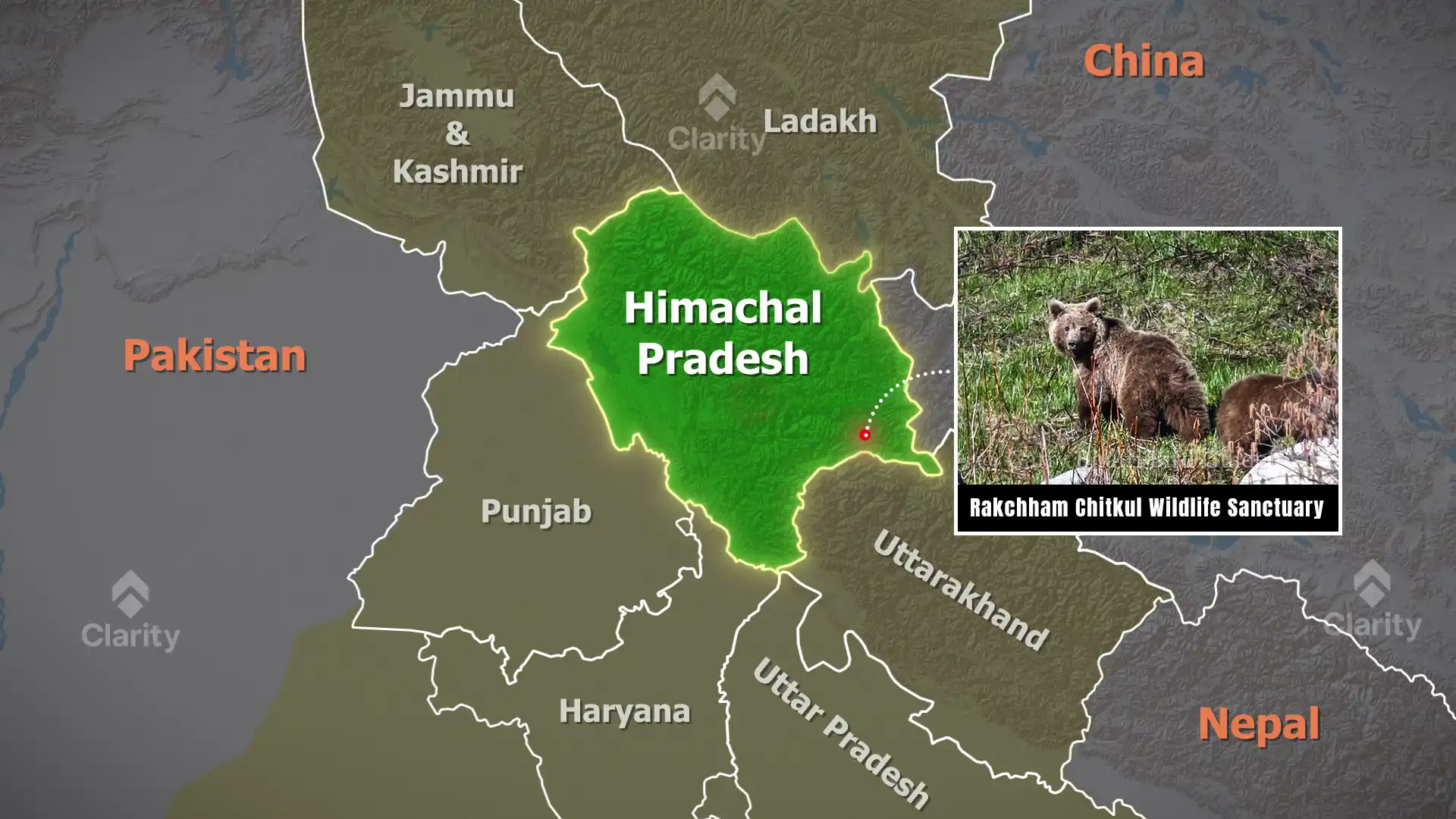
During a biodiversity survey on 9 May 2026, researchers photographed a Himalayan brown bear sow with two cubs in the Rakchham‑Chitkul Wildlife Sanctuary in Himachal Pradesh. This is only the second confirmed photographic evidence of the species in the sanctuary since 2016–17, making it a significant conservation milestone.
Background
The Rakchham‑Chitkul Wildlife Sanctuary lies in the Kinnaur district of Himachal Pradesh, bordering Tibet. Spread across roughly 34 square kilometres at elevations between 3,200 and 5,489 metres, it includes alpine meadows, sub‑alpine forests and cold deserts. The sanctuary is home to diverse flora like birch, willow and medicinal herbs, and fauna such as ibex, snow leopard and red fox. The Himalayan brown bear (Ursus arctos isabellinus) is a critically endangered subspecies endemic to the Himalayas. It plays a key ecological role as an omnivore and seed disperser but faces threats from habitat loss, climate change and poaching.
Significance of the sighting
- Population monitoring: The sighting indicates that the brown bear persists in the sanctuary despite few records, highlighting the need for ongoing monitoring and habitat protection.
- Ecological health: Presence of top predators like brown bears suggests that the ecosystem retains its trophic complexity and can support large mammals.
- Conservation awareness: Photographic evidence can be used to raise awareness and secure funding for conservation efforts in high‑altitude habitats.
- Community engagement: Local communities and authorities are encouraged to protect natural resources and reduce human–wildlife conflict, particularly during the bears’ foraging season.
Conclusion
The rare sighting of a Himalayan brown bear family underscores the ecological significance of Rakchham‑Chitkul Sanctuary. Protecting such habitats ensures survival of high‑altitude species and maintains biodiversity in the fragile Himalayas.