

Why in news?
Environmentalists have raised alarms after camera traps in Kedarnath Wildlife Sanctuary captured herds of Himalayan tahr grazing near garbage dumps. Unmanaged waste from trekking and pilgrimages is drawing these mountain goats away from their natural pastures and creating ecological traps.
Background
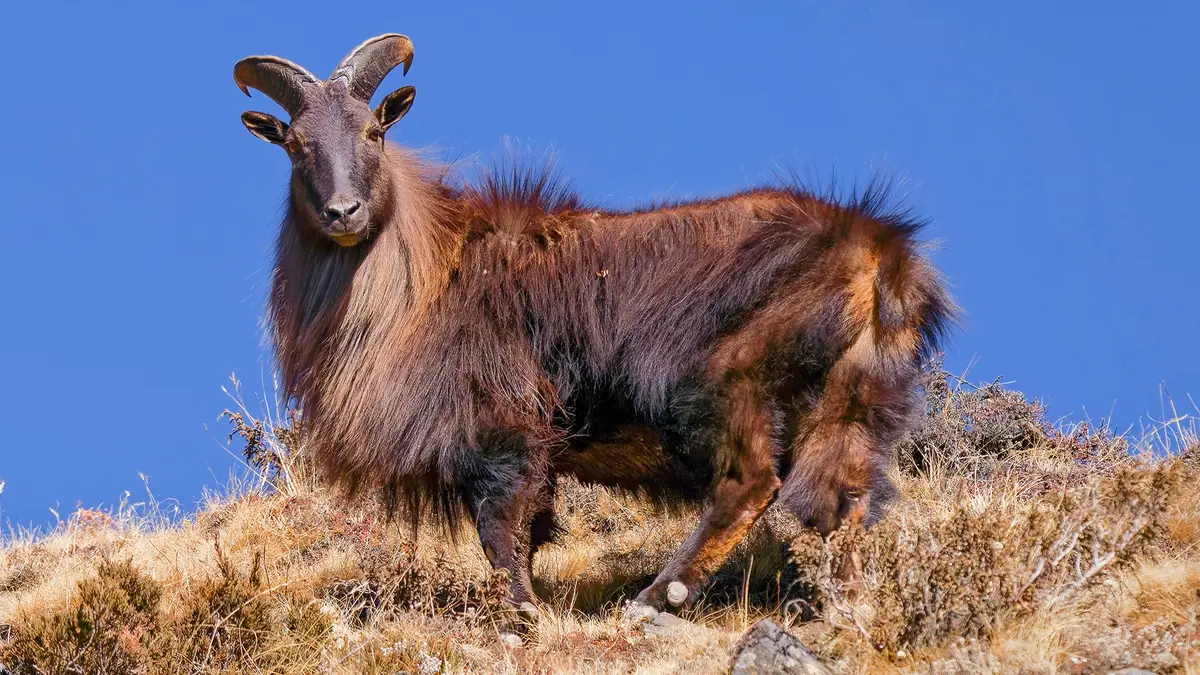
The Himalayan tahr (Hemitragus jemlahicus) is a large goat‑like mammal native to the high mountains of India, Nepal and Bhutan. Males can weigh over 70 kilograms and have thick reddish‑brown coats and curved horns, while females are smaller with shorter horns. Adapted to steep terrain, they use cloven hooves with a rubber‑like core to grip smooth rocks. The species is listed as Near Threatened on the IUCN Red List due to hunting and habitat loss.
Emerging threats
- Garbage as a lure: Tourists and pilgrims leave plastic, food waste and other trash along trails and campsites. Tahrs are attracted to edible waste, causing them to frequent garbage sites rather than natural meadows.
- Ecological trap: Once animals become habituated to feeding at waste dumps, they lose their natural foraging skills. This can lead to malnutrition, disease and higher mortality, while pollutants contaminate soil and water sources.
- Habitat degradation: Waste accumulation degrades alpine meadows and can harm other species. Climate change and development already threaten tahr habitat; garbage exacerbates these pressures.
Conservation measures
- Waste management: Authorities and trekking companies must ensure waste is collected and removed from high‑altitude camps. Strict enforcement of “carry in–carry out” rules and installation of waste segregation facilities are needed.
- Community awareness: Local communities, pilgrims and trekkers should be educated about the impact of littering on wildlife and encouraged to minimise waste.
- Habitat protection: Protecting and restoring alpine meadows through regulated grazing, eco‑sensitive zone declarations and sustainable tourism policies will help maintain natural foraging grounds.
Conclusion
The Himalayan tahr is an iconic symbol of the Himalayan highlands. Preventing garbage from infiltrating its fragile habitat is essential to ensure this species continues to thrive. Responsible tourism, improved waste management and habitat protection are key to safeguarding these mountain goats.
Sources: Down To Earth