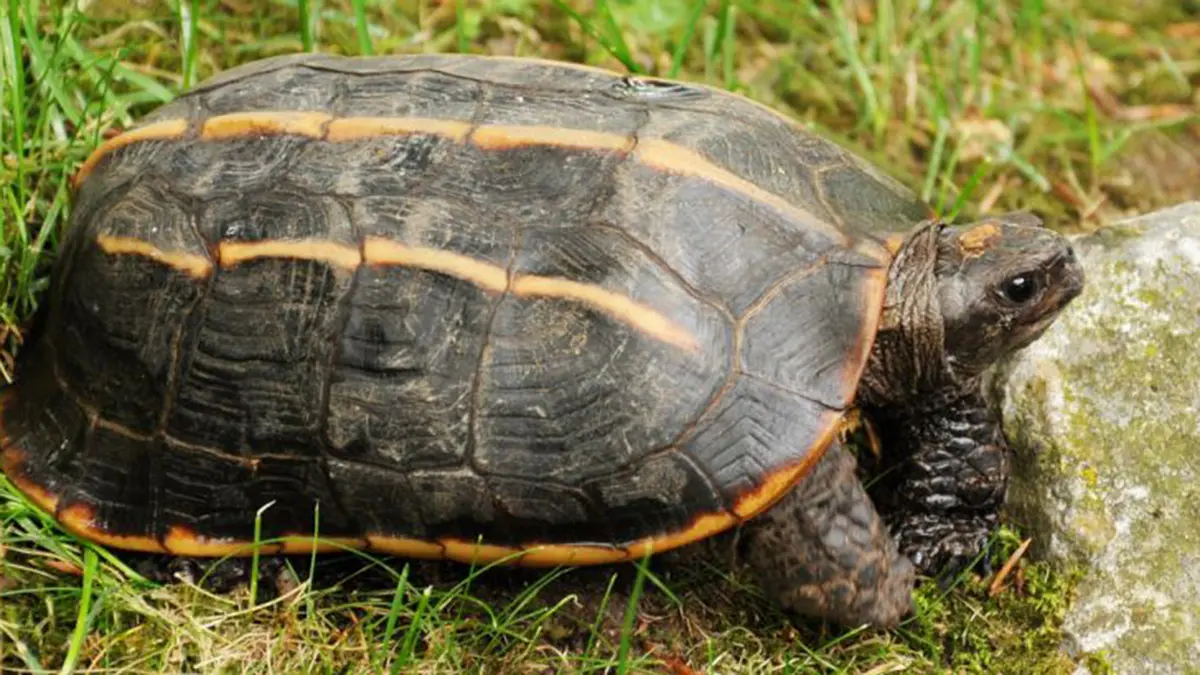
Why in news?
Forest guards at Chhattisgarh’s Udanti Sitanadi Tiger Reserve recently photographed a Himalayan Tricarinate Hill Turtle, a species rarely documented outside the Himalayan foothills. The sighting suggests that conservation efforts and healthy microhabitats are allowing unusual wildlife to persist in central India.
Background
The Himalayan Tricarinate Hill Turtle (Melanochelys tricarinata) is a small freshwater turtle named for the three raised ridges (carinae) on its carapace. It occurs in moist deciduous and evergreen forests along the Himalayan foothills in India (including Arunachal Pradesh, Assam, Bihar, Uttar Pradesh, West Bengal and parts of Chhattisgarh), Bangladesh, Nepal and Bhutan. The species is shy, often hiding under leaf litter near streams and marshes. Because of its restricted range and threats from habitat destruction and illegal pet trade, it is listed as “Vulnerable” on the IUCN Red List.
Key characteristics
- Appearance: A brown or olive carapace with three distinct longitudinal ridges; the plastron (belly shell) is yellowish with dark markings.
- Size: Adults typically measure 16–25 centimetres long.
- Habitat: Prefers slow‑flowing streams, paddy fields and marshes in forested regions. It remains on land during the monsoon when fields flood.
- Behaviour: Nocturnal and secretive; feeds on insects, molluscs, small frogs and plant material.
- Threats: Loss of wetlands to agriculture, pollution of streams and collection for the pet trade.
Significance of the sighting
The record from Udanti Sitanadi Tiger Reserve expands the known distribution of this turtle and indicates that protected areas in central India still hold suitable habitat. Such observations underscore the importance of anti‑poaching patrols, habitat restoration and awareness campaigns in safeguarding lesser‑known species.