
Why in news?
In late May 2026 officials at Assam’s Kaziranga National Park reported sightings of an albino hog deer. Photographs shared by the state leadership drew attention to this unusual animal, whose lack of pigmentation makes it highly conspicuous to predators. The park authority emphasised the need to protect this rare individual while educating visitors about conservation.
About hog deer
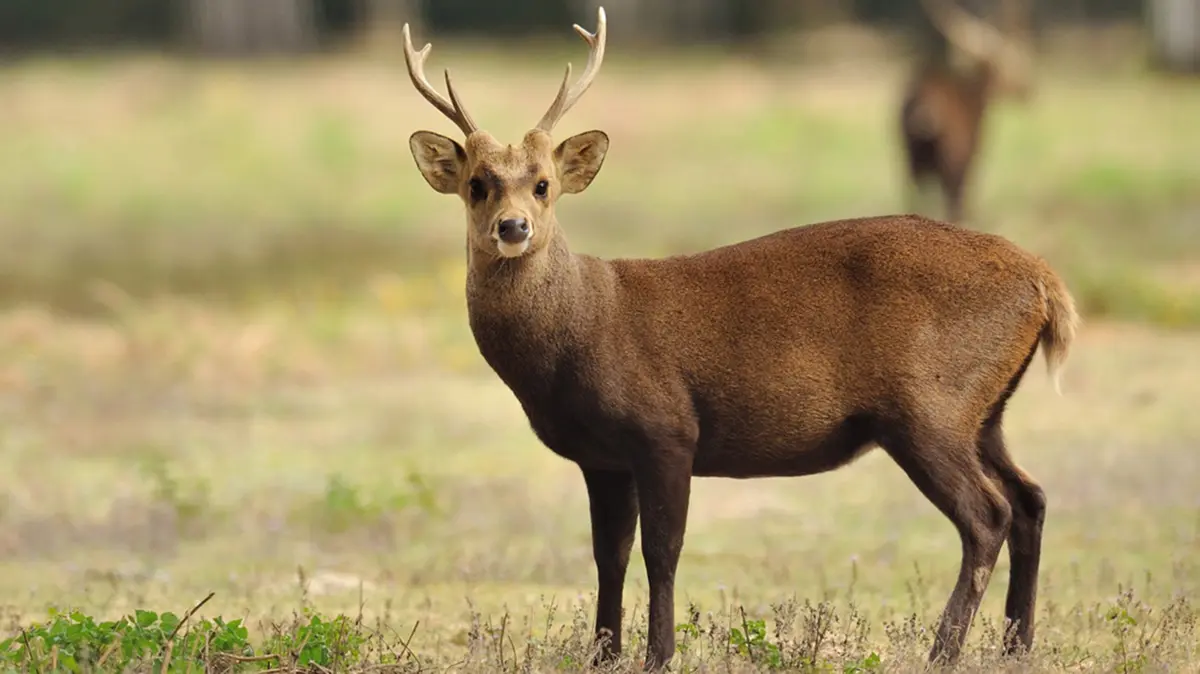
Hog deer (Axis porcinus) are small, sturdy deer native to the Indo‑Gangetic plains and Southeast Asia. They get their name from the hog‑like manner in which they run with head down to move through tall grass. Historically abundant, their populations have declined due to habitat loss and hunting, and the species is now listed as endangered.
Distribution and habitat
- Native range: Hog deer occur from Pakistan and northern India through Nepal, Bhutan and Bangladesh to mainland Southeast Asia. They have been introduced to Australia, Sri Lanka and parts of the United States.
- Preferred habitat: They favour tall grasslands and reed beds near rivers and floodplains. Hog deer avoid dense forests but may use scrubland and agricultural fields. In Kaziranga and other protected areas they share habitat with rhinos and elephants.
- Appearance and behaviour: Adults have a dark olive‑brown coat with coarse hair and white‑tipped guard hairs. The species is sexually dimorphic; males carry three‑tined antlers and have thicker necks, while females are smaller and lack antlers. Hog deer are generally solitary or found in small groups and are most active at dawn and dusk.
- Conservation status: Populations have become fragmented due to land conversion. The species is protected under Schedule I of India’s Wildlife (Protection) Act, 1972, and is listed as Endangered on the IUCN Red List. Major threats include habitat loss, poaching and competition with livestock.
Albino hog deer
Albinism is a genetic condition where an animal lacks melanin pigment, resulting in white fur and pink eyes. Albino animals are rare in the wild because their conspicuous colour makes them vulnerable to predators and reduces camouflage. The albino hog deer in Kaziranga highlights both the genetic diversity of the population and the challenges such individuals face. Park authorities have urged visitors not to disturb or feed the animal.
Conclusion
Hog deer play an important role in the riverine grasslands of India and Southeast Asia. Protecting their habitats and controlling poaching are essential to ensuring their survival. The rare albino sighting in Kaziranga reminds us of the genetic wonders within our wildlife and underscores the need for responsible tourism and conservation.