

Why in News?
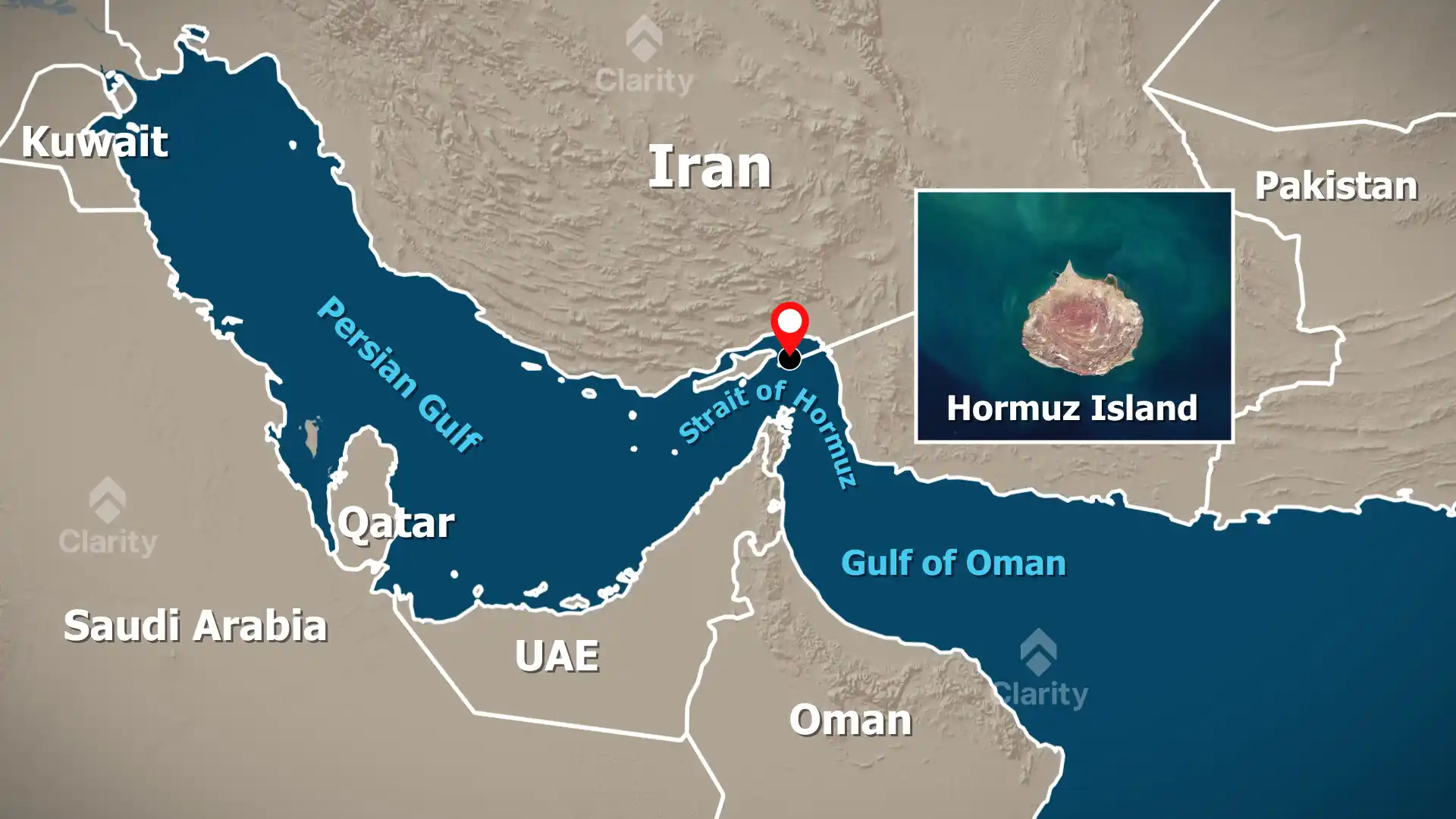
Heavy rainfall in southern Iran recently caused the coastline of Hormuz Island to turn a striking shade of red. Images of the “blood‑red” waves went viral on social media, prompting curiosity about the geological and environmental factors behind the phenomenon.
Background
Hormuz Island is a hilly island located in the Strait of Hormuz, between the Persian Gulf and the Gulf of Oman, roughly eight kilometres off the Iranian mainland. With an area of about 42 square kilometres, the island is composed of sedimentary rock and volcanic ash. Its soil and water are extremely salty because the region receives little rainfall. The island is renowned for its colourful soil, earning it the nickname “Rainbow Island.” Shades of red, gold, silver and white appear in the sand and rock, reflecting the high concentration of minerals. The native people belong to the Bandari ethnic group and largely depend on fishing for their livelihood.
Why the Water Turned Red
- Iron‑rich soil: Hormuz is famous for a red soil called golak that contains significant amounts of iron oxide (hematite).
- Rainfall and runoff: After heavy rains, streams of iron‑rich soil flow down the island’s slopes and into the sea. When the iron comes into contact with seawater, it oxidises rapidly and colours the water red.
- Natural and temporary: This phenomenon occurs naturally and is temporary. As the iron settles, the water returns to its usual colour. The red soil is not harmful to humans and is sometimes used as a pigment in cosmetics and traditional cooking.
Significance
- Geo‑tourism: The striking colours draw visitors and highlight the island’s geological uniqueness, promoting eco‑friendly tourism.
- Economic potential: The colourful soils, especially the red earth, are exported for use in paints, dyes and cosmetics, providing income for local communities.
- Environmental sensitivity: The event underscores the delicate balance of Hormuz’s ecosystem, which is vulnerable to changes in rainfall patterns and human activities such as mining.