
Why in news?
Hungarian President Tamás Sulyok signed a constitutional amendment. The amendment ends his own mandate before its scheduled expiry. Sulyok criticised the measure but accepted his legal duty. Parliament’s Speaker will temporarily perform the President’s constitutional functions.
Background
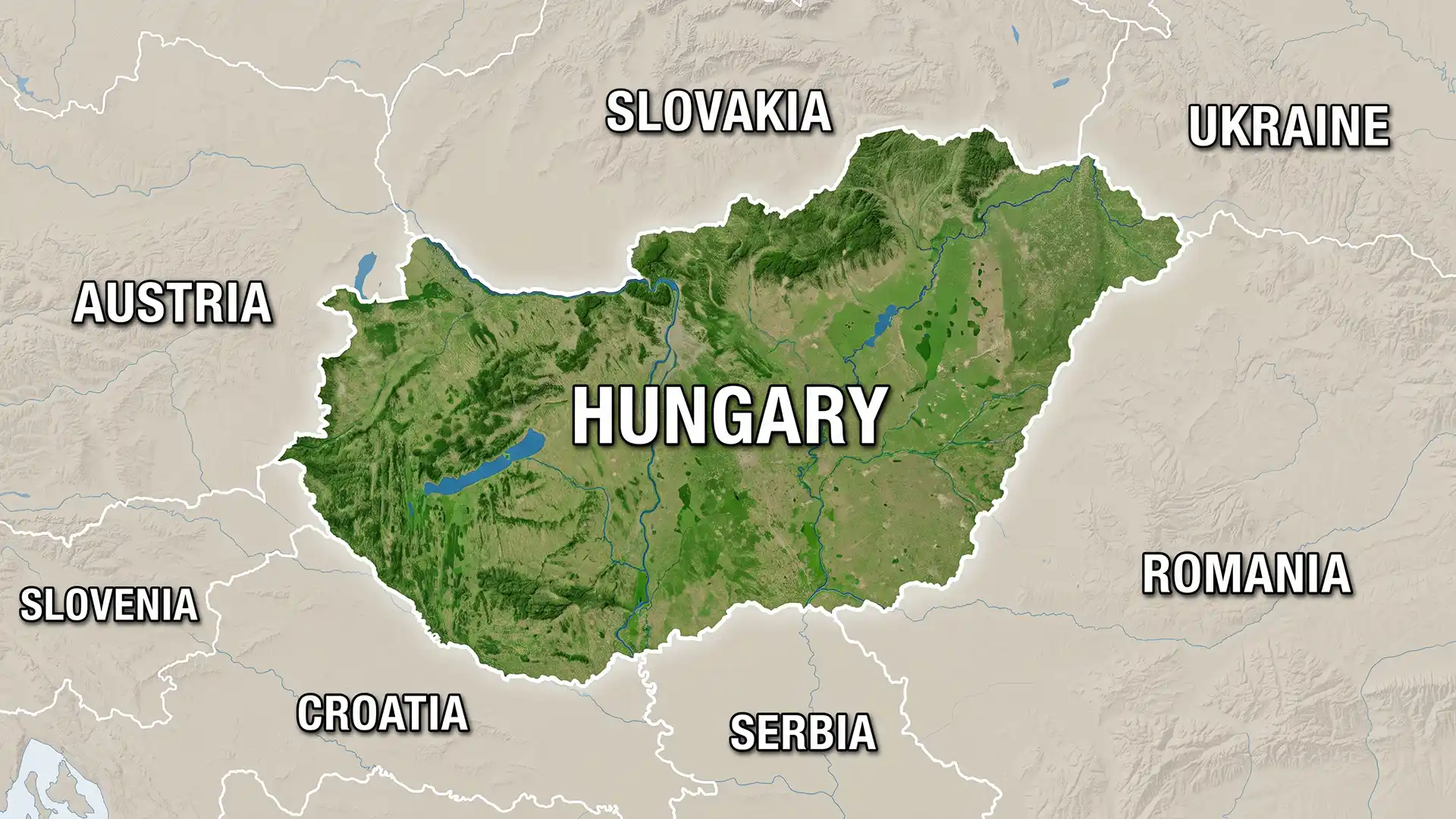
Hungary is a landlocked country in Central Europe; it lies mainly within the low-lying Carpathian Basin.
Its capital and largest city is Budapest; the Danube passes through Budapest and divides its older urban halves.
Buda lies mainly west of the river; Pest lies mainly east.
How is Hungary governed?
Hungary is a parliamentary republic under its Fundamental Law; the Prime Minister leads the government and exercises executive authority.
The President is the head of state and mainly performs representative duties.
The President also signs laws and has limited constitutional referral powers.
Parliament elects the President rather than holding a direct popular election.
Institutional clarity: Hungary’s President is not the government leader; the Prime Minister heads the executive.
How did the present dispute develop?
- Parliament elected Tamás Sulyok as President during 2024.
- He succeeded Katalin Novák after her resignation during a pardon controversy.
- Viktor Orbán’s Fidesz had supported Sulyok’s presidential election.
- The Tisza Party won Hungary’s parliamentary election on 12 April 2026.
- The result gave Tisza a two-thirds parliamentary majority.
- Péter Magyar became Prime Minister and sought major institutional changes.
- Parliament adopted the seventeenth constitutional amendment on 13 July.
- President Sulyok formally signed that constitutional amendment on 18 July.
The new government argued that several office-holders remained tied to the previous government.
Sulyok rejected the method used to remove him.
What did Parliament approve?
Parliament passed the amendment by 139 votes to six; no member recorded an abstention.
Fidesz and its allied Christian Democratic group boycotted the sitting.
The measure says the sitting President’s mandate ends after it takes effect.
This clause directly applied to Sulyok; he called it an abuse of political power.
However, he said refusing his signature would itself violate the law; he therefore signed while publicly recording his objections.
Who performs presidential functions now?
Ágnes Forsthoffer is the Speaker of Hungary’s National Assembly; the amendment assigns her interim presidential functions.
This arrangement continues until Parliament elects a new head of state.
The next President will serve until a new constitution begins; that temporary term cannot exceed five years.
Prelims fact: Parliament’s Speaker, not the Prime Minister, becomes interim President under this arrangement.
What other changes does the amendment make?
- Future parliamentary service is limited to twelve years or three elections.
- The limit does not terminate current legislators’ mandates.
- Constitutional judges will serve nine years instead of twelve.
- Constitutional judges must leave office upon reaching seventy years.
- The Constitutional Court regains several earlier review powers.
- Judges receive a role in selecting senior judicial leaders.
- A new office can trace and recover unlawfully handled public assets.
- The old Hungarian word for county is restored.
The parliamentary-service limit affects future eligibility, not existing seats.
The restored court powers include wider review of budgetary and taxation laws.
Earlier constitutional changes had restricted this form of judicial review.
Why is the episode constitutionally important?
A two-thirds majority can legally amend Hungary’s Fundamental Law; yet legality does not end debate about institutional independence.
The government presents the changes as democratic repair after prolonged partisan control.
Critics see an office-specific removal as dangerous for separation of powers; both concerns involve an important constitutional question.
How should a democratic transition reform institutions without weakening their independence?
Key geographical facts about Hungary
| Feature | Fact |
|---|---|
| Region | Central Europe and the Carpathian Basin |
| Capital | Budapest |
| Official language | Hungarian |
| Currency | Hungarian forint |
| Main rivers | Danube and Tisza |
| Largest lake | Lake Balaton |
| Highest point | Kékes, about 1,014 metres |
| Sea access | None |
Which countries border Hungary?
Hungary shares land borders with seven neighbouring European countries.
- Slovakia forms much of Hungary’s northern land boundary.
- Ukraine meets Hungary along a short north-eastern boundary.
- Romania forms Hungary’s long eastern and south-eastern boundary.
- Serbia and Croatia meet Hungary along its southern side.
- Slovenia meets Hungary near the country’s south-western corner.
- Austria lies directly along Hungary’s western land boundary.
The Danube crosses Hungary from north to south; the Tisza drains much of the country’s eastern plain.
What are Hungary’s international memberships?
- Hungary joined the North Atlantic Treaty Organization during 1999.
- It joined the European Union on 1 May 2004.
- It entered the Schengen travel area during December 2007.
- It remains outside the euro area and uses the forint.
The North Atlantic Treaty Organization is shortened to NATO; the European Union is shortened to EU.
Schengen membership removes routine internal border checks with participating countries; it is not identical to EU or euro-area membership.
Conclusion
Hungary’s transition shows that constitutional change needs both democratic authority and institutional restraint.