
Why in news?
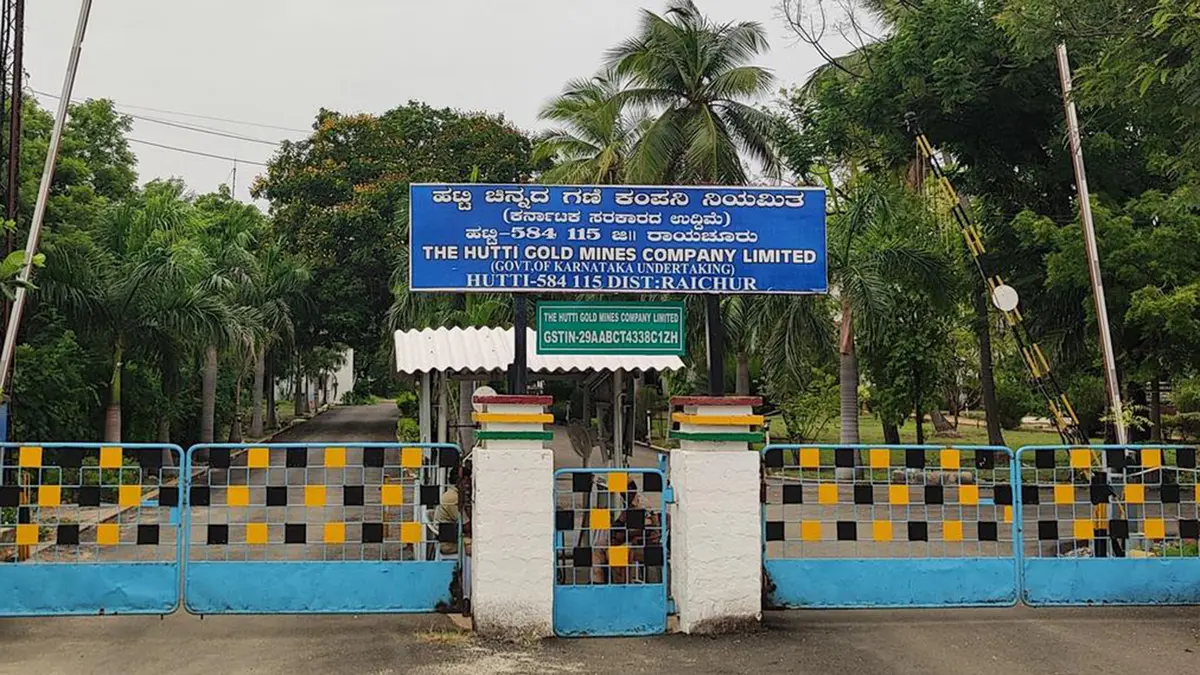
The Ministry of Mines’ Annual Report 2025‑26 notes that India produced about 1,302 kilograms of primary gold that year, nearly 20 percent less than in 2024‑25. Almost all of this gold came from the state‑owned Hutti Gold Mines Company Ltd (HGML) in Karnataka, highlighting both the mine’s importance and the challenges of declining ore grades.
Background and history
The Hutti deposits are among the oldest known gold mines in the world. Archaeological evidence suggests that miners used the “fire‑setting” technique more than 2,000 years ago, heating rock with fire and then dousing it with water to crack it. Carbon dating of timber from old workings indicates mining activity around 2 millennia ago. Between 1902 and 1919, modern operations extracted roughly 7,400 kilograms of gold at an average grade of 19 grams per tonne. The venture closed in 1920 due to technical and financial difficulties.
The Nizam’s government of Hyderabad restarted exploration in 1937, and the Hyderabad Gold Mines Co. Ltd was formed in 1947 with state participation. Production resumed in 1948 at about 130 tonnes of ore per day and rose to 600 tonnes per day by 1972. After the reorganisation of states in 1956, control passed to Mysore (now Karnataka) and the company was renamed Hutti Gold Mines Limited. Over the decades the mines have produced more than 26,000 kilograms of gold from roughly 3.86 million tonnes of ore. The main underground mine eventually became water‑logged and was closed, but other lodes continue to be worked.
Present‑day operations
- Leading producer: HGML is India’s only major producer of primary gold. According to the Ministry of Mines, Karnataka accounted for 92.40 percent of the nation’s gold production in 2025‑26, with the rest coming from small operations in Andhra Pradesh and Jharkhand【654524516019584†L1592-L1599】.
- Integrated processes: The company undertakes underground mining, milling and refining on the same campus at Hutti. It also recovers gold from old tailings.
- Challenges and prospects: Ore grades have declined over time, raising production costs. The central government has approved exploration of new prospects such as Killarhatti and Chinnikatti in Karnataka. Rising gold prices have improved revenues but long‑term sustainability depends on discovering new deposits.
Significance
HGML provides employment to thousands and reduces India’s dependence on imported bullion. Its long history illustrates the evolution of mining technology from ancient fire‑setting to modern mechanised extraction. The recent decline in output underscores the need for sustainable resource management and diversification of the gold sector.

