

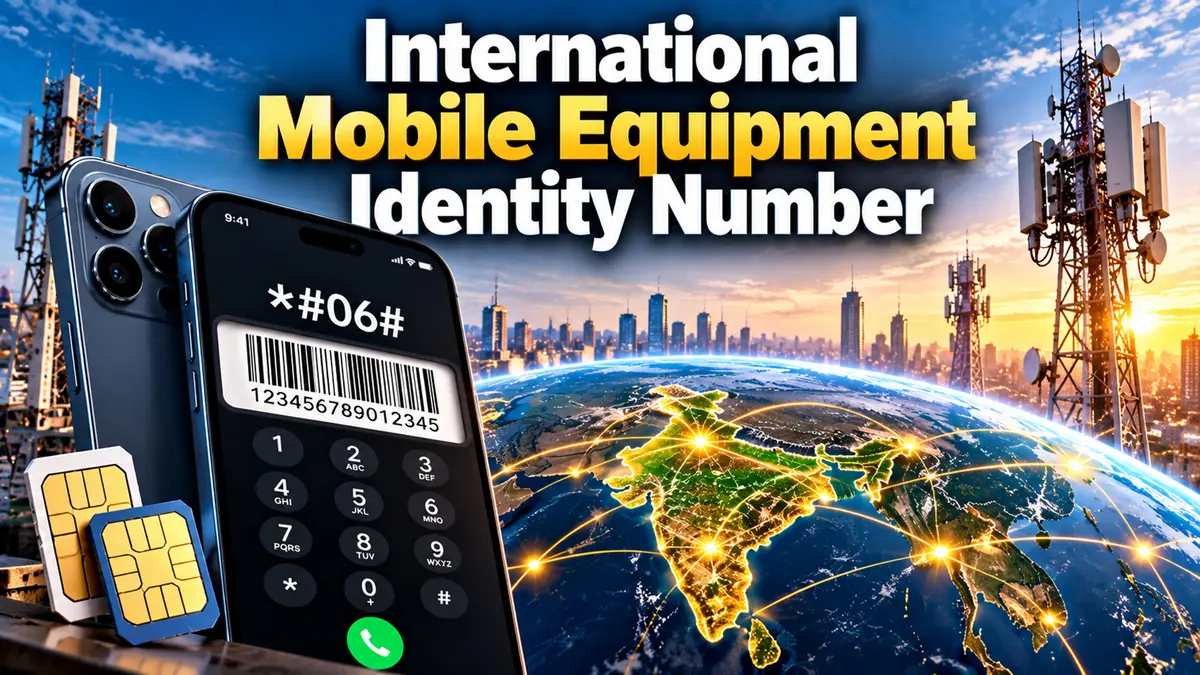
Why in news?
A government explainer issued on 23 September highlighted handset identification and the risks of tampering with an International Mobile Equipment Identity number. Commonly called an IMEI, this identifier allows mobile networks to recognise equipment separately from the subscriber using it. That distinction matters when a stolen phone receives a different subscriber card: changing the card does not normally change the handset's identity. India's system combines equipment registration, verification services and the blocking of reported lost or stolen devices. These measures can make resale and misuse harder. They do not guarantee recovery, establish legal ownership by themselves or make every phone displaying a valid number genuine.
Three different identities inside one mobile connection
A telephone number identifies a service through which somebody can be contacted. A Subscriber Identity Module, or SIM, carries credentials used to authenticate a subscription. The handset has a separate equipment identity. These roles overlap during a call but are not interchangeable. Moving a SIM into another phone changes the equipment being used without necessarily changing the subscription. Conversely, inserting another SIM into the same handset does not normally replace its equipment identifier.
The conventional IMEI contains 15 digits. Its first eight form the Type Allocation Code, which identifies an allocated device type. Six further digits distinguish individual equipment within that allocation, and the last is a check digit. The check digit helps detect incorrectly entered numbers; it is not a security certificate. Manufacturers assign individual numbers within allocated ranges. The mobile-industry body GSMA oversees the type-allocation framework rather than personally issuing each consumer's complete handset number.
A phone supporting two SIM connections can have two IMEIs. Seeing two numbers is therefore not, by itself, evidence of fraud. The relevant question is whether each equipment identity is valid and corresponds to that device. Device identity must also be distinguished from a serial number printed for a manufacturer's inventory. Related identifiers may appear together on packaging, but a mobile network does not use every label for the same purpose.
Registration and the prohibition on tampering
The Telecommunications (Telecom Cyber Security) Rules, 2024 establish obligations for equipment carrying an IMEI. A manufacturer must register the identifiers of equipment made in India before its first sale. An importer must register relevant equipment before import, including imports for testing or research. These requirements create records before devices enter ordinary circulation. They also place responsibility on businesses upstream of the consumer, rather than relying entirely on complaints after a phone disappears.
The rules prohibit intentional removal, alteration or obliteration of an equipment identification number. They also address knowing involvement with hardware or software configured for such tampering. Section 42 of the Telecommunications Act, 2023 separately covers tampering with telecommunications identifiers. It provides for imprisonment up to three years, a fine up to ₹50 lakh, or both. These are maximum statutory penalties, not an automatic sentence in every case. The relevant offence provisions came into force in June 2024.
The policy concern is that altered or duplicated identifiers undermine the link between a handset and its records. Blocking one reported device becomes less reliable if the same identifier appears on unrelated equipment. Legitimate buyers can also inherit problems when purchasing a tampered handset. This is why equipment identity supports a wider chain of manufacturer registration, seller accountability and consumer checks. The number is useful because that chain gives it meaning, not because 15 digits are inherently trustworthy.
What blocking does—and what it does not do
The Central Equipment Identity Register, or CEIR, supports blocking reported lost or stolen mobile equipment across Indian telecommunications networks. This addresses a weakness in blocking only a SIM: someone could otherwise insert another card into the stolen handset. The official service connects a device report with the equipment identifier and supporting information. Its public process asks for a police report and other verification details. A request reference allows the applicant to follow the process.
Network blocking and physical recovery are different outcomes. A blocked handset may remain in somebody else's possession, and blocking does not remotely erase personal files. Likewise, an identifier check does not replace securing accounts linked to the missing device. CEIR provides a separate unblocking process when a handset is recovered. This makes accurate reporting important for both the original owner and any later lawful use. A device should not remain blocked merely because its recovery was never recorded.
The government's Sanchar Saathi services also let people check handset identifiers before a purchase. The identifier displayed by a handset can be compared with its purchase documentation and packaging. A mismatch deserves investigation, but a match is not conclusive proof against counterfeiting or theft. The practical value lies in combining checks with a traceable seller and reliable documentation. Consumers should use official channels rather than provide identity documents to an unverified intermediary promising guaranteed recovery.
Conclusion
The IMEI system separates the identity of mobile equipment from the identity of a subscription. That makes it useful for checking devices, investigating misuse and restricting stolen handsets across networks. Its effectiveness still depends on accurate registration, lawful enforcement and correct consumer reporting. The number is one part of a wider security process. Changing a SIM does not defeat every safeguard, while a valid-looking identifier does not guarantee a safe device.