

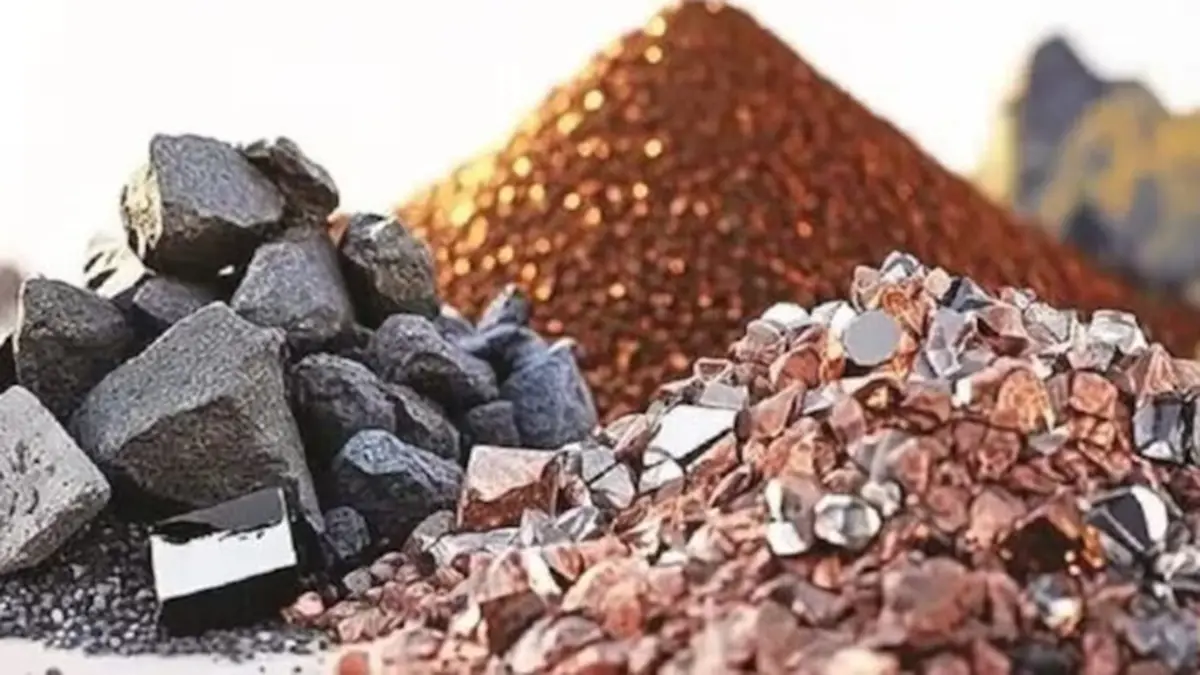
Why in news?
In April 2026 the Union Cabinet approved a ₹1,500‑crore incentive scheme to develop recycling capacity for critical minerals. Shortly afterwards the Ministry of Mines shortlisted 58 companies to participate. The initiative aims to reduce India’s dependence on imported materials essential for clean energy technologies by creating a domestic recycling industry.
Background
The National Critical Mineral Mission identifies minerals such as lithium, cobalt, nickel, graphite and rare earth elements as essential for batteries, electronics and renewable energy. Recycling end‑of‑life products — such as lithium‑ion batteries, electronic waste and catalytic converters — can recover these minerals and reduce environmental impacts. The new scheme runs from financial year 2025–26 to 2030–31 and is open to both large recyclers and small start‑ups.
Key provisions
- Capital subsidy: Companies that commission recycling plants within the scheme period are eligible for a 20 % subsidy on the cost of plant and machinery.
- Operating subsidy: Incentives are tied to incremental sales of recycled products over a base year (FY 2025–26). Beneficiaries receive a subsidy equal to 40 % of eligible sales in the second year and 60 % in the fifth year.
- Incentive caps: Large entities may receive up to ₹50 crore in total incentives, while small entities are capped at ₹25 crore. Operating subsidies are limited to ₹10 crore and ₹5 crore respectively.
- Expected outcomes: The Ministry of Mines anticipates creating at least 270 kilo‑tonnes per annum (KTPA) of recycling capacity and producing about 40 KTPA of critical minerals each year. The programme is projected to attract investments of nearly ₹8,000 crore and generate around 70,000 direct and indirect jobs.
- Early approvals: The first 58 approved proposals represent a pledged capacity of about 850 KTPA and an investment of ₹5,000 crore.
Significance
Recycling domestic waste streams will help India secure minerals vital for electric vehicles, solar panels and electronics while reducing landfill pollution. The scheme also encourages innovation among start‑ups and diversifies supply chains away from single‑source imports.