Why in news?
On 26 April 2026 the Indian Embassy in Bamako urged Indian nationals in Mali to remain indoors and exercise utmost caution. The advisory followed reports of coordinated attacks on military bases and other sites across the West African nation.
Background
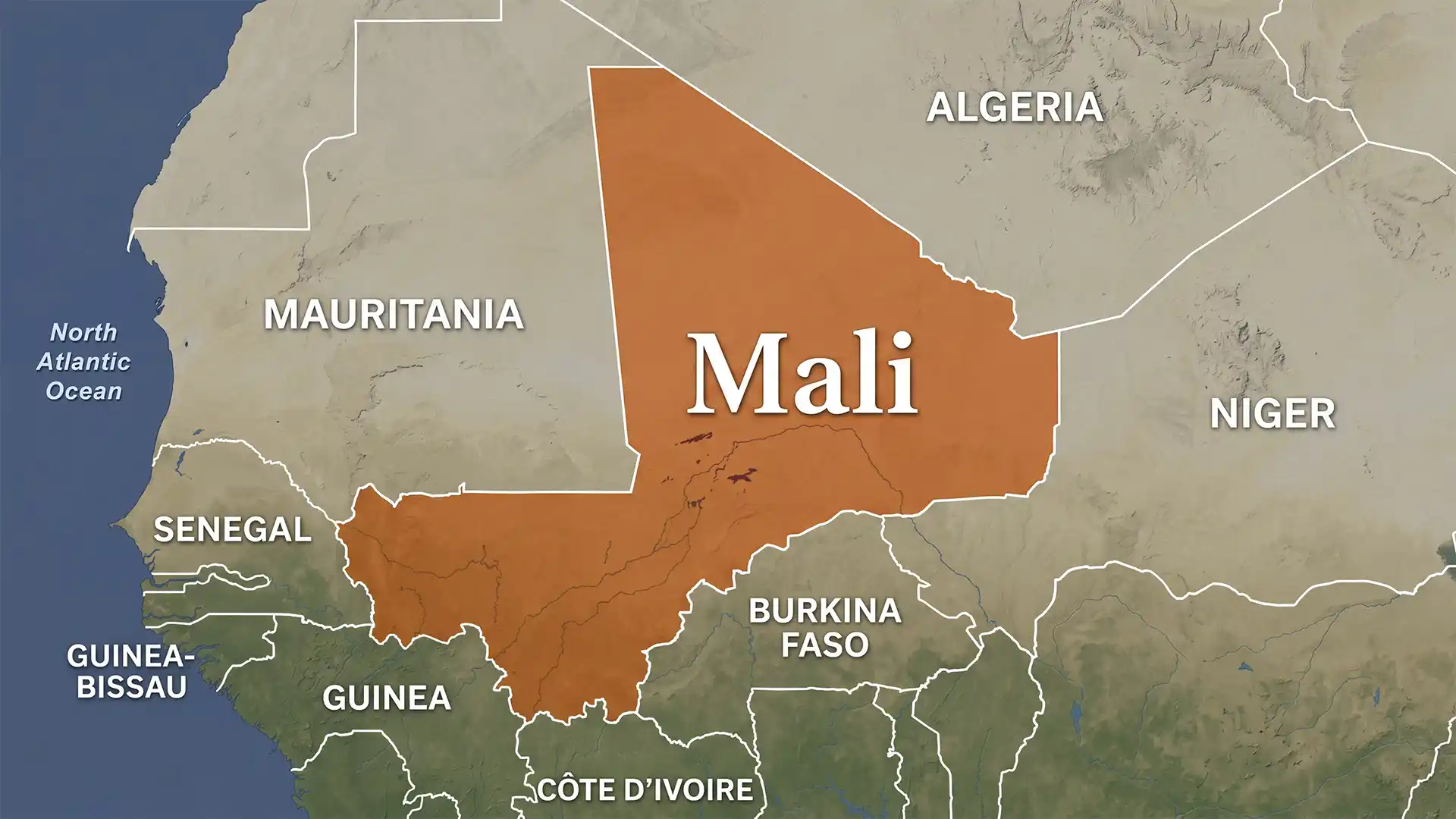
Mali is a land‑locked country in West Africa bordered by Algeria, Niger, Burkina Faso, Côte d’Ivoire, Guinea, Senegal and Mauritania. The capital is Bamako, situated on the Niger River. The country’s climate ranges from desert in the north to semi‑arid Sahel and savanna in the south. Mali has faced repeated coups and an insurgency by jihadist groups linked to al‑Qaida and the Islamic State, as well as a longstanding Tuareg separatist rebellion in the north. Foreign peacekeepers have withdrawn over recent years, and the junta has sought support from Russian security contractors.
Recent security situation
- Coordinated attacks: On 25 April 2026, militants launched simultaneous assaults on Bamako’s international airport and military bases in Kati, Sévaré, Mopti, Gao and Kidal. The al‑Qaida‑affiliated Jama’at Nusrat al‑Islam wal‑Muslimin (JNIM) claimed responsibility with support from the Azawad Liberation Front.
- Embassy advisory: Following these attacks, the Indian Embassy advised nationals to shelter in place, follow instructions from Malian authorities and stay in contact through official channels for updates. Emergency helplines were provided.
- Broader context: Analysts noted that this was one of the largest coordinated assaults in Mali in years. It underscores the fragile security landscape and the challenges facing the military government.
About Mali
- Geography: Roughly 65 percent of Mali’s territory is desert or semi‑desert. The Niger River is its main water source.
- Economy: Mali is rich in gold, uranium and other minerals, but much of the population relies on agriculture and livestock. The country is one of the world’s leading cotton producers.
- Cultural diversity: Ethnic groups include the Bambara, Dogon, Tuareg and many others. French is the official language, while Bambara is widely spoken.
Conclusion
India’s advisory highlights the seriousness of recent attacks in Mali and the volatility of the security situation there. Travellers and residents must remain vigilant, and international cooperation is needed to stabilise the Sahel region.
Source: The Hindu