
Why in news?
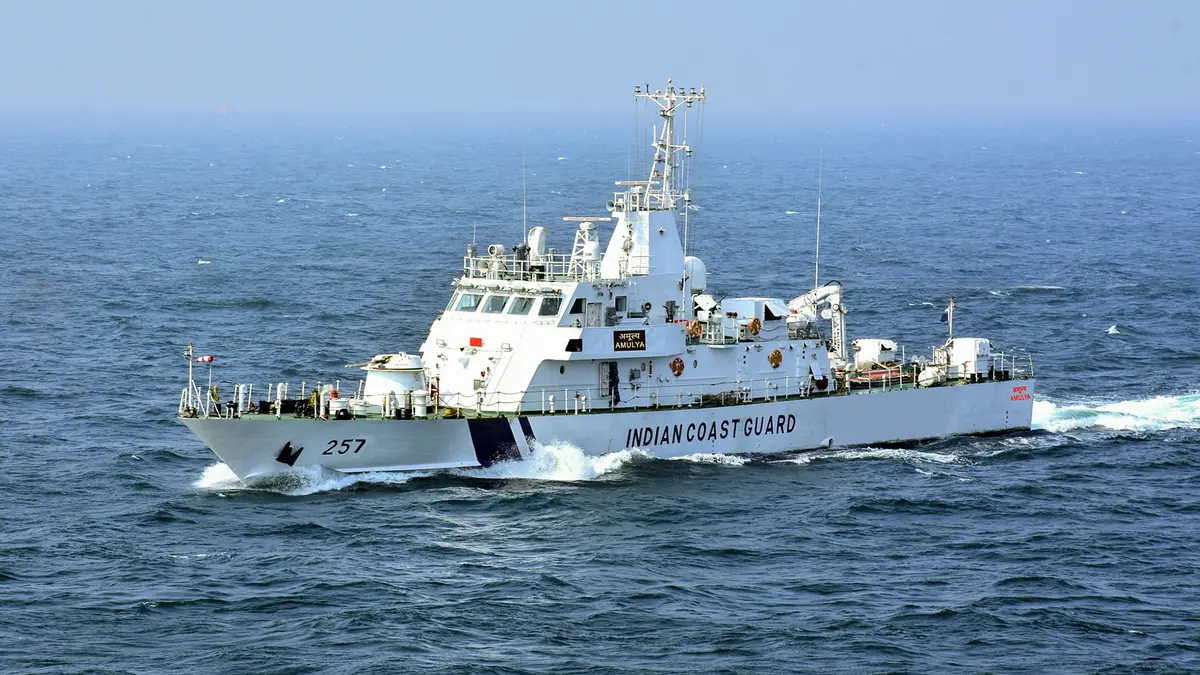
On 21 June 2026 the Indian Coast Guard (ICG) marked the 12th International Day of Yoga with its “Yoga Sangam 2026” initiative. Under the theme Yoga for Healthy Ageing thousands of officers, sailors and family members performed yoga aboard ships and at shore establishments. A central event in Noida saw more than 1,000 participants. The programme aimed to promote physical fitness, mental clarity and resilience among personnel who often work in high‑stress maritime environments.
Background
The Indian Coast Guard was established to protect India’s maritime interests and enforce sea laws. After rampant smuggling in the 1960s the Government set up the Nag Committee in 1970 and the Rustamji Committee in 1975 to examine the need for a separate maritime law enforcement agency. The Union Cabinet approved the creation of the Coast Guard in 1977. It became operational on 1 February 1977 and was formally inaugurated on 19 August 1978 by Prime Minister Morarji Desai.
The mission of the ICG is to protect India’s ocean and offshore wealth, assist mariners in distress, enforce maritime laws, preserve the marine environment and gather scientific data. Its motto Vayam Rakshamah means “We Protect.”
Highlights of Yoga Sangam 2026
- Holistic health: The programme emphasised yoga’s role in improving flexibility, breathing and mental focus, which are essential for sailors and rescue teams who face demanding conditions at sea.
- Wide participation: Yoga sessions were held simultaneously on ships, in coastal headquarters and at training centres. Families of ICG personnel also took part.
- Leadership support: The Director General of the ICG stressed that regular yoga practice helps personnel manage stress, improves endurance and reduces injury risk. He urged everyone to integrate yoga into daily routines.
- Strengthening morale: By adopting yoga, the ICG seeks to build a resilient force capable of responding to emergencies while maintaining mental balance.
Role of the Indian Coast Guard
- Protection of ocean wealth: The ICG safeguards offshore oil installations, fishing grounds and mineral resources.
- Search and rescue: It assists ships and boats in distress and coordinates evacuation during natural disasters.
- Law enforcement: The force enforces maritime laws relating to customs, immigration, fisheries and pollution.
- Environmental stewardship: It works to prevent oil spills and protect marine ecosystems.
- Scientific data collection: The ICG supports oceanographic and meteorological research that aids navigation and weather forecasting.
Conclusion
Yoga Sangam 2026 highlighted how traditional wellness practices can complement modern maritime operations. By promoting yoga among its personnel, the Indian Coast Guard is investing in the physical and mental well‑being of those who guard the nation’s waters. Such initiatives enhance morale and readiness in a force whose work is often strenuous and unpredictable.