
Why in news?
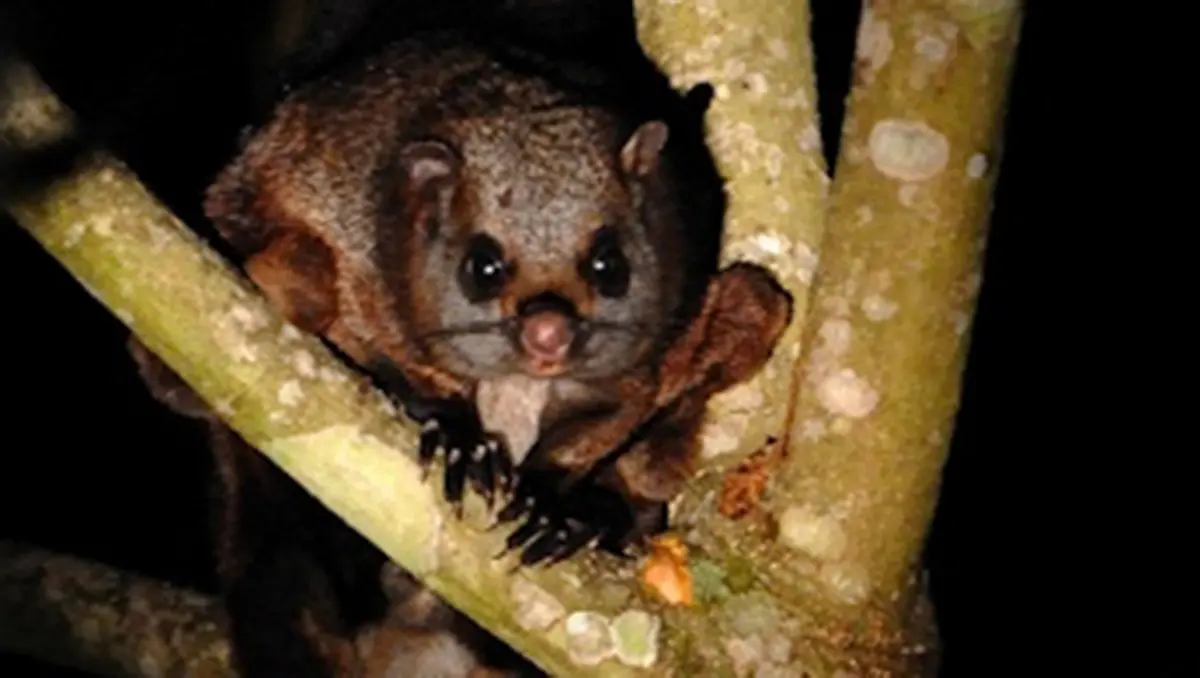
Forest staff rescued a large flying squirrel near Ramnagar in Uttarakhand. Villagers found it at night near homes in Teda village. Officials identified it as an Indian Giant Flying Squirrel. Reports called it the area’s first sighting in about twelve years.
Background
The Indian Giant Flying Squirrel is a large tree-dwelling rodent, and its scientific name is Petaurista philippensis.
It belongs to the squirrel family Sciuridae and the order Rodentia. The species is also called the large brown flying squirrel.
Despite its name, it cannot perform powered flight, and it glides downwards between trees after jumping from a height.
How does it glide?
A broad skin membrane joins its forelimbs and hind limbs, and this membrane is called the patagium.
The squirrel spreads all four limbs after jumping, and the stretched membrane then creates lift and slows its fall.
Its long tail helps with balance, direction and landing, and claws provide grip when it reaches another tree trunk.
The local report mentioned glides of sixty to eighty metres, and actual distance varies with height, wind and tree spacing.
Remember: Flying squirrels glide using a patagium, and bats alone achieve sustained powered flight among living mammals.
Where does the species live?
Its broad range covers parts of South and Southeast Asia, and populations also occur in southern and central China.
It occupies dry deciduous forest, evergreen forest and some plantations, and large trees and connected canopy remain especially important.
Indian records come from several forested regions, and Uttarakhand reports include Ranikhet, Lansdowne, Pithoragarh, Chakrata and Mussoorie landscapes.
Taxonomy within Asian giant flying squirrels remains complex, and similar-looking populations may be treated differently after genetic research.
How does it live?
- It is mainly nocturnal and becomes active after sunset.
- It spends most of its time in the forest canopy.
- It rests and breeds inside suitable tree hollows.
- Its diet includes fruits, leaves, bark, shoots and resins.
- It may also eat some insects and larvae.
- Gliding saves energy while crossing gaps between trees.
Night activity and high canopy use make observation difficult, and a species may occur locally without frequent human sightings.
What exactly happened near Ramnagar?
Residents noticed the animal near houses in Teda village. The village lies within the wider Ramnagar forest landscape near Corbett.
Forest personnel reached the location and rescued the animal. Local officers then identified it from its appearance and gliding membrane.
The twelve-year statement concerns the local area, and it does not mean Uttarakhand lacked the species for twelve years.
Evidence caution: The identification came from local forest officials and news reporting. No genetic confirmation was reported.
Is it the same as the Indian Giant Squirrel?
The Indian Giant Squirrel is a different species, scientifically named Ratufa indica.
That animal is also called the Malabar Giant Squirrel, and it moves through branches but lacks a gliding membrane.
The two animals share forests and large body size, and their different scientific names and movement methods prevent confusion.
What is its conservation status?
The International Union for Conservation of Nature assesses the Indian Giant Flying Squirrel as Least Concern.
This category reflects its broad overall range, and it does not mean every local population is common or increasing.
Forest loss can isolate groups between roads and farms, and hunting and removal of old hollow trees create further pressure.
Canopy bridges may help at carefully chosen road crossings. However, protecting continuous natural forest provides a stronger long-term solution.
Why does the sighting matter?
The record may indicate surviving canopy habitat near Teda, and follow-up camera surveys can test whether more individuals occur nearby.
Researchers should examine tree hollows, food trees and movement routes, and night surveys need methods that minimise disturbance.
Protecting connected canopy benefits hornbills, primates and many other tree dwellers alongside this squirrel.
Conclusion
The Ramnagar record is locally encouraging but needs follow-up evidence. Protecting old trees and canopy links remains the central task.