

Why in news?
During a forest fire in the Amrabad Tiger Reserve in Telangana in February 2026, a doctor rescued an Indian star tortoise from burning vegetation and handed it over to forest officials. The incident drew attention to the species’ vulnerability and the importance of protecting its habitat.
Background
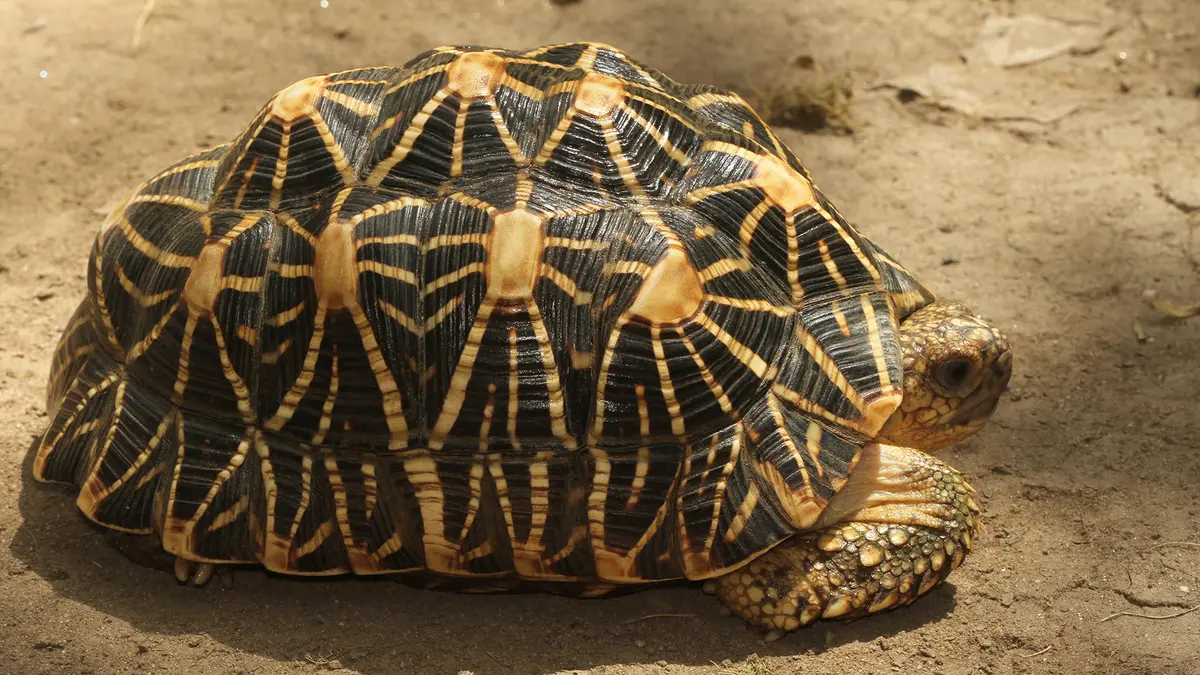
The Indian star tortoise (Geochelone elegans) is a medium‑sized terrestrial reptile found in the dry forests and scrublands of peninsular India, Sri Lanka and parts of Pakistan. It is named for the star‑shaped radiating patterns on its domed shell. Adults reach 20–30 centimetres in length and feed mainly on grasses, fruits and succulents. The species is listed as Vulnerable on the IUCN Red List due to habitat loss, wildfires and illegal collection for the pet trade.
Threats and conservation efforts
- Habitat degradation: Conversion of dry forests to agriculture and urban areas reduces available habitat. Frequent fires, often started by humans to clear land, destroy vegetation and food sources.
- Illegal trade: Indian star tortoises are smuggled in large numbers for the exotic pet market. Their attractive shells make them popular among collectors despite legal protection under India’s Wildlife (Protection) Act.
- Protected areas: Reserves like the Amrabad Tiger Reserve and the adjoining Nagarjunsagar–Srisailam Tiger Reserve provide refuge for star tortoises. Habitat management, fire control and anti‑poaching patrols are key conservation strategies.
- Public awareness: Rescue stories highlight the plight of tortoises and encourage local communities to report illegal trade and support conservation programmes.
Significance
- Indicator species: As slow‑moving herbivores dependent on specific habitats, star tortoises are indicators of the health of dry forest ecosystems. Their decline signals broader environmental degradation.
- Legal and ethical considerations: The rescue emphasises that handling or keeping wild tortoises without permission is illegal. Educating the public discourages the keeping of exotic pets and supports rehabilitation efforts.
- Community engagement: Involving local residents, veterinarians and conservationists strengthens networks that can respond quickly to wildlife emergencies and mitigate threats.
Conclusion
The Indian star tortoise remains under pressure from habitat loss and illicit trade. Protecting reserves like Amrabad and raising awareness among the public are crucial for ensuring that these unique reptiles continue to thrive in the wild.
Source: Deccan Chronicle