
Why in news?
In early June 2026 Venezuela’s acting President Delcy Rodríguez visited India with a delegation of ministers. She met Prime Minister Narendra Modi and other leaders to strengthen energy cooperation. Discussions focused on upstream and downstream projects, and Rodríguez toured Indian oil refineries. The visit came at a time when global oil supplies were disrupted by geopolitical tensions in West Asia.
Background
India resumed purchases of Venezuelan crude in early 2026 after sanctions were eased. According to government officials, India imported about 427,000 barrels per day in May, making it the second‑largest buyer of Venezuelan oil after the United States. India seeks to diversify its energy sources, while Venezuela views India as a “preferred partner” in the energy sector. The delegation’s visit included meetings with energy industry leaders in New Delhi and Mumbai and underscored the complementary interests of both countries.
Geography and natural features of Venezuela
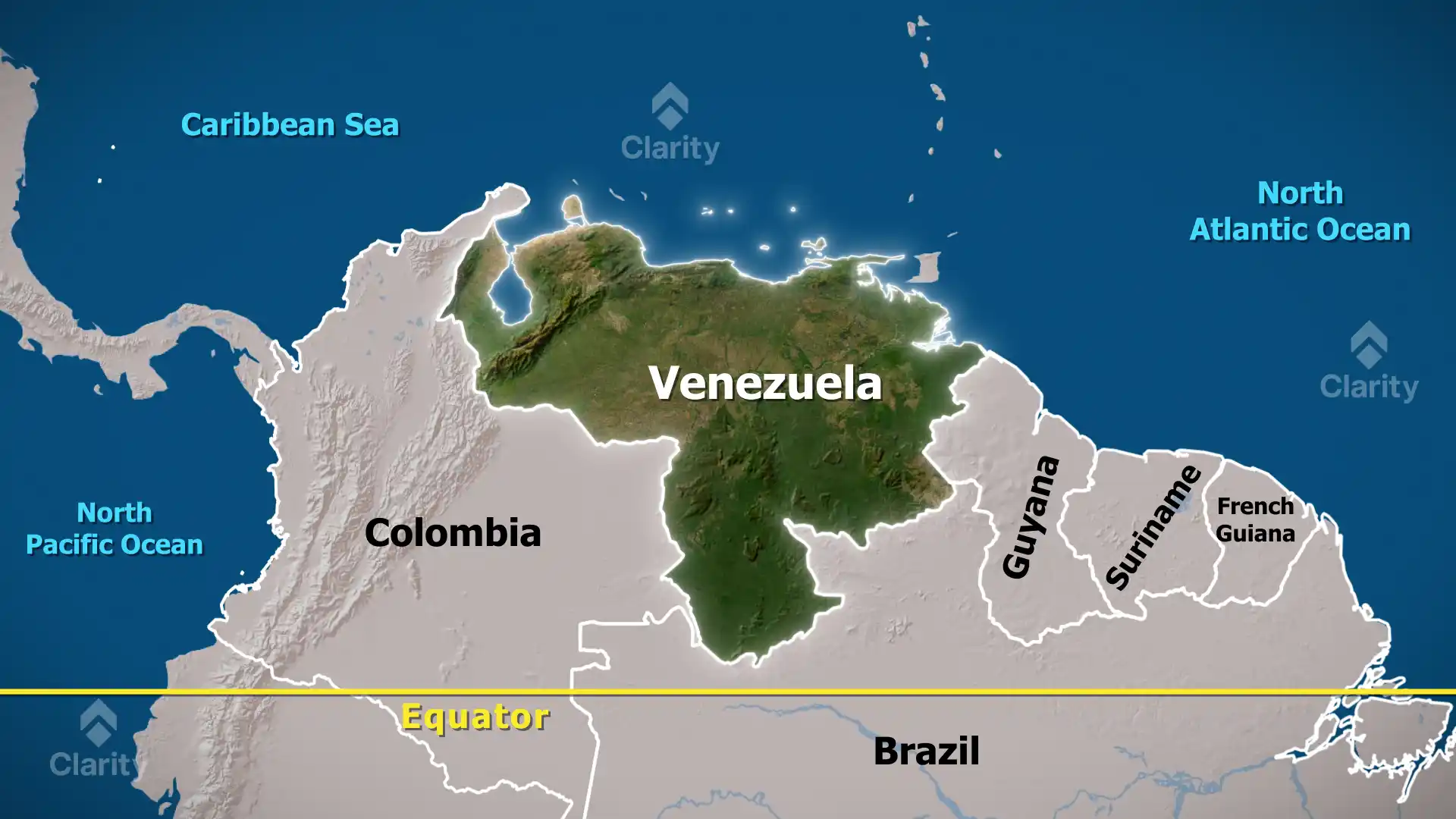
- Location and boundaries: Venezuela is a country located in northern South America. It borders the Caribbean Sea to the north, Guyana and the Atlantic Ocean to the east, Brazil to the south and Colombia to the west.
- Diverse landscapes: The Andes Mountains and Maracaibo Lowlands lie in the northwest, while the Guiana Highlands are situated in the southeast. The central region comprises the vast llanos – grassy plains that stretch from Colombia to the Orinoco River delta.
- Tropical climate: Most of Venezuela has a hot and humid tropical climate, although conditions are cooler in the highlands.
- Forests and rainfall: Around 54 percent of the country is covered by forest. Arid and semi‑arid areas in the north‑west receive 350–700 millimetres of rainfall annually with an average of about 515 millimetres.
- Natural resources: Venezuela possesses some of the world’s largest proven oil reserves, especially around Lake Maracaibo and the Orinoco Belt. The economy is highly dependent on oil revenues, which account for roughly 30 percent of Gross Domestic Product.
- Agriculture: Farming contributes about 5 percent of GDP and most agricultural production is concentrated in arid and semi‑arid areas. Agriculture is vulnerable to variations in rainfall.
Significance of the visit
- Diversifying energy sources: Engaging with Venezuela helps India reduce reliance on Middle Eastern oil and enhance energy security amid geopolitical uncertainties.
- Mutual benefit: Venezuela gains a reliable buyer for its crude while India leverages Venezuela’s heavy crude for its refineries. Collaboration could extend to downstream investments and technology sharing.
- Gateway to Latin America: Deepening ties with Venezuela could open opportunities for India in Latin American markets and strengthen South–South cooperation.
Conclusion
Venezuela’s visit highlights the strategic importance of energy cooperation and underlines the need for India to understand the geography and economic realities of its partners. Knowledge of Venezuela’s diverse landscapes and resource base is crucial for informed engagement.