Why in news?
Indonesia’s government has announced that, beginning 28 March 2026, social‑media accounts operated by children under 16 on high‑risk platforms such as TikTok, Facebook, Instagram and Roblox will be gradually deactivated. Officials say the measure aims to protect minors from cyberbullying, online fraud and addiction. The policy aligns Indonesia with a growing number of countries imposing age limits on social‑media use.
About Indonesia
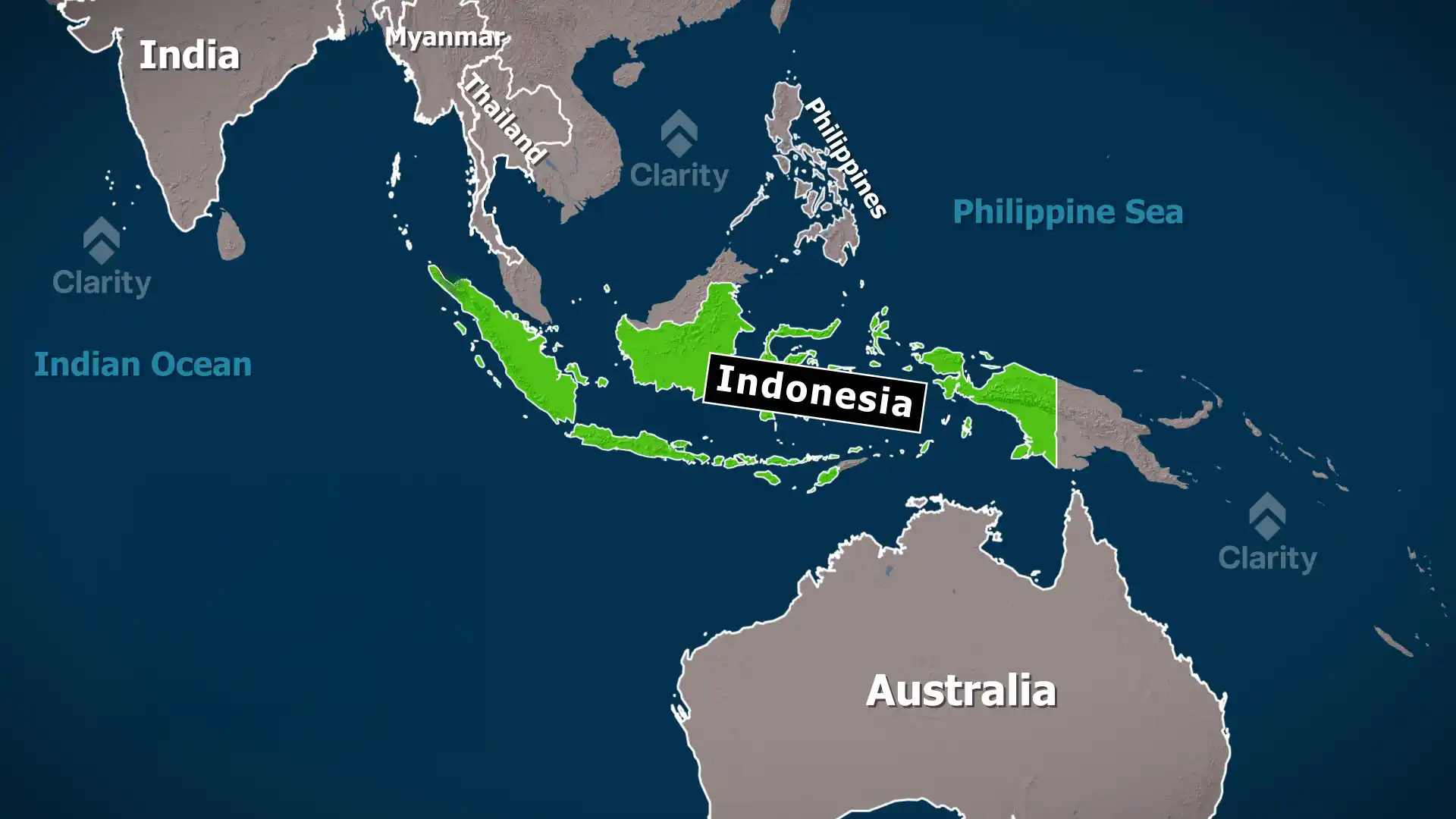
Indonesia is the world’s largest archipelagic nation, straddling the equator between the Indian and Pacific Oceans in Southeast Asia. With more than 17,000 islands and a population of over 270 million people, it is the fourth most populous country. The nation is ethnically and linguistically diverse, though Bahasa Indonesia is the official language and Islam is the predominant religion.
Geography and climate
- Location: Indonesia is located off the southeast Asian mainland. It shares land borders with Malaysia (on the island of Borneo), Papua New Guinea (on New Guinea) and Timor‑Leste (on Timor) and maritime borders with Singapore, the Philippines and Australia.
- Major islands: The principal islands are Sumatra, Java, Kalimantan (Indonesian Borneo), Sulawesi and the western half of New Guinea. Java is the most populous and houses the capital, Jakarta.
- Terrain: Much of Indonesia consists of volcanic mountain ranges that descend to coastal lowlands and alluvial swamps. Many islands lie along the Pacific Ring of Fire, making the country prone to earthquakes and volcanic eruptions.
- Climate: Indonesia has a tropical equatorial climate with two seasons: a wet season (roughly November to March) and a dry season (April to October). Temperatures are warm year‑round, averaging between 25 °C and 30 °C, with high humidity.
- Highest peak: Puncak Jaya (also called Carstensz Pyramid) in Central Papua rises to 4,884 m, making it the highest island peak in the world. Its glaciers have largely melted due to climate change.
Natural resources and economy
- Energy and minerals: Indonesia is a leading producer and exporter of natural gas and crude petroleum. It also has abundant reserves of coal, nickel, bauxite, tin, copper and gold. The mining sector is a major contributor to export earnings.
- Agriculture and forestry: Fertile soils and a favourable climate enable the cultivation of rice, coffee, cocoa, rubber, palm oil and spices. Indonesia’s rainforests are among the world’s largest but face pressures from logging and plantation expansion.
- Demographics: The population includes more than 300 ethnic groups. The majority religion is Islam, making Indonesia the world’s most populous Muslim‑majority country. Despite resource wealth, poverty persists in some regions, illustrating the “resource curse” phenomenon.
Social media restrictions
The Communications Minister Meutya Hafid said that children under 16 will have access to social‑media accounts delayed or deactivated on high‑risk platforms starting in late March 2026. The regulation reflects concerns about pornography, online fraud and social‑media addiction among minors. Indonesia follows countries like Australia and Spain in imposing age limits. Officials are still finalising details of the regulation, and the policy has raised debate about parental responsibility versus government oversight.