

Why in news?
More than 200 Indian school students visited the destroyer Imphal while it was berthed in Oman.
The reported visit
Asian News International reported the outreach event on 17 August. The ship was alongside at Port Sultan Qaboos in Muscat. Students toured the warship and interacted with its crew.
The visit presented naval life and India’s shipbuilding capabilities to young residents abroad. The report described an educational engagement, not a combat deployment or bilateral exercise. Its significance lies mainly in public diplomacy.
What is Indian Naval Ship Imphal?
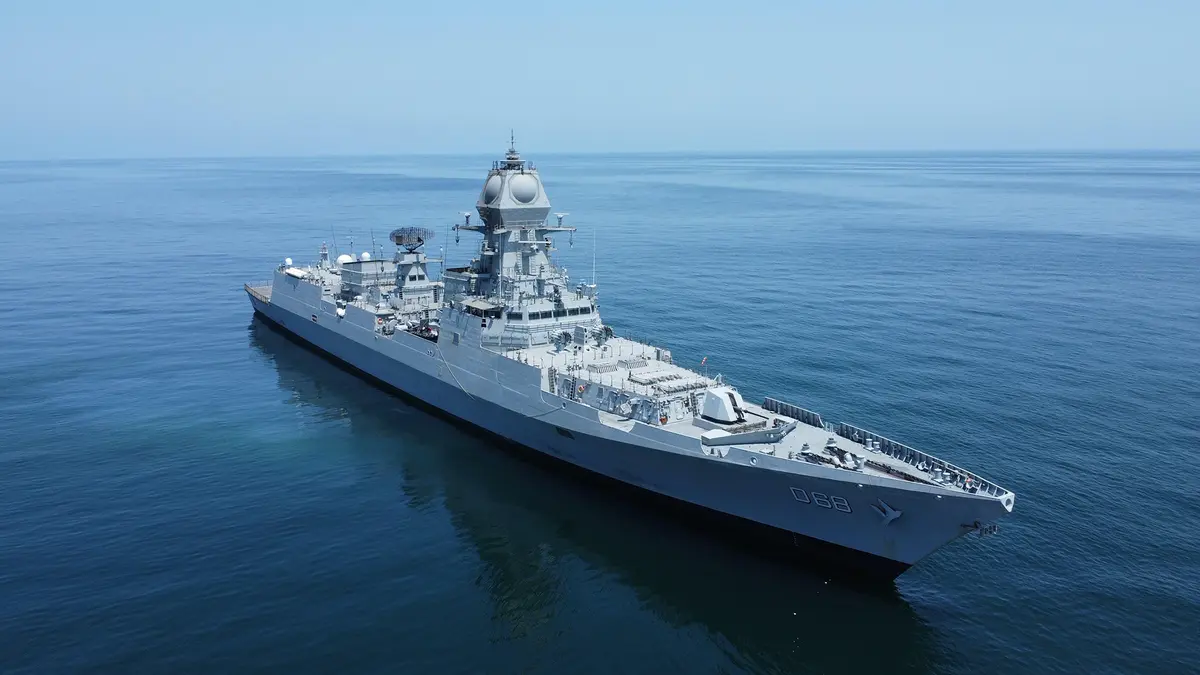
Indian Naval Ship (INS) Imphal is a stealth guided-missile destroyer. It was commissioned in Mumbai on 26 December 2023. It is the third of four Project 15B destroyers.
The class is also known as the Visakhapatnam class. The Navy’s Warship Design Bureau designed the vessel. Mazagon Dock Shipbuilders Limited constructed it in Mumbai.
The ship is 163 metres long and displaces about 7,400 tonnes. Its maximum speed exceeds 30 knots. Official commissioning material reported about 75 per cent indigenous content.
The vessel combines Indian systems with selected foreign equipment. Its weapons include BrahMos missiles and medium-range surface-to-air missiles. Torpedoes and anti-submarine rockets support underwater warfare.
Imphal was the first capital warship named after a north-eastern Indian city. The distinction should not be shortened to “first warship”.
Why the ship’s name matters
The name connects maritime power with India’s north-eastern identity. It also recalls Imphal’s wartime history.
Oman’s geographic importance
Muscat stands on Oman’s coast along the Gulf of Oman. The Arabian Sea opens immediately to its east and south-east. Oman occupies the south-eastern Arabian Peninsula.
It faces sea lanes connecting India with the Persian Gulf, Africa and Europe. The Musandam peninsula overlooks the Strait of Hormuz. That narrow passage links the Persian Gulf with the Gulf of Oman.
India and Oman are strategic partners and maritime neighbours. Defence contacts include ship visits, training and service-level exercises.
Why ship visits matter
A port call supports logistics and professional exchange. It also signals sustained presence without implying coercive action. Public tours add a civilian dimension to naval diplomacy.
They strengthen community ties among India’s large diaspora in Oman. For the Navy, indigenous warships visibly demonstrate industrial capability. Their true value still depends on maintenance, weapons integration and crew readiness.
A warship can serve diplomatic purposes
INS Imphal carries military capability. Its Muscat engagement used that platform for education, reassurance and bilateral contact.
Conclusion
The student visit was modest but meaningful. It joined diaspora outreach with India’s naval and shipbuilding story.