
Why in news?
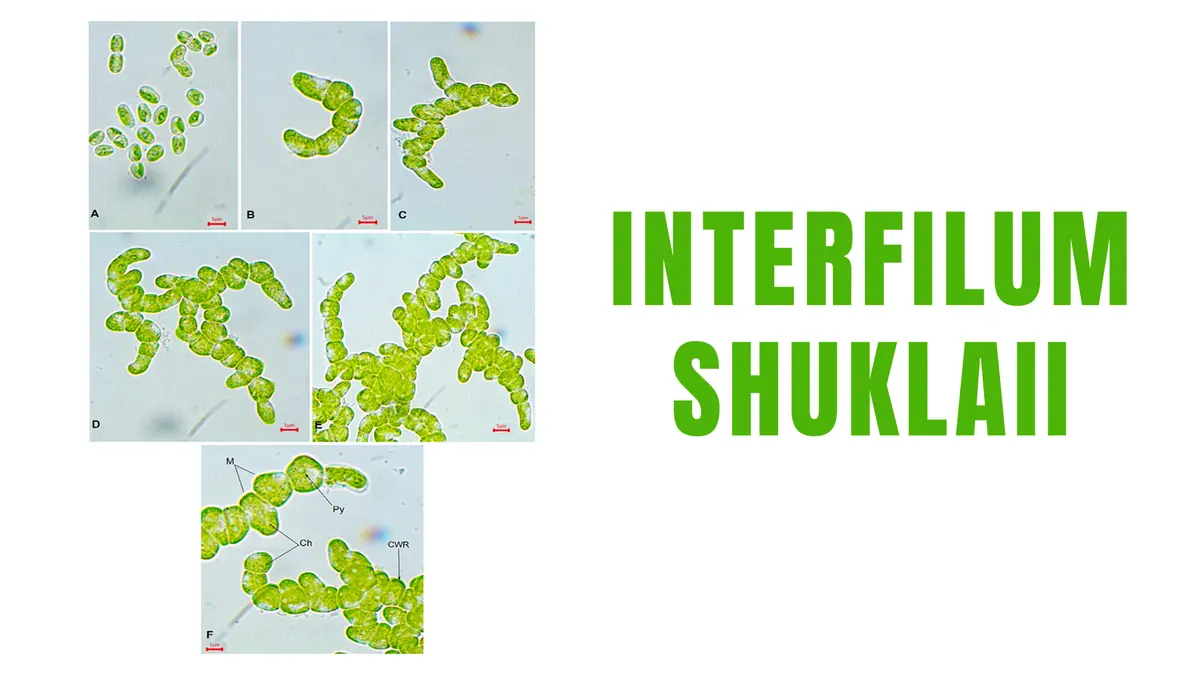
Researchers at Catholicate College in Kerala’s Western Ghats discovered a new species of green alga, Interfilum shuklaii, in 2026. The species is named after Group Captain Shubhanshu Shukla of the Indian Air Force. It is the first recorded member of the genus Interfilum from India and underscores the rich biodiversity of the Western Ghats.
Background
The genus Interfilum belongs to the family Klebsormidiaceae in the order Klebsormidiales, which forms part of the charophyte green algae. Charophytes are ancient relatives of land plants and are important for understanding how plants adapted to life on land. Species of Interfilum are usually unicellular or form small packets of cells. They possess a mucilage envelope that protects them from desiccation and harsh light. Some species can photosynthesise efficiently under low light and avoid photoinhibition under high light, showing remarkable physiological plasticity.
Discovery and features
The new alga was isolated from moist rock surfaces in the Western Ghats. Scientists observed that its cells are surrounded by a thick, non‑striated mucilage envelope. After cell division the remaining wall of the mother cell forms a dome‑shaped cap over the daughter cells—features that distinguish it from other Interfilum species. The researchers honoured Group Captain Shubhanshu Shukla by naming the species shuklaii, recognising his contributions to national defence.
Potential importance
- Biotechnology: Streptophyte algae such as Interfilum can fix carbon efficiently and tolerate extreme environments. They could be explored for biofertilisers, biofuel production and as life‑support organisms in closed habitats like spacecraft.
- Carbon sequestration: Algae capture atmospheric carbon dioxide during photosynthesis. Discovering new species improves our understanding of carbon sinks and their potential role in climate change mitigation.
- Biodiversity significance: Finding a new algal species emphasises the ecological value of the Western Ghats, a UNESCO World Heritage Site. Protecting such habitats is vital for conserving unknown and economically useful organisms.
Conclusion
The discovery of Interfilum shuklaii adds a new chapter to India’s botanical record. Its unique structure and resilience suggest applications in biotechnology and climate science. Continued exploration and conservation of microalgae in the Western Ghats could reveal more species with valuable properties.