

Why in news?
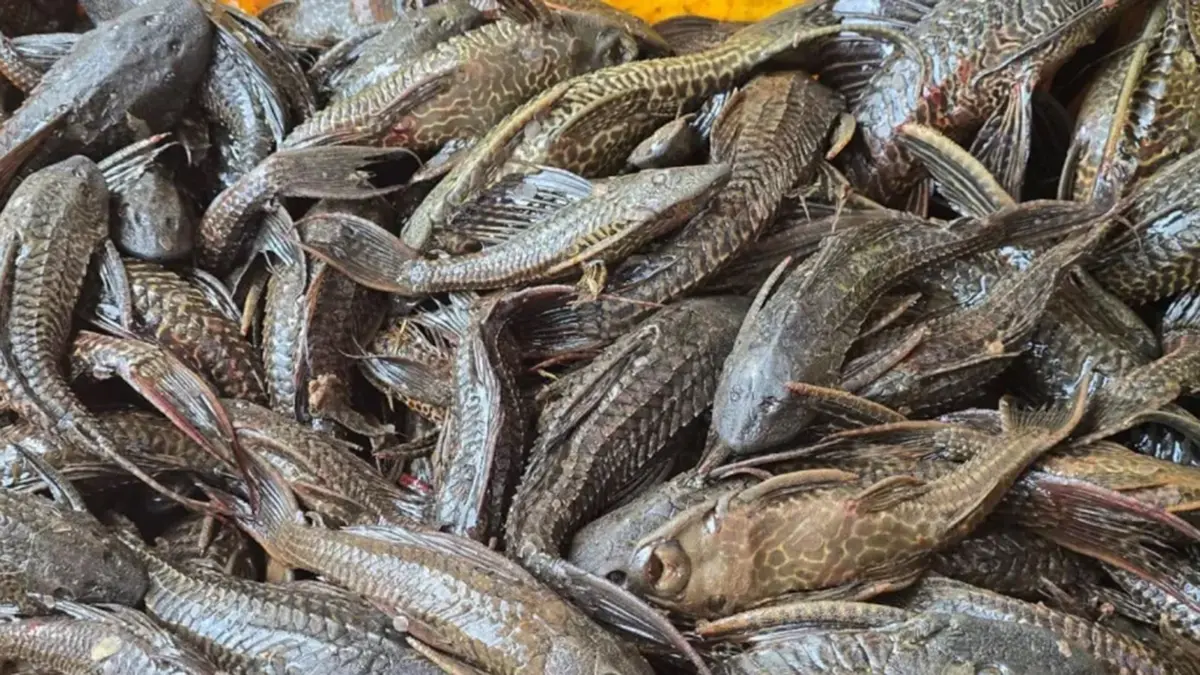
The Bombay Natural History Society reported large-scale removal of invasive suckermouth catfish from Ujani Reservoir. About 5,116 kilograms were collected between 1 and 25 May 2026.
What “suckermouth catfish” means
The name covers several armoured catfish in the family Loricariidae. Aquarium traders often call them plecos because they graze algae from hard surfaces. These fish are native to Central and South America. Releases from aquariums have established populations in many tropical and subtropical waters.
Their flattened mouths help them attach to rocks and other surfaces. Hard bony plates protect much of the body.
Identification to species can be difficult because the aquarium trade contains hybrids and similar taxa. Management reports therefore often use a broad common name.
The Ujani intervention
Ujani Reservoir sits on the Bhima River in Solapur district, Maharashtra. The Bhima forms part of the wider Krishna basin.
Its shallow wetland zones support fisheries, birds and local livelihoods. The Bombay Natural History Society began systematic market monitoring around Bhigwan.
The Society recorded fish brought from Bhigwan and Daund during May.
A community collection centre opened in April 2026. Fishers received an organised place for delivery, weighing and onward use in fishmeal.
An earlier February survey documented about 2,400 kilograms removed. The later figure shows substantial effort, but not the reservoir’s total population.
Why the invasion matters
Large non-native populations can compete with local bottom-feeding species; they may also change sediment and food-web processes. Some suckermouth catfish excavate riverbanks for nesting. Dense burrows can increase erosion in vulnerable banks.
Native fishers may find the species difficult to sell for food. High catches then occupy nets and handling time without equivalent income.
Ecological impact varies by species, density and habitat. Assertions about damage should therefore rest on local surveys, not foreign examples alone.
Why removal must continue
One intensive collection rarely eradicates an established fish. Survivors reproduce, while inaccessible areas continue supplying new individuals. Sustained incentives can keep fishing pressure high. Reliable catch records also reveal changes in size, distribution and seasonal abundance.
Prevention remains cheaper than long-term control. Aquarium owners need surrender options and clear warnings against release into lakes or drains.
Authorities should also regulate transport responsibly. Commercial use must not create incentives to breed or spread the invasive fish elsewhere.
Conclusion
Ujani’s programme links removal with data collection and fisher participation. Its success will depend on sustained effort, prevention and measured ecological recovery.