
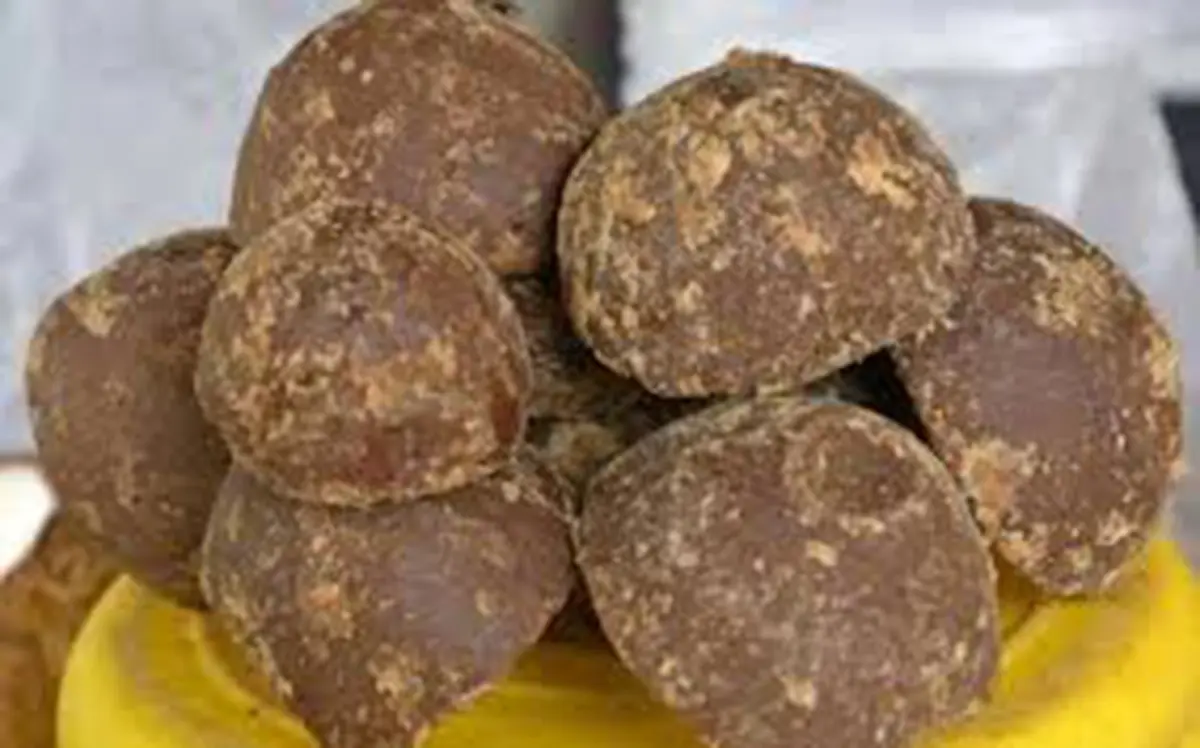
Why in News? A recent government backgrounder highlighted jaggery’s role in India’s rural economy, its nutritional benefits and measures being taken to promote exports. The article described jaggery as a “superfood sweetener” and emphasised its importance in traditional diets.
Background
Jaggery is a traditional unrefined sweetener produced by boiling sugarcane or palm sap until it solidifies. India has cultivated sugarcane since the Vedic period, and historical records show that knowledge of sugar processing travelled from India to China as early as the seventh century. The English word “sugar” derives from the Sanskrit term śarkarā, reflecting this heritage.
Production and Economic Significance
- Dominant producer: India accounts for more than 70 per cent of global jaggery production. Around 20–30 per cent of the country’s sugarcane harvest is diverted to jaggery and khandsari making, supporting approximately 2.5 million rural livelihoods.
- Major producing states: Uttar Pradesh contributes about 48 per cent of India’s jaggery output, followed by Maharashtra (about 24 per cent) and Karnataka (around 10 per cent). Other producers include Gujarat, Tamil Nadu, Bihar, Uttarakhand, Punjab, Madhya Pradesh and Haryana.
- Export growth: Government initiatives and improved quality standards have led to a more than 100 per cent increase in jaggery exports between 2015‑16 and 2024‑25. India’s jaggery is now exported to countries in Asia, the Middle East, Africa and beyond.
- Government support: Schemes such as the Pradhan Mantri Kisan Sampada Yojana (PMKSY), Production‑Linked Incentive Scheme for Food Processing Industries (PLISFPI), the PM Formalisation of Micro Food Processing Enterprises (PMFME), and the One District One Product programme provide credit, modern processing equipment and marketing support for jaggery clusters. Products certified under AGMARK gain access to premium markets.
Nutritional and Health Benefits
- Rich in micronutrients: Because it is not heavily refined, jaggery retains minerals such as calcium, magnesium, potassium and iron. It also contains trace vitamins like folic acid and B‑complex vitamins.
- Health benefits: Jaggery provides sustained energy due to its balanced mix of sucrose and invert sugars. Traditional medicine systems believe it helps detoxify the liver, improves digestion, relieves constipation and boosts haemoglobin. It is often recommended as a healthier alternative to white sugar.
- Social programmes: In Tamil Nadu’s nutrition intervention, jaggery is included in Sathumavu weaning food distributed to pregnant women and children, benefiting millions of families. Women’s cooperatives manage many of these jaggery processing units, providing livelihood opportunities.
Conclusion
Jaggery is more than a sweetener; it is part of India’s cultural heritage and an important source of income for rural communities. With its rich nutrient profile and growing global demand, jaggery offers a sustainable alternative to refined sugar. Responsible consumption and continued support for small producers will help this traditional product thrive in modern markets.
Sources: PIB

