
Why in news?
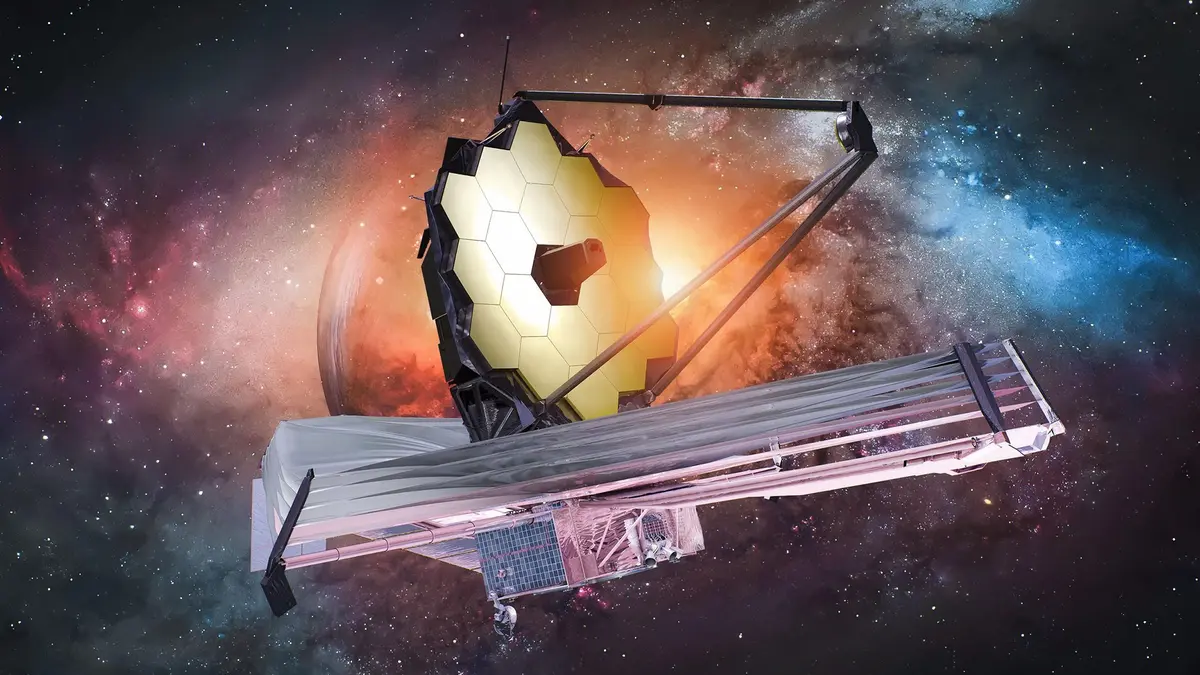
On 1 June 2026 NASA announced that the James Webb Space Telescope (JWST) had made the first direct detection of methane on an interstellar comet. During a December 2025 follow‑up observation of comet 3I/ATLAS, Webb’s mid‑infrared instrument identified methane gas in the comet’s coma. The finding hints at chemical processes in planetary systems beyond our own.
Background
JWST is a joint mission of NASA, the European Space Agency (ESA) and the Canadian Space Agency. Launched in December 2021, the telescope observes the universe in infrared light from its orbit around the Sun–Earth Lagrange point 2. One of its goals is to study comets and small bodies to understand planetary formation. 3I/ATLAS is the third known interstellar object to pass through our solar system, after 1I/ʻOumuamua and 2I/Borisov. Discovered in July 2025, it has a nucleus roughly 2.6 km wide and an extended cloud of gas and dust.
Findings
- Observational details: Webb’s Mid‑Infrared Instrument (MIRI) observed 3I/ATLAS on 15–16 December 2025 when the comet was about 329 million km from the Sun, and again on 27 December when it was 379 million km away. The MIRI medium resolution spectrometer collects spectra across a small field of view, enabling researchers to map the distribution of gases around the nucleus.
- Methane detection: The observations revealed strong signatures of methane (CH4) in the coma. Methane is highly volatile, sublimating quickly when exposed to heat. Its late appearance suggests it was buried beneath the comet’s surface and released only after the comet swung close to the Sun and heat penetrated deeper layers.
- Chemical oddities: Webb confirmed that 3I/ATLAS contains an unusually high proportion of carbon dioxide compared with water, unlike most solar system comets. The high methane relative to water indicates a formation environment very different from the cold outer regions where typical comets formed around our Sun.
- Distribution of gases: Images showed water vapour spreading far from the nucleus, probably released from icy grains in the coma. Carbon dioxide and methane were concentrated closer to the nucleus. This variation provides clues about the comet’s structure and evolution.
Significance
Detecting methane on an interstellar comet broadens our knowledge of the chemistry of small bodies that formed around other stars. It suggests that planetary systems elsewhere can preserve volatile ices beneath insulating layers and that their comets may exhibit compositions unlike those in our solar system. Such findings help astronomers refine models of planet formation and migration across the galaxy.
Conclusion
JWST’s observations of 3I/ATLAS demonstrate the power of modern telescopes to probe distant objects and uncover their chemical secrets. By comparing interstellar visitors with native comets, scientists can piece together how planetary systems form and evolve, providing context for our own solar system’s history.