

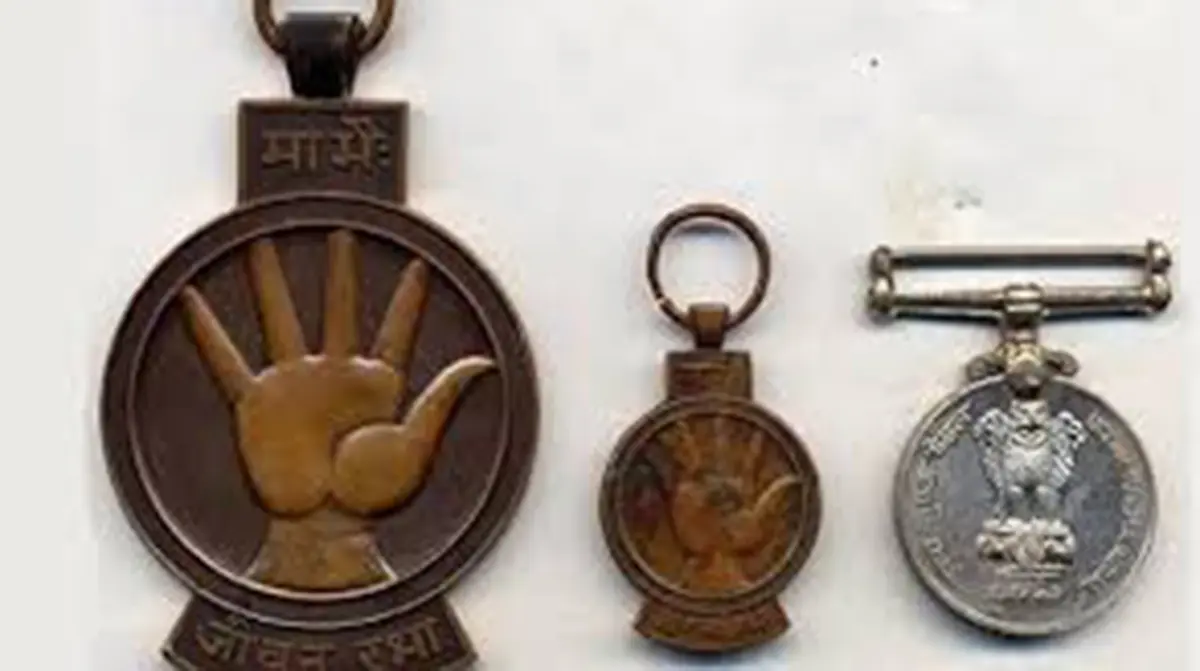
Why in news?
Union Minister Nitin Gadkari presented the lifesaving series' highest medal to twelve Silkyara rescuers. Their manual excavation had helped free forty-one trapped tunnel workers. The medal presentation occurred during August 2026. Presidential approval for these awards had already come during January 2025.
Background
A section of the Silkyara–Barkot tunnel collapsed on 12 November 2023. Falling debris blocked the planned escape route in Uttarkashi, Uttarakhand; forty-one construction workers remained trapped beyond the obstruction.
Rescuers maintained communication and supplied food, medicine and oxygen through narrow pipes. Several drilling plans encountered unstable ground or damaged equipment; a large auger eventually became trapped within the steel escape pipe.
Twelve skilled workers then entered the confined pipe and removed the final debris manually. They used small tools while colleagues moved spoil backwards; their work completed the passage after about twenty-six continuous hours.
Every trapped worker emerged safely on 28 November 2023; the rescue ended seventeen days after the collapse. Medical teams examined the workers immediately after evacuation.
Approval and presentation were separate events
The President approved the 2024 Jeevan Raksha Padak series on 25 January 2025. Forty-nine people received recognition across its three categories; the twelve Silkyara rescuers formed part of that approved list.
They received the Sarvottam Jeevan Raksha Padak, the highest category. Five other recipients in that category were honoured posthumously. Nine people received the Uttam medal, while twenty-three received the third category.
The August 2026 ceremony physically presented medals to the Silkyara team; it did not constitute a new presidential selection. This delay illustrates why approval dates and presentation dates must remain distinct.
The recipients included Vaqeel Hassan, Munna Qureshi, Ankur Kumar and Monu Kumar. Devendra, Mohmmed Rashid, Firoz Qureshi and Jatin Kashyap also served. Saurabh Kashyap, Mohmmed Irshad, Nasruddin and Naseem completed the team.
How the award system works
The Government instituted the lifesaving awards during 1961; they originated as an offshoot of the Ashoka Chakra gallantry series. Their purpose is humanitarian courage in saving human life.
Eligible situations include drowning, fire, electrocution, accidents, natural calamities and mine rescues. People from every walk of life can receive them. Awards can also be made posthumously.
- Sarvottam Jeevan Raksha Padak recognises conspicuous courage amid very great danger to the rescuer.
- Uttam Jeevan Raksha Padak recognises courage and promptitude amid great danger to the rescuer.
- Jeevan Raksha Padak covers prompt lifesaving courage involving grave bodily injury to the rescuer.
States, Union Territories and Union ministries normally submit nominations every year. An awards committee considers eligible acts within two calendar years; it then makes recommendations to the Prime Minister and President.
The President's approval completes the formal decision; the relevant state or ministry usually presents the decoration. Recipients do not necessarily receive the medal directly from the President.
Decoration and monetary allowance
Every decoration includes a medallion and formal certificate; the Union Home Minister signs the certificate. A small replica normally accompanies the full medal.
The Sarvottam category carries a one-time allowance of ₹2 lakh. Uttam carries ₹1.5 lakh, while Jeevan Raksha carries ₹1 lakh; the scheme provides no continuing railway or airfare concession.
Money is part of recognition but does not price the rescued lives. The award records exceptional personal risk and prompt action; public agencies must still investigate preventable failures behind an emergency.
Understanding the “rat miner” description
News reports commonly called the twelve workers “rat-hole miners.” Their relevant expertise was narrow, manual tunnelling in confined spaces. The label should not suggest approval of unlawful coal extraction.
Rat-hole coal mining has caused serious safety and environmental harm; courts and regulators treat that industry separately. Emergency use of manual tunnelling skill does not legalise the mining method.
The Silkyara operation combined machinery, engineering, medical support and manual work. Giving proper credit to the final team should not erase other responders. The successful rescue depended upon the entire coordinated system.
Conclusion
The medal recognises decisive courage at the most dangerous stage of the Silkyara rescue. Accurate reporting must preserve both the rescue chronology and award process.