

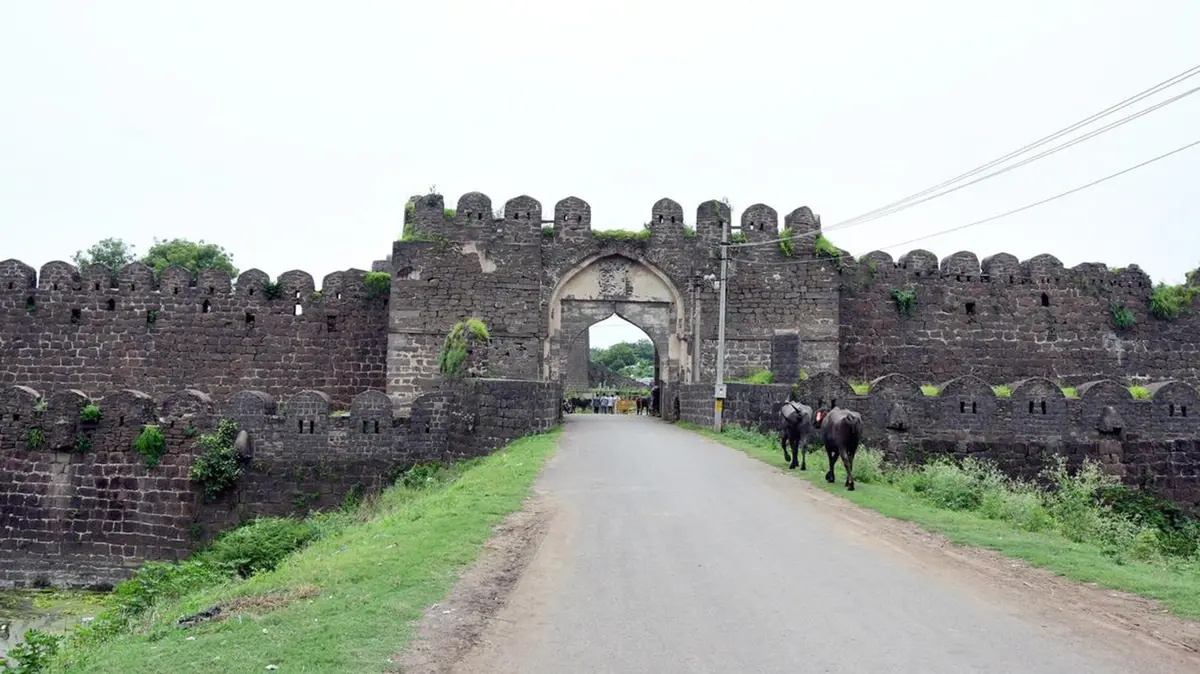
Why in news?
A reported request sought Union approval for conserving and rejuvenating Kalaburagi Fort. No independent final sanction was found by the review date.
History and built form
Kalaburagi was formerly called Gulbarga. The fort was strengthened by Alauddin Hasan Bahman Shah after the Bahmani Sultanate’s establishment. The fortified complex includes a wide moat, double defences and the Jama Masjid. Its structures show the Deccan’s layered political and architectural history.
The city served as the first Bahmani capital. Its surviving fabric therefore extends beyond a single dynasty or monument.
Geographic setting
Kalaburagi lies on the Deccan Plateau in northern Karnataka. The wider district adjoins Maharashtra and Telangana, besides neighbouring Karnataka districts. The Bhima and Krishna systems shape the regional landscape. Dry conditions and strong seasonal weather affect exposed masonry and visitor facilities.
The city connects heritage circuits across northern Karnataka and the adjoining Deccan. Conservation could strengthen that regional network without commercialising the monument.
What sound conservation requires
A request for funds is not project approval. Work should begin only after documentation, structural assessment and an agreed conservation plan.
Repairs must use compatible materials and retain historic evidence. Unverified reconstruction can erase original fabric while producing a falsely uniform appearance.
Drainage, vegetation control and visitor movement may matter more than cosmetic lighting. Archaeologists, architects and local communities should shape priorities together.
The project remains a proposal
No final sanction was established during this review. The request should not be described as an approved allocation or active contract.
Wider implications
Conservation can support education, skilled work and responsible tourism. Benefits will depend on maintenance, interpretation and links with nearby heritage.
Public reporting should disclose scope, tendering and progress. It should also distinguish structural conservation from visitor amenities and urban beautification.
Clear institutional responsibility is equally important. Archaeology, municipal services and tourism agencies must coordinate without weakening conservation authority.
A baseline survey should map cracks, moisture and earlier repairs. Photographs and material tests then allow later teams to judge whether interventions worked.
Visitor access needs paths, signs and safety without cutting historic fabric. Revenue arrangements should also reserve funds for routine maintenance.
Interpretation should present the fort’s layered Deccan history in several languages. Local guides and traditional craftspeople can contribute while receiving fair compensation. Such participation can strengthen local ownership and routine care long after the funded construction phase has ended.
Conclusion
Kalaburagi Fort deserves careful investment rather than hurried restoration. Approval should follow evidence, transparent costing and long-term maintenance planning.