
Why in news?
Kalamkari, a traditional art of Andhra Pradesh and Telangana, has gained renewed interest as heritage agencies promote crafts with Geographical Indication tags. The art form is celebrated for its natural dyes and storytelling motifs. Understanding its two distinct styles helps consumers appreciate authentic pieces and support artisans.
Background
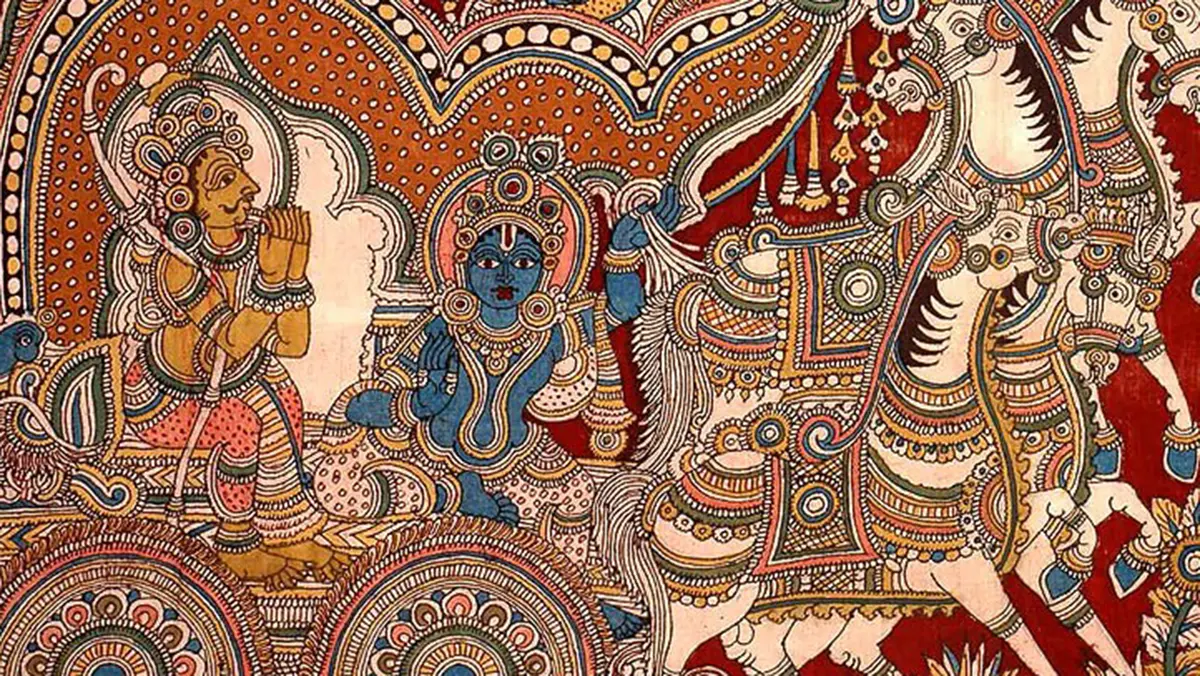
The term kalamkari comes from the Persian words kalam (pen) and kari (work), meaning “drawing with a pen.” The art originated more than 3,000 years ago as temple murals and sacred scrolls in the temple towns of Srikalahasti and Machilipatnam. Artists used natural dyes made from plants, roots and minerals to paint scenes from epics such as the Ramayana and Mahabharata on cotton cloth. During the Mughal era the craft flourished as an export art from India’s Coromandel Coast.
Two main styles
- Srikalahasti style: This style is entirely hand‑drawn using a bamboo or date‑palm pen dipped in natural dyes. Artists depict stories of gods and heroes from Hindu mythology. Temple hangings, narrative scrolls and ceremonial textiles are common products. The process is slow and highly detailed; a single piece may require more than 20 steps, including treating the fabric with cow dung and milk to fix the dyes.
- Machilipatnam (Pedana) style: Also called block‑printed kalamkari, this style uses hand‑carved wooden blocks to stamp designs onto cloth. Motifs include Persian floral patterns, vines, birds and Islamic architectural elements. The design is printed repeatedly along the fabric, making it suitable for sarees, dupattas, bed covers and curtains. Natural dyes derived from indigo, pomegranate rind and iron rust are applied between printing and mordanting stages.
Protection and recognition
- Geographical Indication tags: Both Srikalahasti and Machilipatnam kalamkari are protected under India’s Geographical Indications registry. Srikalahasti received its GI tag in 2005, and Machilipatnam followed in 2008. A GI tag certifies that only artisans from the designated area using documented processes may market their products under that name.
- Natural dyes and sustainability: Authentic kalamkari uses vegetable dyes and avoids synthetic chemicals. The colours are earthy reds, blues, yellows and greens produced from madder root, indigo and pomegranate. Each colour is applied separately, and the cloth is washed after each step.
- Motifs and symbolism: The Tree of Life is a popular motif symbolising the connection between heaven and earth. Peacocks, tigers, deer and divine figures often appear in kalamkari designs.
Conclusion
Kalamkari represents the synergy of art, culture and ecology. Its two styles show how a single craft can evolve from hand‑drawn devotional panels to block‑printed textiles while maintaining authenticity. Geographical Indication tags protect artisans and assure buyers of genuine, sustainable products. Supporting kalamkari encourages the survival of one of India’s oldest storytelling traditions.