

Why in news?
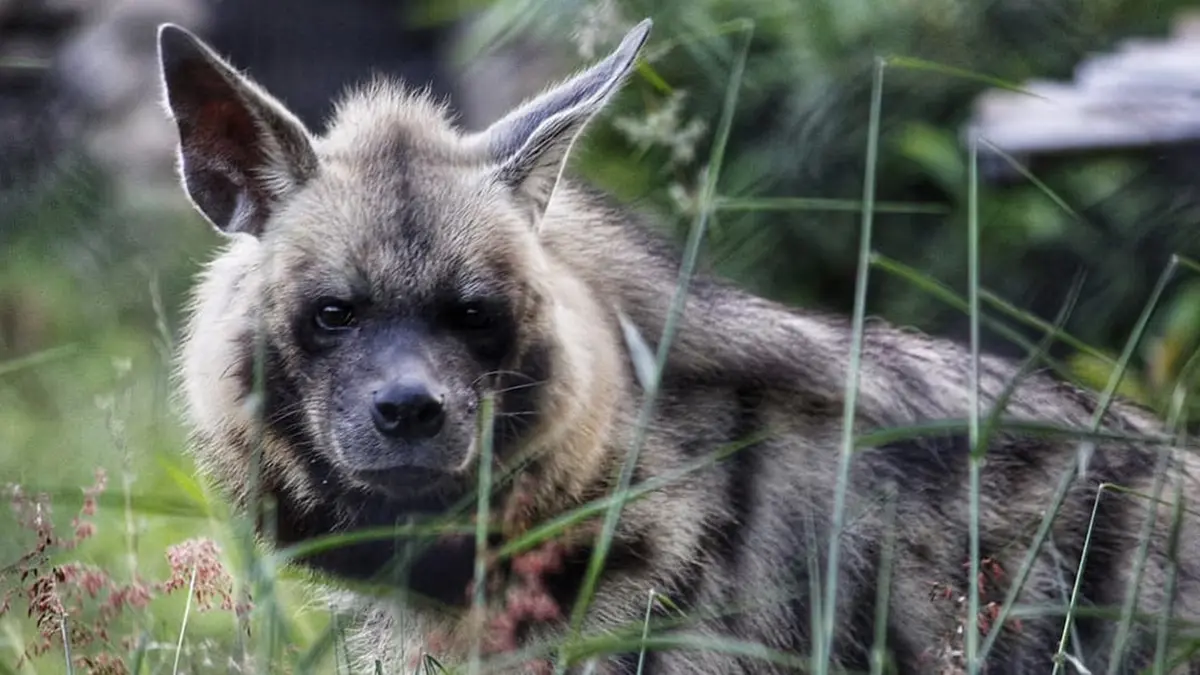
Foresters at the Kali Tiger Reserve in Karnataka recently sighted and photographed a striped hyena in the park’s safari zone. The animal, locally called katte kiruba, is seldom seen in the moist forests of the Western Ghats, making this record noteworthy.
Background
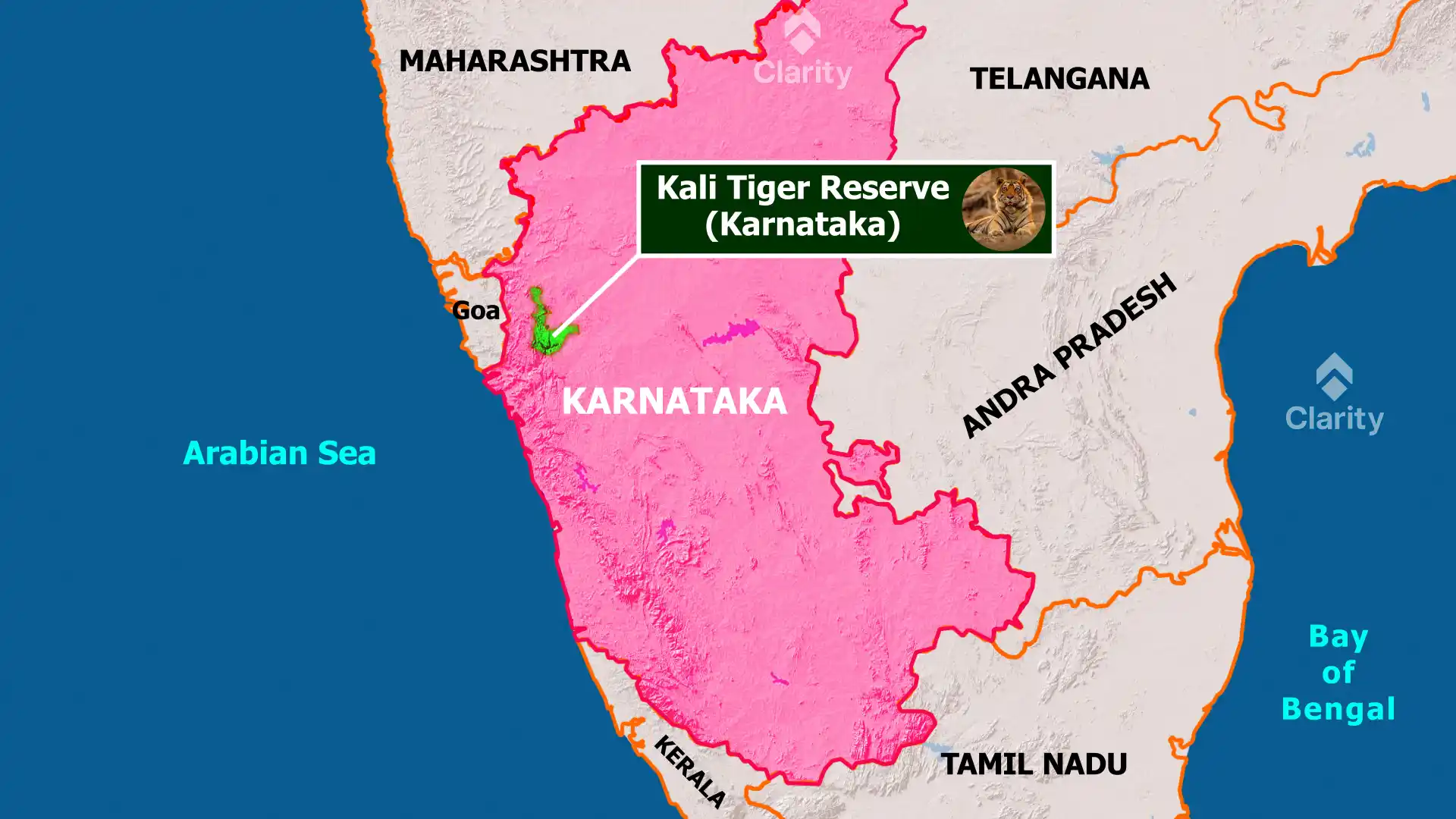
The Kali Tiger Reserve, formerly known as the Dandeli–Anshi Tiger Reserve, lies in Uttara Kannada district of Karnataka. It was created by combining the Anshi National Park and the Dandeli Wildlife Sanctuary and renamed in 2015 to highlight the importance of the Kali River that flows through it. The reserve covers roughly 1,300 sq km (though some sources cite about 834 sq km) in the Western Ghats. Elevations range from 27 m to over 1,000 m above sea level, encompassing semi‑evergreen, moist deciduous and montane rain forests interspersed with bamboo and grasslands.
Ecology
- Flora: Trees such as teak, bintangur, Malabar tamarind, blackboard tree, cinnamon and bamboo thrive here. The area lies within endangered North Western Ghats montane rain forest and moist deciduous forest ecoregions.
- Fauna: The reserve supports Bengal tigers, black panthers, Indian elephants, leopards, dhole (wild dogs), gaur (Indian bison), sloth bears, sambar, spotted deer and primates like bonnet macaques and grey langurs. Reptiles include king cobras and pythons. Over 200 bird species are recorded, including the Great Indian Hornbill, Malabar pied hornbill and Sri Lanka frogmouth.
- Hydrology: The Kali River, originating in the Western Ghats, flows through the park and provides water for wildlife and people in Uttara Kannada. Several hydroelectric dams and a nuclear power plant are located along its course.
Striped hyena sighting
The striped hyena (Hyaena hyaena) is typically associated with arid and semi‑arid landscapes of north and central India. Classified as Near Threatened by the IUCN, it is a nocturnal scavenger that helps clean ecosystems by feeding on carrion. Its presence in the dense forests of Kali suggests either a wider ecological tolerance than previously understood or movement from nearby dry zones. Park authorities have installed camera traps to monitor the animal’s movements and ensure it is not threatened by vehicular traffic in the safari zone.
Conclusion
The unexpected appearance of a striped hyena underscores the ecological richness of the Kali Tiger Reserve. Protecting such habitats not only safeguards flagship species like tigers but also supports a wide array of lesser‑known animals. Continued vigilance and habitat connectivity are essential to conserving this biodiversity hotspot.
Source: The New Indian Express · Kali Tiger Reserve