
Why in news?
On 30 March 2026 Zimbabwe announced plans to install a 500 MW floating solar plant on Lake Kariba. The project, led by Green Hybrid Power in partnership with the Intensive Energy User Group, aims to augment electricity supply, revive the fishing industry and advance Zimbabwe’s clean‑energy transition.
Background
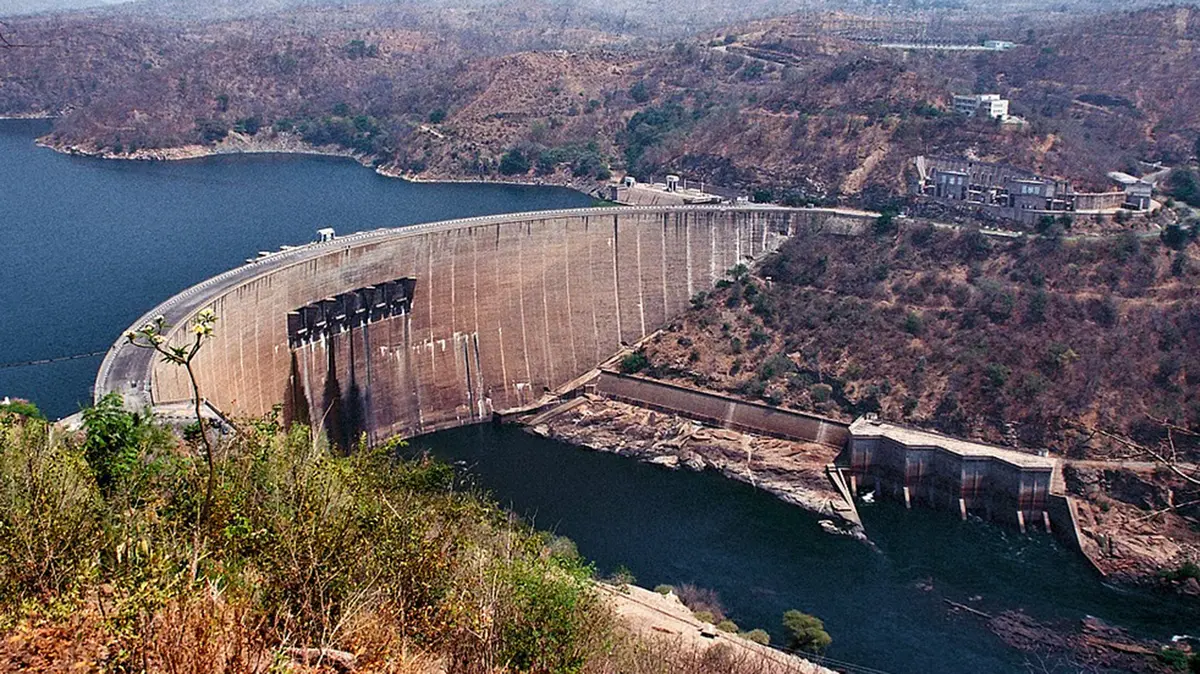
Kariba Dam is a double‑curvature concrete arch dam on the Zambezi River at the Kariba Gorge, straddling the border between Zambia and Zimbabwe. Completed in 1959, the 128‑metre‑high dam created Lake Kariba, the world’s largest human‑made lake by volume, and its hydroelectric station originally had an installed capacity of about 1,050 MW. The dam remains vital for both countries’ electricity supply, but prolonged droughts and reduced inflows have lowered generation output in recent years.
About the floating solar project
- Additional capacity: A 500 MW floating solar plant will use the lake’s surface to generate renewable energy without competing for land, boosting power supply for industries and households.
- Hybrid system: Solar panels floating on the reservoir complement hydropower by generating electricity during the day while allowing the dam to operate primarily at night, smoothing output and maximising existing transmission infrastructure.
- Economic benefits: The project includes an aquaculture component that breeds fish beneath the panels, reviving the fishing industry, creating jobs and generating carbon credits.
- Climate resilience: Floating solar panels reduce evaporation from the reservoir and increase panel efficiency through water cooling—advantages for drought‑prone regions.
Key facts about the Zambezi River
- Length and course: Africa’s fourth longest river flows roughly 3,421 kilometres from Angola’s highlands through Zambia, Namibia, Botswana, Zimbabwe and Mozambique before emptying into the Indian Ocean.
- Waterfalls: Home to spectacular falls such as Victoria Falls and Chavuma Falls.
- Dams: Hosts major hydroelectric dams, including Kariba and Mozambique’s Cahora Bassa.
- Tributaries: The main tributaries include the Shire, Kafue, Luangwa, Kabompo and Cuando rivers.
Significance
- Energy security: The floating solar plant diversifies Zimbabwe’s energy mix, reduces reliance on hydropower during droughts and decreases fuel imports.
- Sustainable development: Integrating aquaculture and clean energy promotes economic diversification and aligns with climate commitments.
- Regional cooperation: Demonstrates innovative approaches for shared river basins and could inspire similar initiatives elsewhere in Africa.
Conclusion
By harnessing both sun and water, the Kariba floating solar project shows how renewable technologies can enhance energy security and ecological resilience. Combined with the dam’s hydroelectric legacy, it underscores the importance of adaptive infrastructure in the face of climate variability.
Source: Down To Earth