
Why in news?
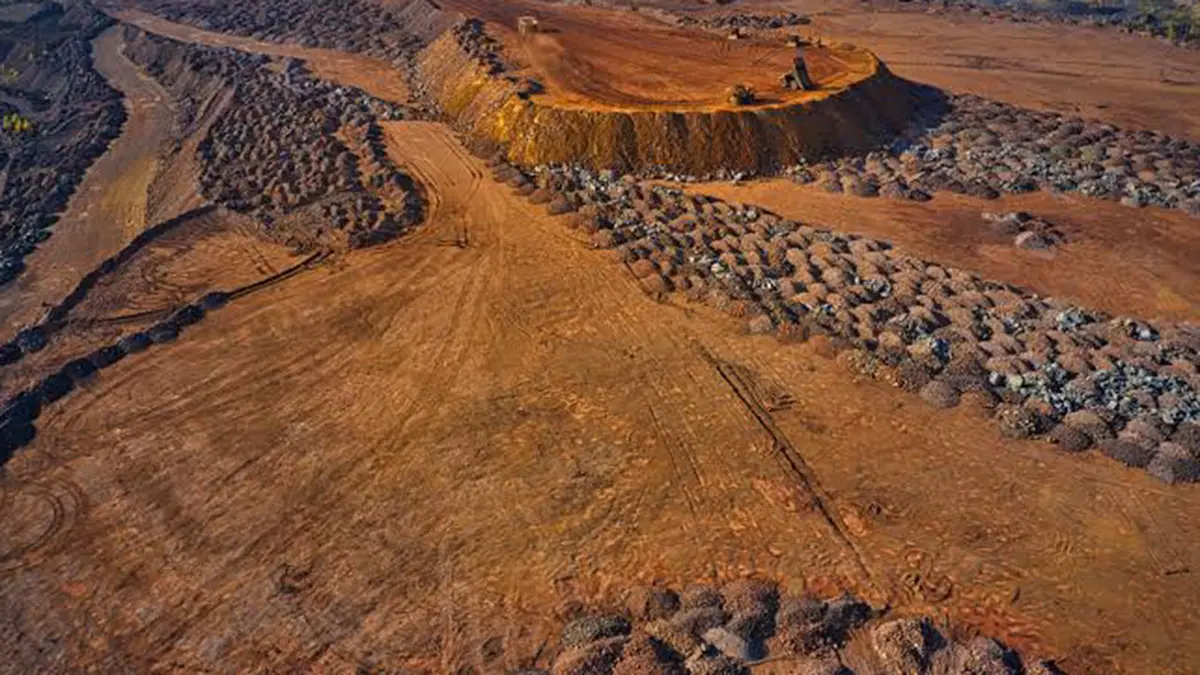
Major industrial groups have shown interest in Odisha's Karlapat bauxite block. The large greenfield deposit is currently being offered through auction. Its high alumina and low silica improve industrial value. Environmental and legal concerns had delayed an earlier auction attempt.
Background
Bauxite is the principal commercial aluminium ore, containing several aluminium-bearing minerals and impurities.
The ore forms through intense tropical weathering, which removes soluble materials and concentrates aluminium minerals.
Aluminium is Earth's most abundant crustal metal and the third most abundant crustal element.
Oxygen and silicon are more abundant, while silica is an oxide of elemental silicon.
Accuracy point: Aluminium is the most abundant crustal metal. Describing it as second after “silica materials” mixes elements and compounds.
Where is the Karlapat block?
The Karlapat-Pollingpadar deposit lies across a 9.6-square-kilometre plateau in Odisha's Kalahandi district.
Its bauxite layer averages nearly 12 metres, with an estimated 207-million-tonne geological resource.
The estimate includes 153 million proved tonnes and 54 million possible tonnes.
The ore contains about 45.2 per cent alumina and relatively low silica.
The deposit is greenfield because commercial mining has not begun there.
Do not confuse: A geological resource estimate is not annual production. It also does not mean the entire quantity is recoverable.
Why are companies interested?
Aluminium producers need reliable bauxite supplies for long-lived refineries and smelters.
Karlapat is among Odisha's largest untapped deposits and could support production for many years.
Low reactive silica is valuable because such silica consumes caustic soda during alumina refining.
Adani, Reliance, Hindalco, Vedanta, Powercem and Coal India reportedly examined the tender.
However, purchasing tender documents does not create a valid bid. It certainly does not make any company the winner.
How does bauxite become aluminium?
- Mining removes bauxite ore from deposits near or beneath the surface.
- The Bayer process dissolves aluminium minerals using hot caustic soda.
- Purification and heating produce alumina, which is aluminium oxide.
- The Hall-Héroult process then passes electricity through molten alumina mixtures.
- Electrolysis separates metallic aluminium at the smelter's cathode.
Alumina refining and aluminium smelting are separate stages, with smelting requiring enormous electricity.
Light, corrosion-resistant and recyclable aluminium serves transport, construction, power, packaging and renewable-energy systems.
Why is Odisha important?
Odisha held about 2,057 million tonnes of bauxite resources on 1 April 2020.
This total included 410 million tonnes of reserves and 1,647 million tonnes of other resources.
The state accounted for about 41 per cent of India's bauxite resources.
| Major Odisha deposit | Reported resource |
|---|---|
| Panchpatmali | 314 million tonnes |
| Sijimali | 245 million tonnes |
| Karlapat-Pollingpadar | 207 million tonnes |
| Gandhamardan | 207 million tonnes |
| Baphilimali | 195 million tonnes |
The Indian Bureau of Mines reported these state totals in its 2024 minerals yearbook.
What is the auction history?
Odisha's July 2021 tender stalled after environmental and legal petitions reached the High Court.
The state issued a fresh May 2026 tender under prescribed mineral auction rules.
An auction award cannot authorise extraction without applicable statutory clearances and approved mining plans.
What environmental questions arise?
The deposit lies near Karlapat Wildlife Sanctuary, creating possible risks for forests, water and wildlife movement.
Open-cast extraction removes vegetation and topsoil, while roads and heavy vehicles can fragment habitats.
Alumina refining produces alkaline waste called red mud. Safe storage is essential to prevent soil and water contamination.
Local communities may depend upon forests and water sources. Their legal rights and livelihood concerns require careful assessment.
Conclusion
Karlapat offers major mineral value, but mining decisions must balance industry, ecology and community rights.