

Why in news?
Images circulated in late 2025 showing hammerhead and silky sharks swimming inside the crater of the Kavachi submarine volcano in the Solomon Islands. This extraordinary footage rekindled interest in the site, which had entered a new eruptive phase in 2021 and remains one of the most active underwater volcanoes in the Pacific.
Background
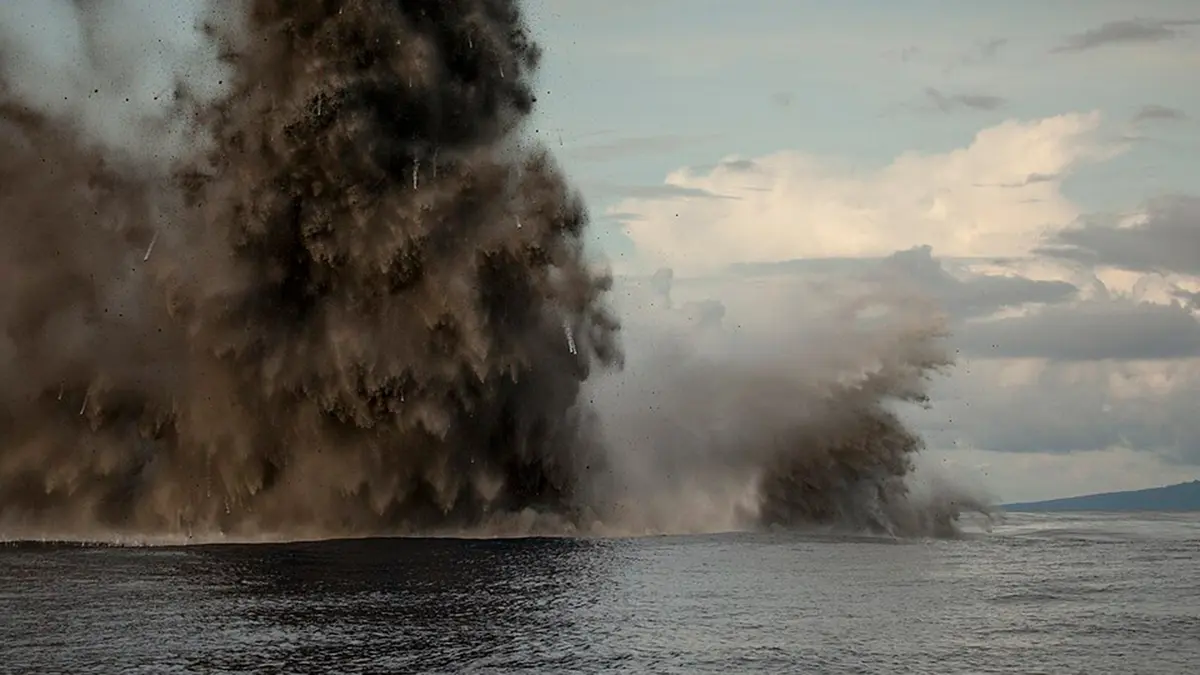
Kavachi is an underwater stratovolcano located about 24 km south of Vangunu Island in the western Solomon Islands. Formed at the convergent boundary where the Pacific Plate subducts beneath the Solomon Plate, the volcano rises more than 1,200 m from the seafloor. Its summit lies only about 20 m below sea level, allowing eruptions to churn discoloured plumes of water visible from aircraft and satellites.
Features and eruption history
- Frequent eruptions: Kavachi has erupted at least 39 times since 1939. Eruptions involve interaction between magma and seawater, producing explosive phreatomagmatic blasts that eject ash and create plumes of steam and hot water.
- Satellite observations: The NASA Earth Observatory has documented discoloured plumes emanating from the volcano, indicating ongoing activity. Water colour changes reflect varying amounts of volcanic material and dissolved gases.
- Marine life: During a lull in 2015, scientists deployed cameras inside the crater and were astonished to record schools of silky sharks, scalloped hammerheads and other fish living amid warm, acidic waters.
How marine life survives
The presence of large predators in such an extreme environment puzzled researchers. The sharks may be drawn by nutrients released from volcanic vents, and their ability to sense electric fields could help them avoid eruptive bursts. These animals demonstrate remarkable adaptability to heat, acidity and low light.
Significance
- Kavachi offers a rare window into how life can thrive in extreme conditions. Studying its microbial and vertebrate inhabitants could provide insights into resilience and evolution.
- Monitoring submarine volcanoes is crucial for maritime safety, as eruptions can generate local tsunamis and discoloured plumes that affect shipping routes.
- Understanding subduction‑zone volcanism aids in hazard preparedness for Pacific island communities.