
Why in news?
Kaziranga National Park authorities in Assam released their first scientific assessment of the greater hog badger. Using camera traps, researchers estimate that at least fifty‑five hog badgers inhabit the park. This is an encouraging sign for a species listed as Vulnerable.
Background
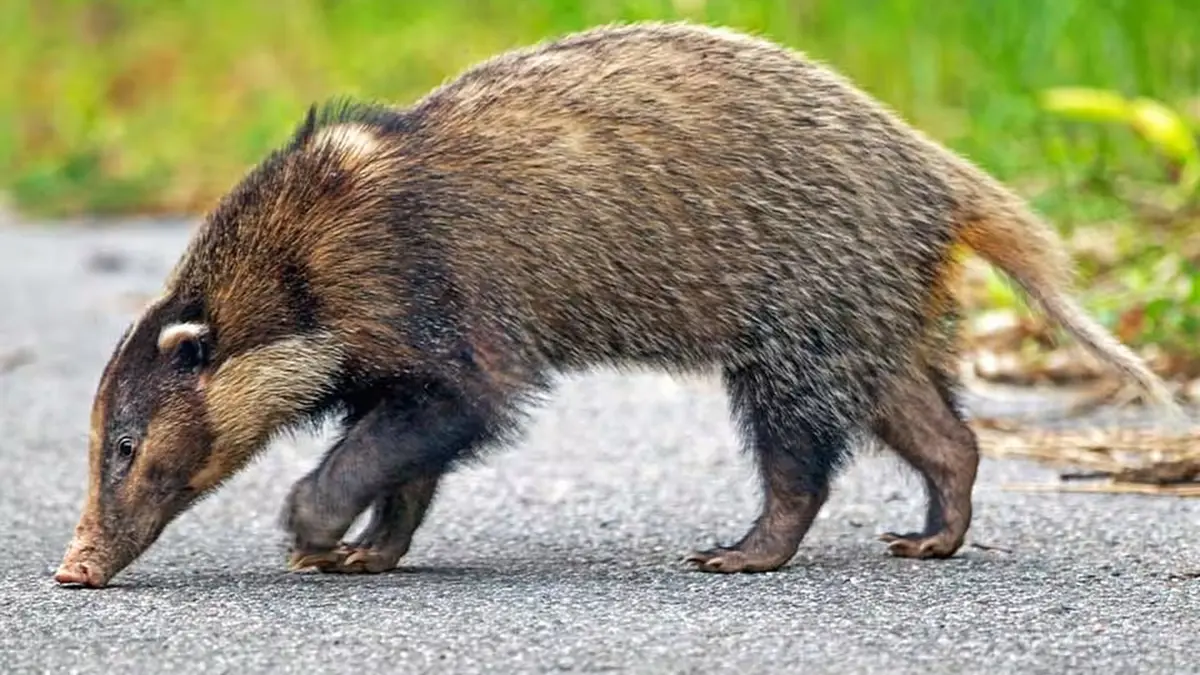
The greater hog badger (Arctonyx collaris) is one of the largest members of the weasel family. It has a stocky build, coarse brown hair, a white throat and two black stripes on a white face. The pink, pig‑like snout and strong claws help it root in the soil for food. Adults measure about 55–70 centimetres and weigh 7–14 kilograms.
Hog badgers occur in forests and grasslands across north‑east India, Bangladesh, Indochina and southern China. They are omnivores that feed on earthworms, insects, fruits and small vertebrates. They are active both day and night and spend much time digging. Hunting and habitat loss have caused populations to decline, leading the International Union for Conservation of Nature (IUCN) to list the species as Vulnerable. In India the species is protected under Schedule I of the Wildlife (Protection) Act.
Key points
- The camera‑trap study recorded at least fifty‑five hog badgers in Kaziranga, suggesting a viable population.
- Hog badgers play an ecological role by turning over soil and dispersing seeds through their foraging.
- They are solitary animals and occupy burrows in the ground, making them difficult to observe.
- Poaching and habitat fragmentation remain threats, so continued monitoring and protection are vital.
- Kaziranga’s report underscores the importance of camera‑trap surveys for studying secretive wildlife.
Conclusion
The discovery of a healthy hog badger population in Kaziranga is a positive conservation story. Protecting their forest habitats and curbing hunting will help ensure that this little‑known species continues to thrive.