

Why in news?
India and Canada signed a Joint Statement on Energy Cooperation on the sidelines of the India Energy Week 2026 held in Goa. The accord relaunched high‑level energy dialogue between the two countries and highlighted collaboration in conventional and clean energy sectors. Canada’s participation reflects its ambition to become a major global supplier of LNG, LPG and crude oil, while India seeks to diversify its energy sources to meet growing demand.
Background
Canada is the world’s second‑largest country by area and sits in northern North America. A former British and French colony, it became a self‑governing Dominion in 1867 and gradually assumed full sovereignty. Canada shares the world’s longest land border with the United States and enjoys abundant natural resources, contributing to its high standard of living. Relations with India span trade, energy and diaspora ties; the latest cooperation builds on discussions held at the G7 Summit in 2025.
Geographical profile
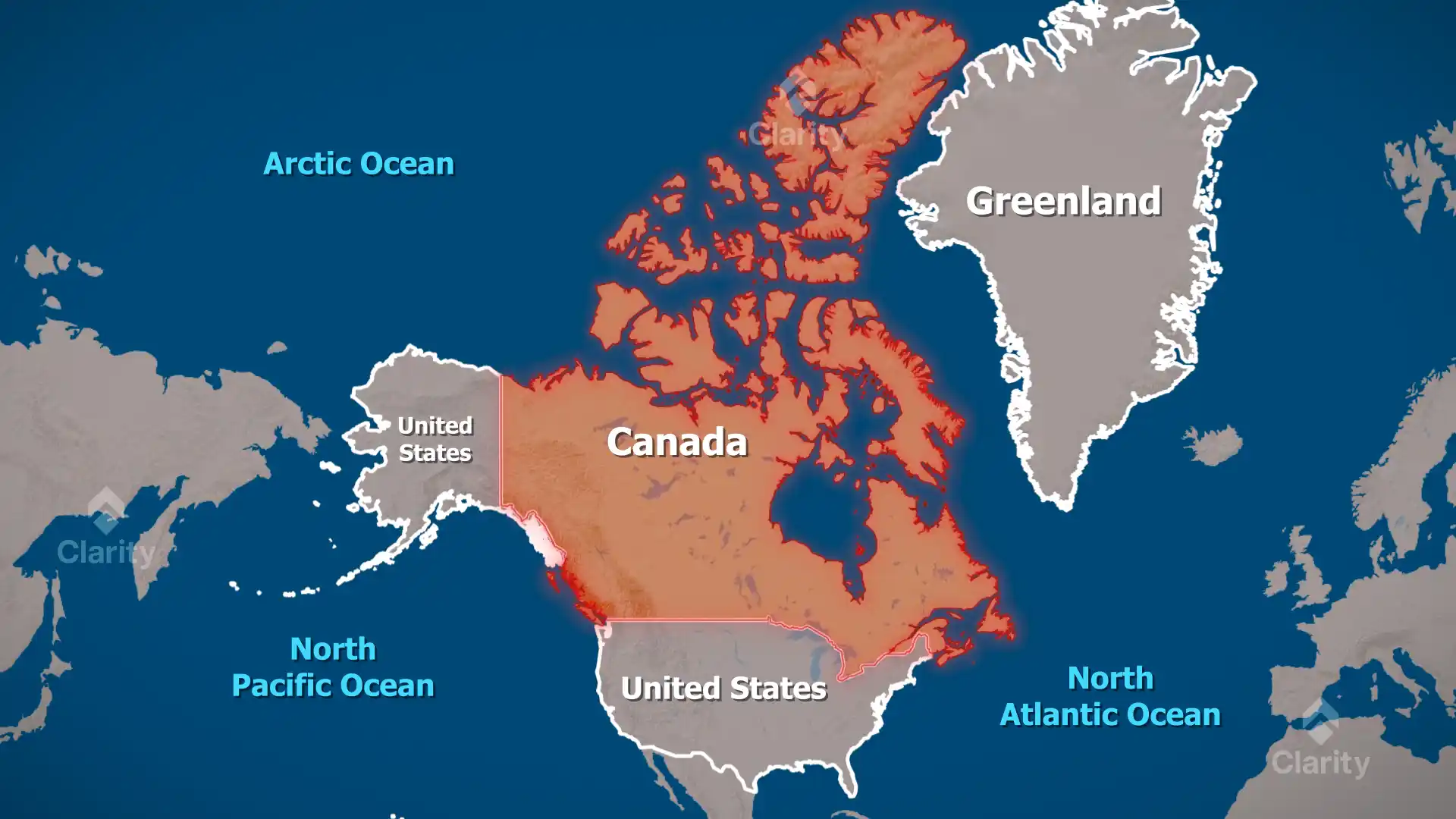
- Location: Canada stretches from the Atlantic Ocean in the east to the Pacific Ocean in the west and up to the Arctic Ocean in the north. It also shares maritime boundaries with Greenland and the French islands of Saint Pierre and Miquelon.
- Size: At 9.98 million km², it is the second‑largest country globally after Russia.
- Neighbours: It borders Alaska to the northwest and twelve contiguous U.S. states to the south. The Canada–U.S. border is the world’s longest bi‑national land boundary.
- Capital: Ottawa is the federal capital and hosts Parliament and national institutions.
- Climate zones: Canada experiences seven climatic regions — Arctic, Sub‑Arctic, Prairie, Great Lakes, Cordilleran and the East and West Coasts — resulting in diverse weather patterns.
- Major landforms: Important mountain ranges include the Rocky Mountains, the St Elias Mountains and the Laurentian Mountains. Major rivers such as the Mackenzie, Yukon and Saint Lawrence traverse vast distances. The Great Lakes — Superior, Michigan, Huron, Ontario and Erie — form a natural boundary with the U.S.; among them, only Lake Michigan lies entirely within the United States.
- Natural resources: Canada possesses rich deposits of bauxite, iron ore, nickel, zinc, copper, gold, uranium, rare earth elements, potash and diamonds. Vast forests and freshwater reserves support forestry and hydropower industries.
Economic and cultural notes
- Canada’s economy relies on natural resources, manufacturing and services. Key exports include energy products, minerals, timber and agricultural goods.
- The country is bilingual at the federal level — English and French are official languages. Multicultural policies encourage cultural diversity.
- Approximately one million people of Indian origin live in Canada, forming one of its largest diaspora communities.
Source: DD News