

Why in news?
Iran continues to feature prominently in international news owing to ongoing protests, nuclear negotiations and regional tensions. For examination purposes it is useful to know essential facts about the country’s geography, history, governance and economy.
Geography and population
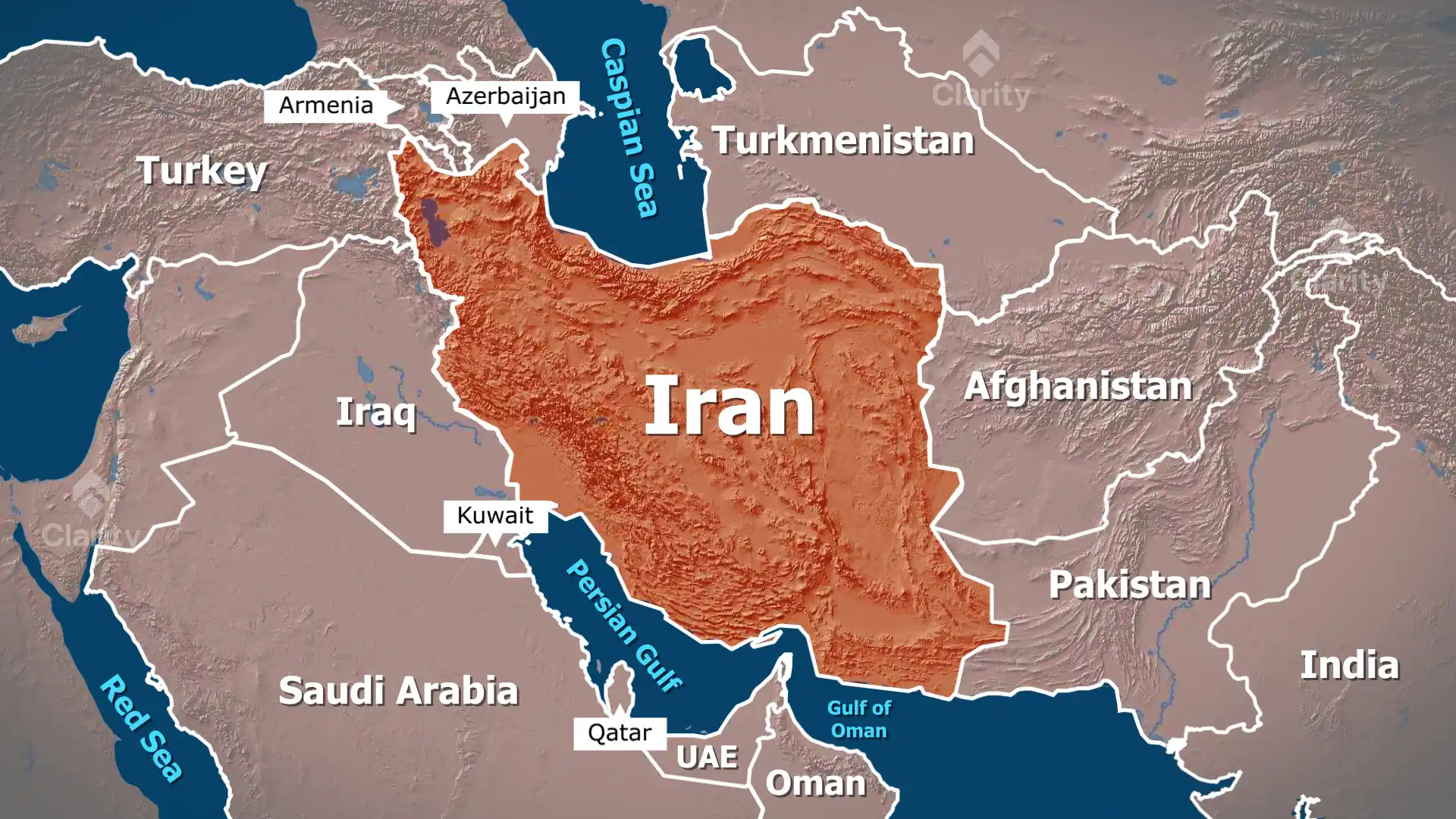
- Location and size: Iran is located in Western Asia and is the second‑largest country in the Middle East. It covers about 1.63 million km² and is roughly twice the size of the Indian state of Rajasthan. Mountains ring a central plateau; the highest peak is Mount Damavand (5,610 m) in the Alborz Range.
- Borders: Iran shares land borders with Armenia, Azerbaijan, Turkmenistan, Afghanistan, Pakistan, Iraq and Turkey. Its southern coastlines along the Persian Gulf and the Gulf of Oman give it strategic maritime access.
- Population: As of 2025 Iran’s population was estimated at around 92 million, making it the 18th most populous country. About 78 percent of people live in urban areas. The capital and largest city is Tehran.
- Language and religion: The official language is Persian (Farsī). The state religion is Islam, and Iran is the world’s only country where Twelver Shiʿism is the official creed. Ethnic Persians form the majority, with sizeable Azerbaijani, Kurdish, Lur, Arab and other minorities.
Historical overview
Known in ancient times as Persia, Iran has been home to some of the world’s earliest civilisations. The Achaemenid Empire founded by Cyrus the Great in the 6th century BCE spanned three continents and introduced advanced administrative systems. Following conquests by Alexander the Great and various dynasties, the Safavid Empire in the 16th century established Shia Islam as the state religion and laid the foundations of the modern Iranian state. In the 20th century Iran experienced the Constitutional Revolution (1906), a British‑backed coup (1953) that reinstated the Pahlavi monarchy, and the 1979 Islamic Revolution, which replaced the monarchy with the Islamic Republic under Ayatollah Khomeini. Iran endured a costly eight‑year war with Iraq (1980–88) and has faced international sanctions over its nuclear programme.
Government and economy
- Political system: Iran is a unitary Islamic republic. The Supreme Leader (currently Ayatollah Ali Khamenei) holds ultimate authority over the executive, legislative and judicial branches. Citizens elect the president, members of the Islamic Consultative Assembly (parliament) and local councils, but key positions are subject to approval by religious bodies.
- Economy: Iran has the world’s fourth‑largest proven crude oil reserves and the second‑largest natural gas reserves. Its economy relies heavily on hydrocarbons but also includes agriculture, automotive manufacturing, petrochemicals and mining. Economic sanctions have limited growth, but Iran retains a skilled workforce and significant domestic market.
- Socio‑economic indicators: Life expectancy is around 75 years. Literacy rates exceed 85 percent for both men and women. The Iranian rial is the currency, and inflation and unemployment have remained persistent challenges.
Significance
- Geostrategic location: Iran sits at the crossroads of the Middle East and Central Asia, controlling access to the Strait of Hormuz, a chokepoint for global oil shipments.
- Cultural heritage: Persian poetry, architecture and handicrafts have influenced art and literature worldwide. Cities like Isfahan and Shiraz boast UNESCO‑listed monuments.
- Regional influence: Iran plays a key role in West Asian politics through its alliances and proxy groups. Its nuclear programme has been the subject of negotiations between Tehran and world powers.
Sources: The Economic Times