

Why in news?
The recently held Italy–India Business Forum 2025 underscored growing ties between the two countries, prompting a renewed look at Italy’s geography and natural resources. Understanding Italy’s physical and economic landscape helps contextualise bilateral cooperation in sectors such as manufacturing, infrastructure and tourism.
Background
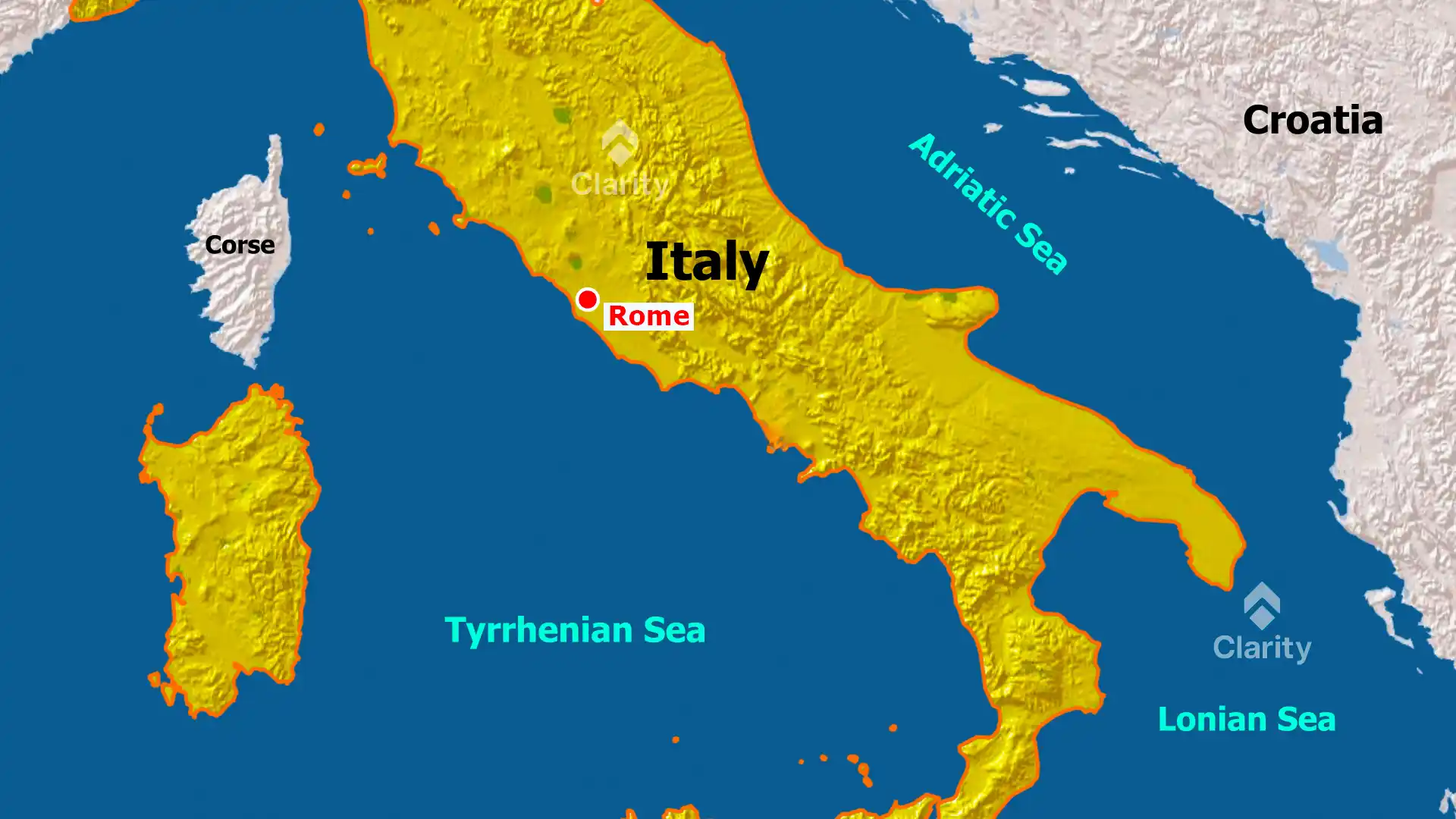
Italy occupies the boot‑shaped Apennine Peninsula in south‑central Europe. It shares land borders with Switzerland and Austria to the north, Slovenia to the northeast and France to the northwest. Two tiny sovereign enclaves – Vatican City and San Marino – lie entirely within Italian territory. The peninsula protrudes into the Mediterranean Sea, with maritime boundaries formed by the Adriatic Sea to the east, the Ionian Sea to the southeast, the Tyrrhenian and Ligurian seas to the west, and the Sea of Sicily to the south. Italy also includes the large islands of Sicily and Sardinia.
Geographical features
- Terrain: Mountains dominate the landscape. The Alps arc along the northern border, while the Apennine range runs down the spine of the peninsula. Between these ranges lie fertile plains such as the Po Valley.
- Rivers: The Po, Italy’s longest river, flows eastward from the Alps to the Adriatic Sea, forming a fertile agricultural corridor. Other significant rivers include the Adige in the north and the Tiber, which flows through Rome.
- Highest point: Mont Blanc (Monte Bianco), on the border with France, rises to 4,748 metres and is the highest peak in Western Europe.
- Volcanic origins: Much of Italy was formed by volcanic activity. Active volcanoes include Mount Etna in Sicily and Stromboli in the Aeolian Islands. The Campanian volcanoes around Naples, including Vesuvius, have shaped the region’s history.
- Natural resources: Italy’s geological diversity yields coal, antimony, mercury, zinc, potash, barite, asbestos, pumice, fluorspar, feldspar and pyrite (sulphur). It also has modest reserves of natural gas and crude oil.
Significance
- Strategic location: Italy’s central position in the Mediterranean makes it a natural crossroads for trade between Europe, Africa and the Middle East.
- Tourism and culture: Picturesque landscapes, historic cities like Rome, Florence and Venice, and rich cultural heritage attract millions of tourists every year.
- Economic links: Natural resources and skilled labour underpin industries such as machinery, automotive, fashion, food processing and design, making Italy an important economic partner for India.
Conclusion
Italy’s rugged mountains, fertile valleys, and volcanic islands contribute to its scenic beauty and diverse economy. Understanding these features helps appreciate why Italy plays a prominent role in European politics and global trade, and why collaboration between India and Italy holds promise in areas ranging from renewable energy to tourism.
Sources: PIB