

Why in news?
The United States conducted a major operation against Islamic State (IS) militants in north‑eastern Syria after American troops were attacked earlier this month. The air and artillery strikes targeted more than seventy IS locations and aimed to reduce the extremists’ ability to launch cross‑border attacks. Understanding Syria’s geography and society helps us grasp why events in this country can have far‑reaching effects.
Background
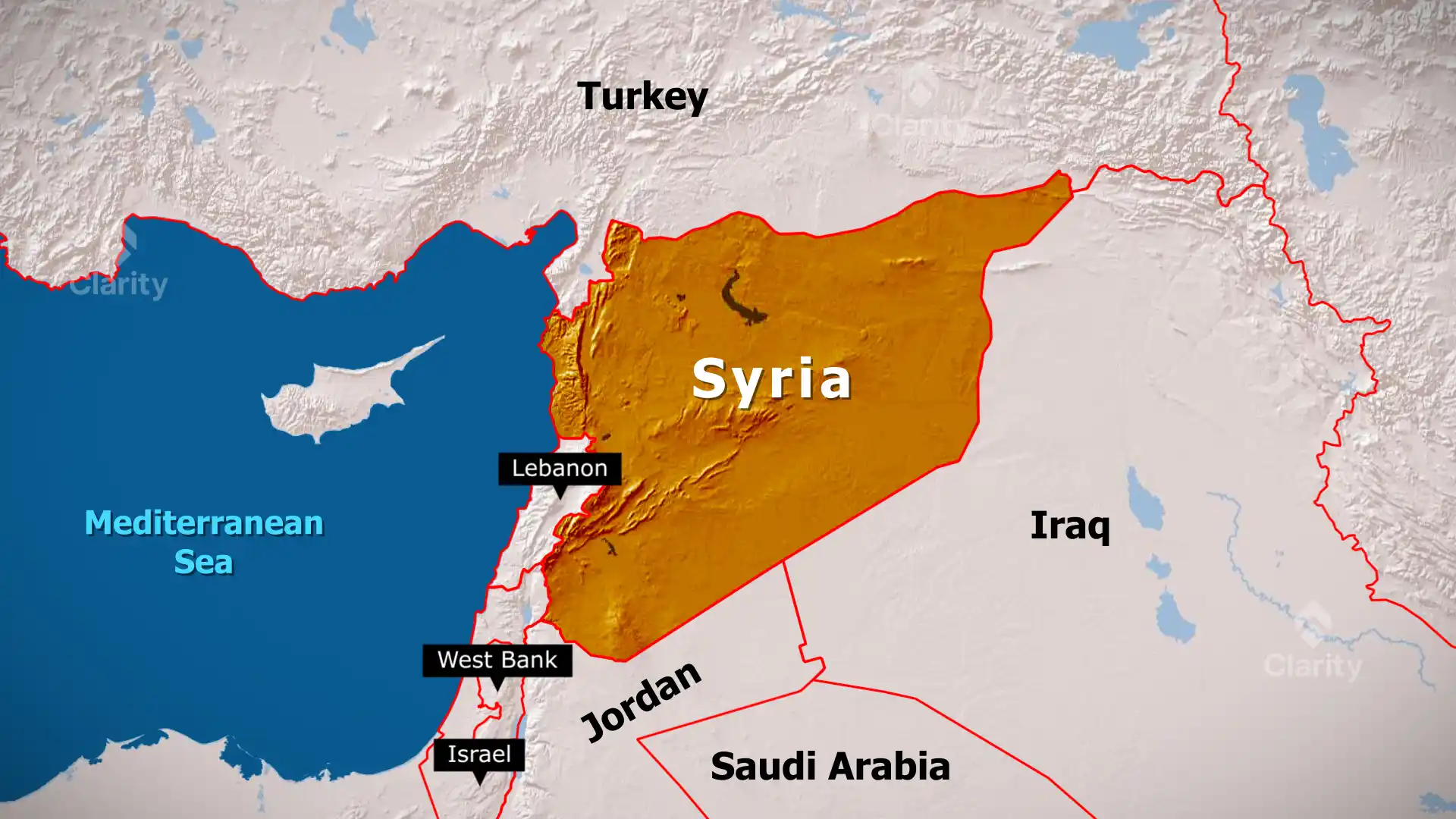
Syria is a country in the Middle East bordered by Turkey, Iraq, Jordan, Israel and Lebanon. It covers about 185,000 km² and has a diverse landscape ranging from the Syrian Desert to narrow coastal plains and mountain ranges. The capital city, Damascus, is one of the world’s oldest continuously inhabited cities. Most Syrians are Arabs, with Kurds and Bedouins as important minority communities. The majority practise Islam, although there are also Christian and Druze minorities. Years of civil war and international interventions have created a complex political and humanitarian situation.
Geography and society
- Terrain: More than half of Syria is covered by the Syrian Desert. To the west lies a narrow coastal plain along the Mediterranean Sea. The Anti‑Lebanon and Al‑Ansariyyah mountain ranges run parallel to the coast, while the Jebel Bishri range lies inland.
- Rivers: The Euphrates, Western Asia’s longest river, flows from Turkey through central Syria and is dammed to form Lake Assad. Other rivers include the Khabur and Orontes.
- People: Syrians are predominantly Arab. The Kurdish population mainly resides in the north‑east, and Bedouin nomads live in desert regions. Arabic is the official language, though Kurdish and other tongues are spoken in some areas.
- Culture: Syria has a rich cultural heritage with influences from Arab, Persian, and Mediterranean civilisations. Damascene crafts such as inlaid woodwork, music styles like classical Arab music, and dishes like tabbouleh and shawarma reflect this heritage.
- Political structure: Syria is officially a presidential republic. The president has broad powers including command of the armed forces and oversight of the legislature. Decades of authoritarian rule and conflict have eroded the country’s institutions.
Current situation
- The civil war, beginning in 2011, has fragmented authority. Government forces, rebel groups, Kurdish administrations and extremist organisations control different areas.
- Foreign military interventions by the United States, Russia, Turkey and Iran have further complicated the landscape. The recent U.S. airstrikes targeted Islamic State militants suspected of killing American soldiers.
- Humanitarian crises persist, with millions of Syrians displaced internally or as refugees. International aid agencies continue to call for ceasefires and political solutions.