

Why in news?
Thailand regularly features in news due to tourism, trade and its role in regional geopolitics. Here are essential facts about the country to help students and travellers gain a clearer understanding of this Southeast Asian nation.
Geography and location
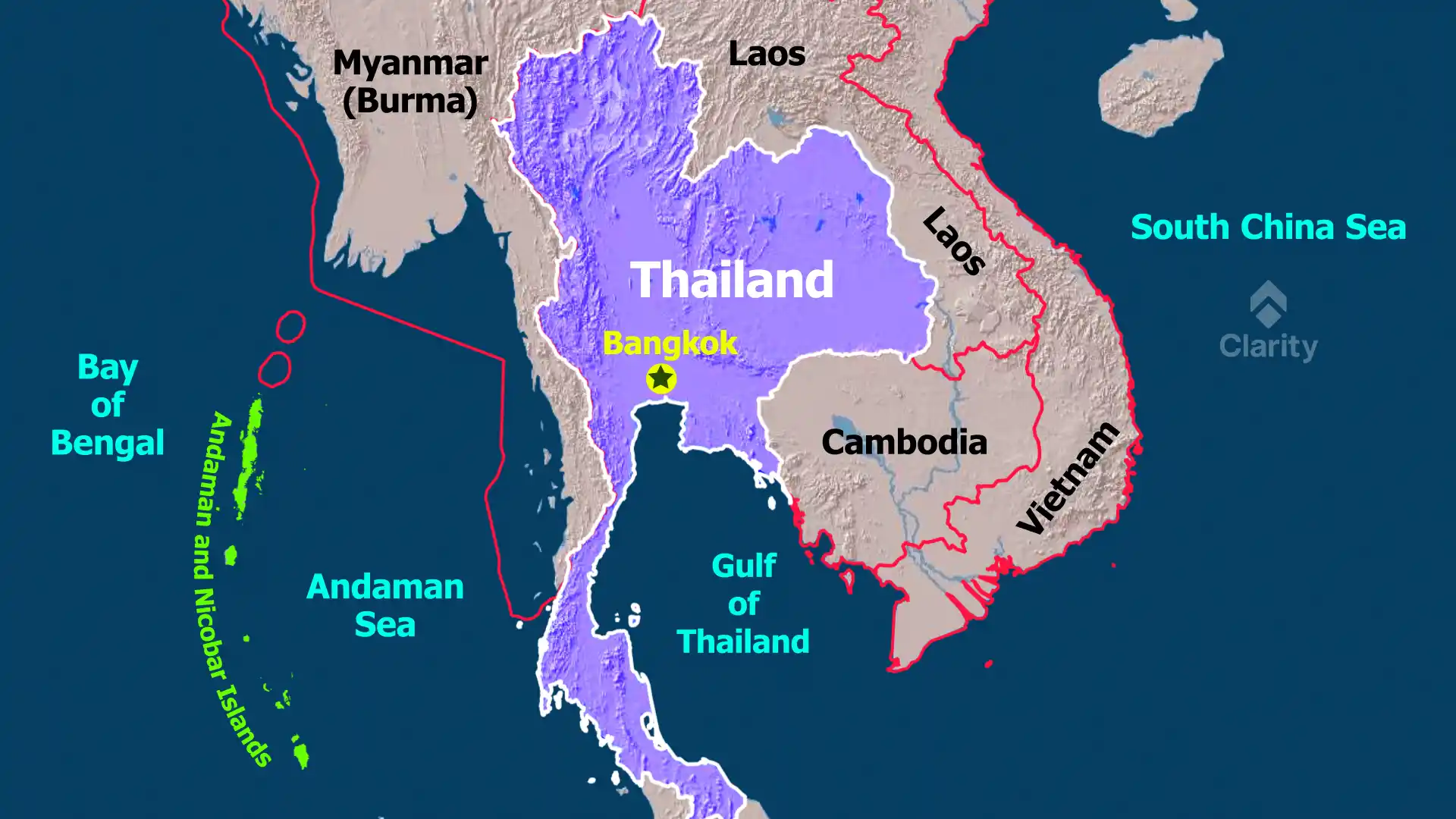
- Position: Thailand lies on the mainland of Southeast Asia and spans roughly 513,000 square kilometres. It shares borders with Myanmar to the west, Laos and Cambodia to the east and Malaysia to the south.
- Topography: The north and west consist of mountainous terrain, including Doi Inthanon (2,565 metres), the country’s highest peak. The central plain along the Chao Phraya river forms the country’s rice bowl, while the narrow southern peninsula is flanked by the Andaman Sea and the Gulf of Thailand.
- Islands: Thailand has more than 1,400 islands, including popular tourist destinations like Phuket, Ko Samui and the Phi Phi Islands.
- Climate: The country lies entirely within the tropical zone and experiences a hot, humid climate with distinct wet and dry seasons. It follows Indochina Time (UTC +7) without daylight saving.
Government and population
- Official name: Kingdom of Thailand.
- Capital and largest city: Bangkok (Krung Thep Maha Nakhon).
- Government: Constitutional monarchy with King Maha Vajiralongkorn (Rama X) as head of state. Anutin Charnvirakul serves as prime minister (as of 2025).
- Population: Approximately 66 million people in 2025. The majority speak Thai and practise Buddhism.
- Currency: Thai baht (THB).
Natural resources and economy
- Minerals: Thailand possesses deposits of natural gas, coal, tungsten, tin, gypsum, lignite, manganese and zinc. Offshore gas fields in the Gulf of Thailand supply domestic energy and exports.
- Agriculture: The country is one of the world’s largest producers of rice and natural rubber. Other crops include sugarcane, cassava, palm oil, pineapples and coffee.
- Forestry: About 28 percent of the country is forested. Valuable hardwoods like teak are harvested under regulated conditions.
- Tourism: Beaches, cultural heritage sites and national parks make tourism a major contributor to the economy. Popular attractions include Bangkok’s temples, Chiang Mai’s hill tribes and the islands of the Andaman Sea.
Conclusion
Thailand’s rich cultural heritage, diverse landscapes and strategic location have made it an important player in Southeast Asia. Knowing the country’s geography, government structure and resources offers useful context for understanding regional developments and planning visits.
Source: WIOMN