

Why in news?
The President of the United Arab Emirates, Sheikh Mohamed bin Zayed Al Nahyan, is scheduled to visit India on 19 January 2026 at the invitation of Prime Minister Narendra Modi. The brief but high‑profile visit aims to strengthen the Comprehensive Strategic Partnership between India and the UAE, expand economic ties under the Comprehensive Economic Partnership Agreement, and discuss regional issues.
Background
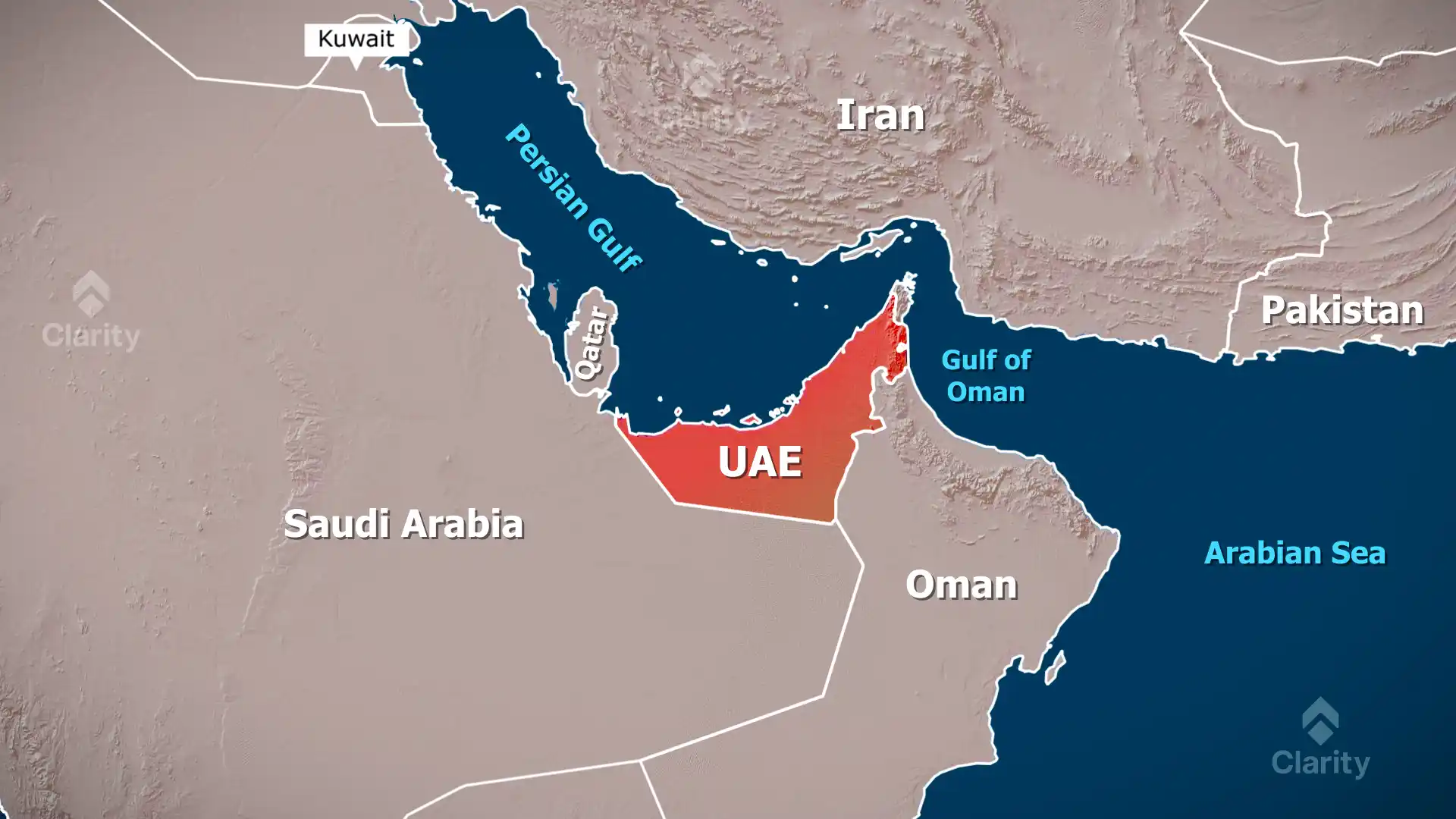
The UAE is a federation of seven emirates – Abu Dhabi, Dubai, Sharjah, Ajman, Umm Al Quwain, Ras Al Khaimah and Fujairah – that came together on 2 December 1971. Abu Dhabi is the capital and the largest emirate by area, while Dubai is the commercial hub. With a land area of about 83,600 square kilometres, the country lies on the southeastern edge of the Arabian Peninsula between Oman and Saudi Arabia. Its terrain consists mostly of desert and coastal plains with mountains in the east. The Tropic of Cancer passes through Abu Dhabi, giving the region a hot desert climate with very little rainfall. Petroleum and natural gas underpin the UAE’s economy, but in recent decades it has diversified into finance, tourism, real estate and renewable energy.
Features of the UAE
- Political structure: The UAE is a constitutional federation governed by a Federal Supreme Council composed of the hereditary rulers of the seven emirates. Sheikh Mohamed bin Zayed Al Nahyan of Abu Dhabi currently serves as President.
- Demography: The population is around 10 million, of which a large majority are expatriate workers from South Asia and other regions. Islam is the official religion and Arabic is the official language; however, English is widely used in business.
- Economic diversification: While oil wealth laid the foundation for rapid development, the UAE now invests heavily in ports, airlines, logistics, high‑tech industries and tourism. Dubai’s Burj Khalifa and mega‑malls symbolise this transformation.
- Geography and climate: Most of the country is sandy desert with rolling dunes and salt flats. Jebel Jais (Jabal Bil ‘Ays) in Ras Al Khaimah is the highest point at around 1,934 metres. Summers are extremely hot, often exceeding 45°C, while winters are mild.
India–UAE relations
- Historical ties: India established diplomatic relations with the UAE in 1972. A large Indian diaspora – about 3.5 million people – forms the UAE’s biggest expatriate community, contributing to its economy and remitting billions of dollars back home.
- Comprehensive partnership: In 2022 the two countries signed a Comprehensive Economic Partnership Agreement (CEPA) that eliminates tariffs on most goods and facilitates investment. They also launched a Local Currency Settlement mechanism allowing trade in Indian rupees and UAE dirhams.
- Strategic cooperation: India and the UAE collaborate on defence, counter‑terrorism, energy security and space exploration. Both participate in plurilateral groups such as the I2U2 (India–Israel–UAE–United States) and are members of BRICS. Joint naval exercises and agreements on food and energy corridors underscore their strategic alignment.
- Economic links: The UAE is one of India’s largest trading partners. Bilateral trade has rapidly expanded in recent years, driven by oil imports, gems and jewellery exports, infrastructure projects and startups. Sovereign wealth funds from the UAE are investing in India’s renewable energy, logistics and infrastructure sectors.
Significance of the visit
The 2026 visit will likely reinforce cooperation in trade, technology and security at a time of geopolitical turbulence in West Asia. It is expected to produce new agreements on energy, digital payments and investment and to showcase India’s role as a trusted partner in the Gulf. Strong relations with the UAE also help India secure the welfare of its expatriates and ensure stable energy supplies.
Sources: TH