
Why in news?
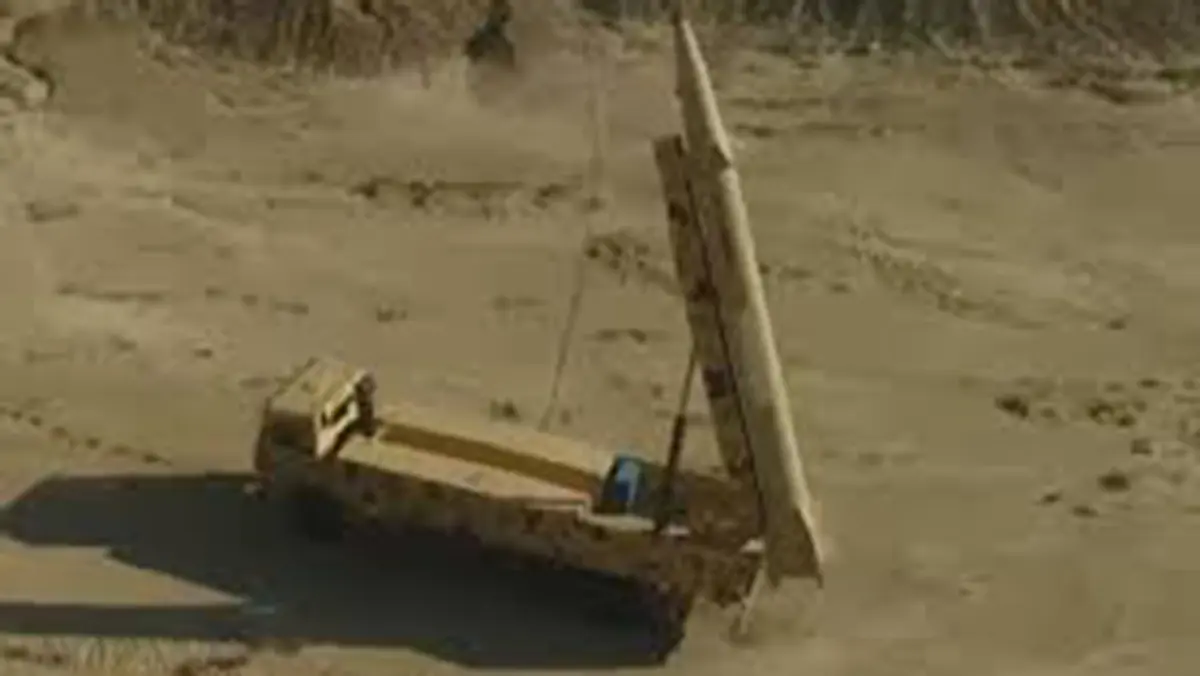
During recent escalations in the Middle East, Iran’s Islamic Revolutionary Guard Corps (IRGC) claimed to have used its Kheybar Shekan missile in strikes against targets linked to Israel. The announcement drew attention to the capabilities of this new missile system.
Background
Iran unveiled the Kheybar Shekan (literally “Breaker of Khaybar”) in 2022 as a third‑generation solid‑fuel ballistic missile. It forms part of Iran’s Khorramshahr missile family, which has evolved over several iterations since 2017. The name refers to the historical Battle of Khaybar fought in 628 CE, highlighting the ideological undertones of Iran’s missile programme.
Key characteristics
- Range and size: The missile is about 11.4 metres long and can strike targets up to roughly 1,450 kilometres away. This range covers much of West Asia.
- Solid‑fuel propulsion: Unlike earlier Iranian missiles that used liquid fuel, the Kheybar Shekan employs solid propellant. Solid fuel shortens launch preparation time, allows storage in sealed canisters and makes the missile easier to transport.
- Manoeuvrable warhead: Reports indicate that the missile carries a high‑explosive warhead weighing around 550 kg. Satellite‑aided guidance and manoeuvrable re‑entry vehicles improve its accuracy and make interception more difficult.
- Mobility: The relatively compact design means the missile can be launched from various platforms, including mobile launchers and even modified commercial vehicles. Such mobility complicates detection by adversaries.
- Cultural symbolism: The name “Kheybar Shekan” connects Iran’s contemporary military actions to early Islamic history, reinforcing the government’s ideological narrative in its confrontation with Israel.
Implications
The deployment of the Kheybar Shekan underscores Iran’s progress in indigenous missile technology. Its solid‑fuel propulsion and precision guidance reduce reliance on older liquid‑fuel systems, signalling a shift toward more agile and survivable missiles. However, its use in conflict raises concerns about regional stability and the potential for escalation.
Source: Euronews

