

Why in news?
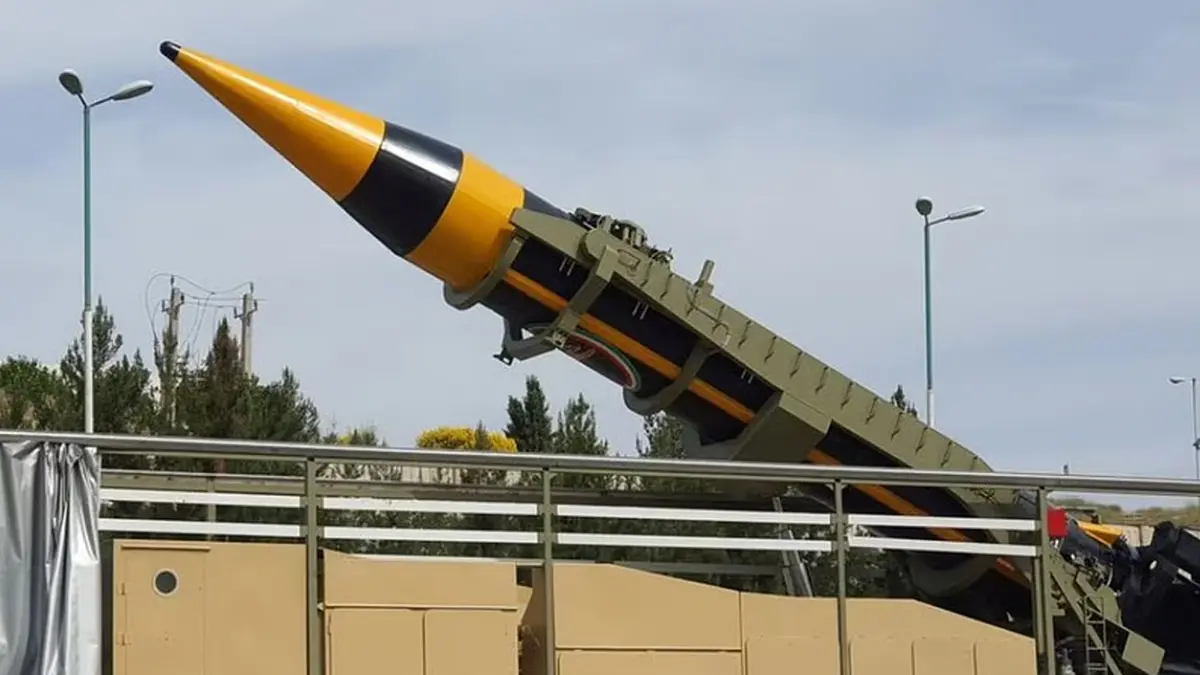
Iran’s Khorramshahr‑4 ballistic missile gained international attention after it was reportedly used in a 2025 attack in West Asia and showcased during recent military parades. The missile, also called Kheibar, is among the most advanced in Iran’s arsenal, raising questions about regional security and missile proliferation.
Background
The Khorramshahr series derives from North Korea’s Hwasong‑10 (Musudan) missiles, themselves influenced by the Soviet R‑27 submarine‑launched missile. Unveiled in May 2023, the Khorramshahr‑4 is a liquid‑fuelled ballistic missile approximately 13 metres long and 1.5 metres in diameter, with a launch weight around 20 tonnes. It can carry a 1,500–1,800 kg warhead and is reported to have a range of about 2,000 kilometres (some sources suggest up to 4,000 km with lighter payloads). The missile’s Persian name, “Kheibar,” references a historic fortress.
Key characteristics
- Guidance and accuracy: The missile features a manoeuvrable re‑entry vehicle and advanced guidance system. It can adjust its trajectory outside the atmosphere, then shut down guidance electronics during re‑entry to resist jamming. Reported accuracy is within 10–30 metres.
- Speed and launch: Khorramshahr‑4 reportedly travels at about Mach 16 outside the atmosphere and Mach 8 upon re‑entry. Its hypergolic liquid fuel allows quick launch preparation (about 12–15 minutes).
- Payload versatility: Besides carrying a single heavy warhead, the missile can potentially deliver multiple smaller warheads to separate targets, complicating interception.
- Mobile launch platform: Mounted on road‑mobile launchers, the missile can be moved and fired from different locations, making detection and pre‑emption difficult.
The development underscores Iran’s pursuit of longer‑range, more sophisticated missiles. Analysts note that such systems heighten regional tensions and raise concerns about proliferation.
Source: OneIndia