
Why in news?
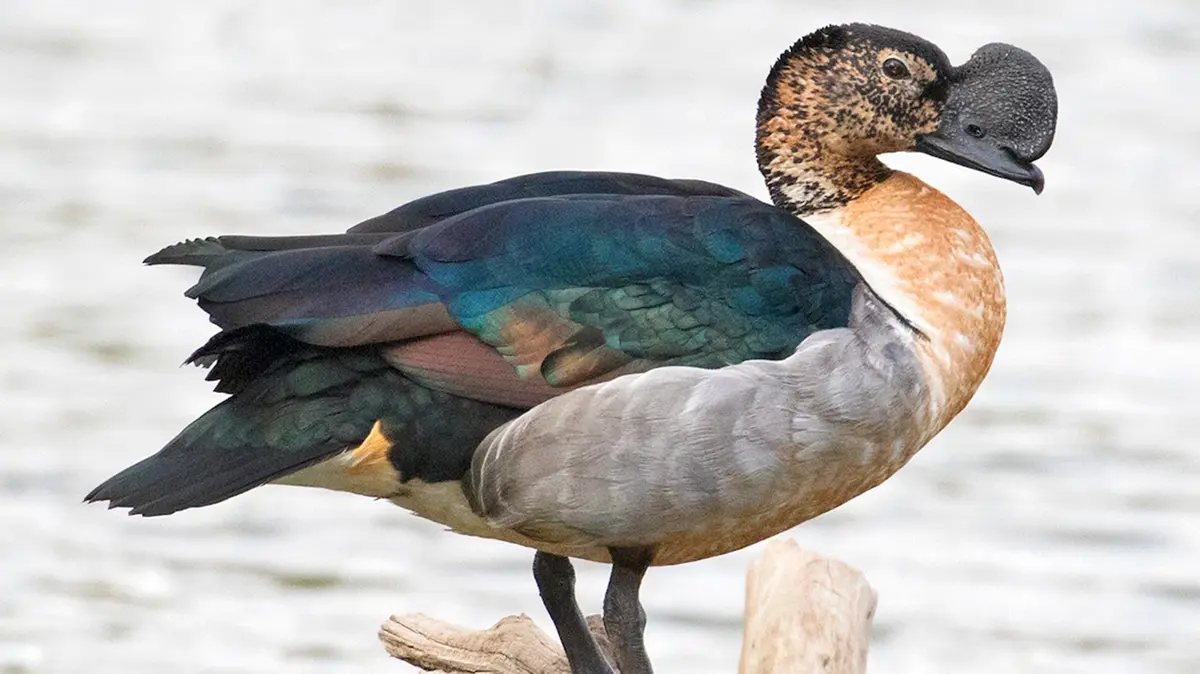
Birdwatchers recently reported sightings of the knob‑billed duck in several Indian wetlands, including Pong Dam Lake. These reports drew attention because the species is rarely seen in northern India. The presence of this distinctive duck highlights the ecological value of protected wetlands and the need to conserve them.
Background
The knob‑billed duck, also called the comb duck, is a large waterfowl found across tropical Africa, Madagascar and South Asia. Males have a fleshy black knob at the base of their bill, while females lack this feature and are slightly smaller. Adults are 56 to 76 centimetres long with a wingspan reaching 145 centimetres. Their glossy green upperparts contrast with white underparts. The species frequents swamps, lakes and rivers where open water is bordered by grassy banks and scattered trees. It is mostly sedentary but disperses locally during wet seasons.
Ecology and behaviour
- Feeding: Knob‑billed ducks graze on grass and aquatic plants and also dabble for seeds, insects and snails.
- Nesting: They often nest in tree holes or use abandoned nests of other birds. The breeding season coincides with the rainy months when food is plentiful.
- Distribution: In India the species is mainly found in central and southern wetlands. Occasional records from northern sites like Pong Dam indicate seasonal dispersal.
- Conservation status: The International Union for Conservation of Nature lists the knob‑billed duck as a species of Least Concern, although local populations decline when wetlands are drained or polluted.
Conclusion
Recent sightings of knob‑billed ducks remind us that India’s wetlands support diverse wildlife. Protecting marshes and lakes from encroachment and pollution will ensure that rare visitors like the comb duck continue to find refuge. Public involvement in birdwatching also helps raise awareness about lesser‑known species.