

Why in news?
A scientific study by researchers from Christ College, Irinjalakuda, documented twelve species of pygmy grasshoppers in Kerala’s Kole wetlands, including four species not previously recorded in the State. The findings highlight the ecological richness of this Ramsar‑listed wetland and draw attention to lesser‑known insect groups that contribute to its biodiversity.
Background
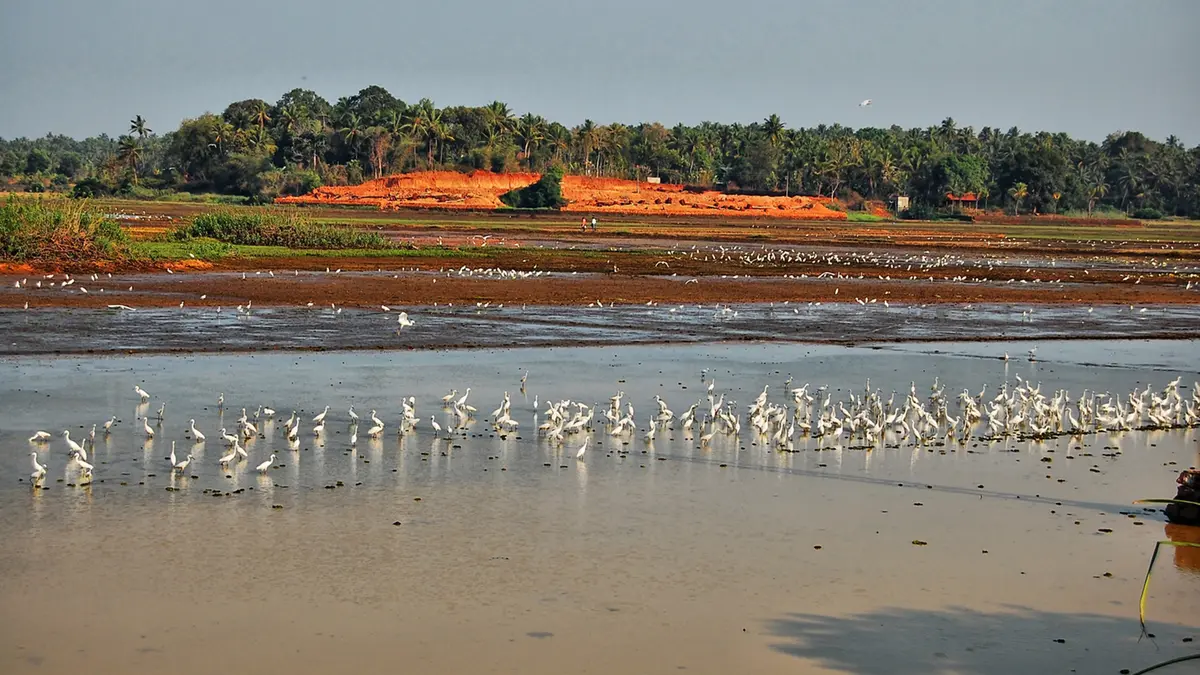
The Kole wetlands are an extensive mosaic of paddy fields and marshes in central Kerala spanning parts of Thrissur and Malappuram districts. The name “Kole” means “bumper crop” in Malayalam, reflecting the area’s high productivity. Farmers have cultivated paddy here for over three centuries, building earthen bunds and drainage channels to manage seasonal inundation. The wetlands lie below sea level; during the monsoon the entire area is submerged and farmers pump out water to plant crops.
Ecological importance of Kole
- Habitat diversity: Low‑lying fields, narrow strips of raised land and pockets of garden crops support a variety of plant and animal life. Coconut and arecanut plantations surround the wetlands.
- Migratory birds: Kole lies along the Central Asian Flyway and is one of India’s top wintering sites for migratory waterbirds. In terms of bird numbers it is the third‑largest wetland in India after Chilika Lake and Nal Sarovar.
- Ramsar site: The wetlands were designated a Ramsar site of international importance in 2002 and are listed as an Important Bird Area by BirdLife International.
About pygmy grasshoppers
- Pygmy grasshoppers (family Tetrigidae) are small insects, usually less than 15 mm long, with brown, grey or green colours that blend into their surroundings.
- Unlike true grasshoppers, their forewings are reduced to small pads or absent, and they deposit eggs singly in soil grooves rather than in underground chambers.
- They inhabit muddy shores and short grasslands and are dimorphic – some forms have reduced wings while others have fully functional wings.
- Pygmy grasshoppers lack the sound‑producing and hearing organs seen in other grasshoppers. Their presence indicates healthy wetland microhabitats.
Significance of the study
- The discovery of four previously unreported species shows that even well‑studied wetlands harbour unknown biodiversity. It underscores the need for continued entomological research in Kerala.
- Protecting the Kole wetlands is vital not only for birds but also for lesser‑known insects that play roles in nutrient cycling and serve as food for other animals.
- Documenting insect diversity supports efforts to manage wetlands sustainably in the face of urbanisation, pollution and changing agricultural practices.
Conclusion
The Kole wetlands are much more than productive paddy fields; they are biodiversity hotspots that support birds, fish and tiny insects like pygmy grasshoppers. The new study reminds us that effective conservation requires looking beyond charismatic species to the small creatures that keep ecosystems functioning.
Source: The Hindu