
Why in news?
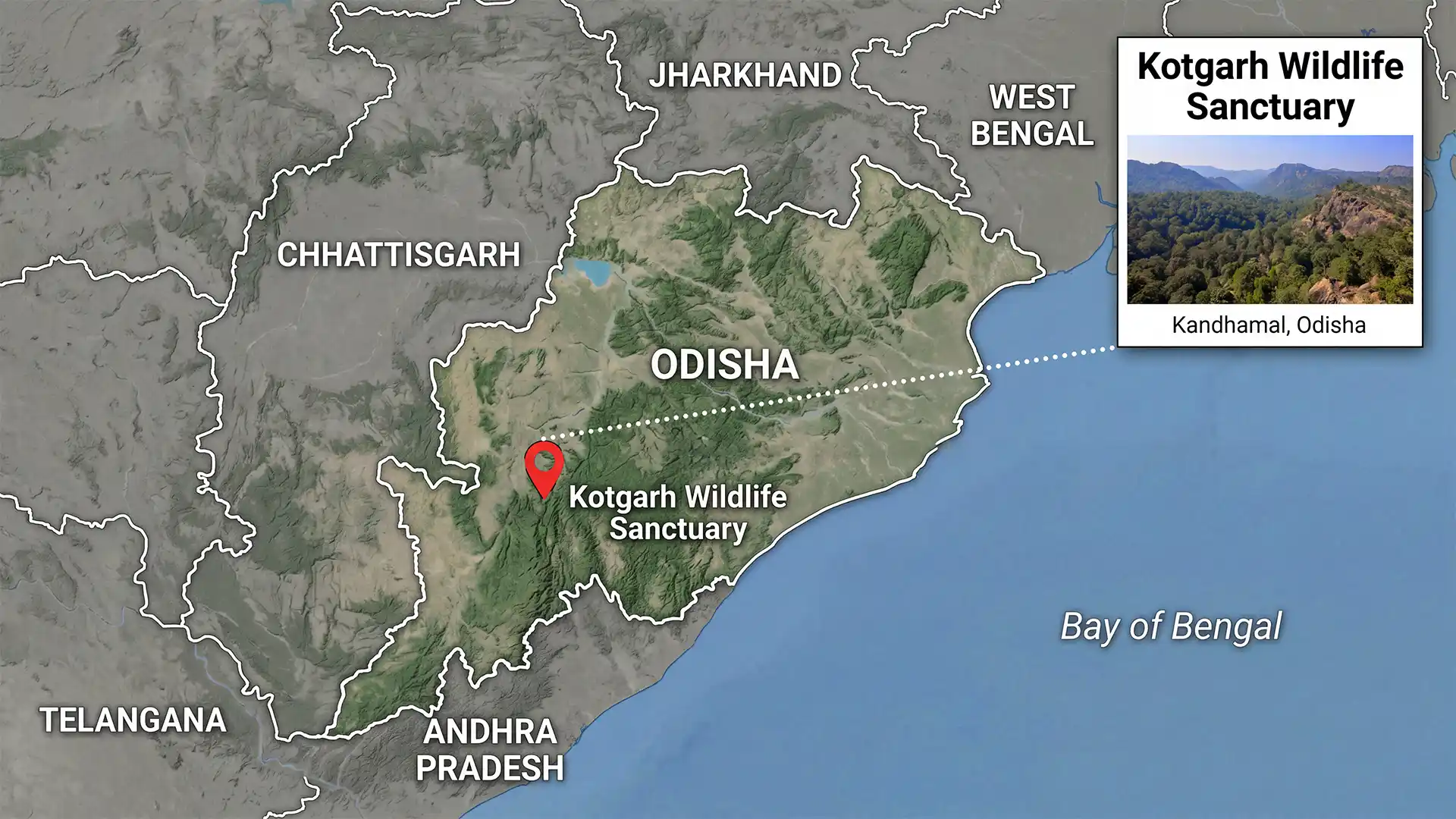
Forest officials in Odisha recently arrested four suspected poachers in Kotgarh Wildlife Sanctuary. The men were caught with guns, ammunition and gunpowder and allegedly attempted to set fire to the forest to flush out animals. The incident has drawn attention to the sanctuary’s rich biodiversity and the threats it faces from illegal hunting.
Background
Kotgarh Wildlife Sanctuary is located in the Baliguda subdivision of the Kandhamal district of Odisha. Spread over about 399 square kilometres, it forms part of the Eastern Highlands moist deciduous forest and includes around 52 tribal villages inhabited by the Kutia Kondh and Desia Kondh communities. The sanctuary’s dense forests and rolling hills support a wide variety of flora and fauna, making it an important conservation area in eastern India.
Ecology of the sanctuary
- Flora: More than 650 plant species have been recorded, with dominant tree species including sal (Shorea robusta), piasal, sisoo, kendu, gamhar, asan and kusum. Fruit-bearing trees like mango, tamarind, mahua and jackfruit provide food for wildlife and local communities. The sanctuary is home to many rare medicinal plants such as Abutilon indicum and Cycas sphaerica.
- Fauna: Mammals like tigers, leopards, sloth bears, elephants, gaur, sambar deer and barking deer roam the forests. The sanctuary is noted for the chousingha, or four-horned antelope, which is rarely seen elsewhere. Birds such as peafowl and red jungle fowl add to the diversity.
- Tribal communities: Indigenous people have traditionally depended on the forest for non-timber forest products and practise shifting cultivation in designated areas. Their cultural practices include sacred groves and community conservation initiatives.
Challenges and conservation efforts
- Poaching and habitat loss: Illegal hunting and land encroachment threaten wildlife. Forest fires set by poachers to flush out animals can destroy vegetation and nesting sites.
- Human–wildlife conflict: Elephants and other large animals occasionally raid crops, leading to conflict with villagers. Compensation schemes and awareness programmes aim to reduce these tensions.
- Eco-tourism potential: With proper management, community-based tourism could generate income while promoting conservation. Infrastructure development must be sensitive to ecological limits.
Conclusion
Kotgarh Wildlife Sanctuary is a biodiversity hotspot and a cultural landscape. Recent arrests underline the need for strict enforcement of wildlife protection laws, community participation in conservation and sustainable livelihoods for local people. Protecting this sanctuary will help preserve eastern India’s rich natural heritage for future generations.
Source: Times of India

