Why in news?
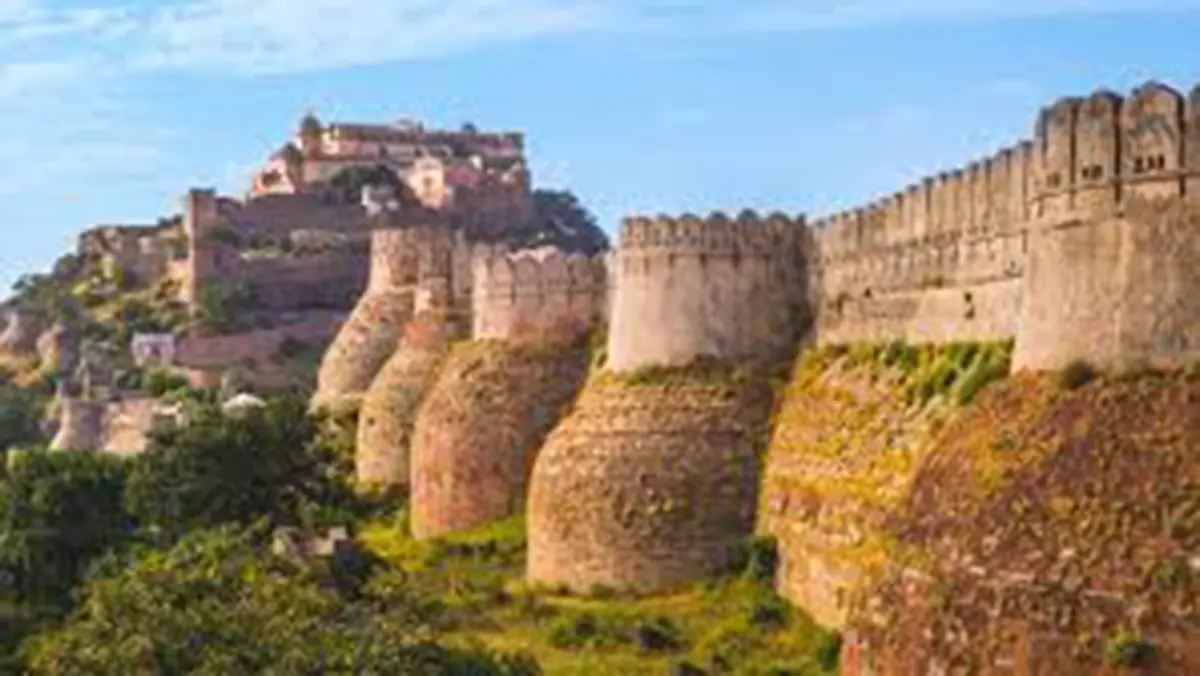
Kumbhalgarh Fort in Rajasthan often features in travel and heritage news due to its gigantic ramparts and UNESCO recognition. In May 2026 it gained renewed attention when tourism authorities launched campaigns highlighting its architectural marvels and conservation needs.
Background
Kumbhalgarh, located in the Aravalli hills of Rajasthan’s Rajsamand district, is one of the six Hill Forts of Rajasthan inscribed on the UNESCO World Heritage List. Constructed between 1443 and 1458 CE by Maharana Rana Kumbha, the fort was designed by the architect Mandan. It sits at an altitude of about 1,100 metres and occupies roughly 36 square kilometres.
Highlights of the fort
- Massive wall: The fort’s outer wall stretches around 36 kilometres, making it the second‑longest continuous wall in the world after the Great Wall of China. The thickness varies between 15 and 25 feet, allowing eight horses to walk abreast.
- Architectural design: Kumbhalgarh contains more than 360 temples—300 Jain and 60 Hindu. The complex features palaces, step wells, granaries and water‑harvesting structures that showcase sophisticated medieval engineering.
- Strategic refuge: The fort served as a military stronghold and refuge for rulers of Mewar. Its elevated position and thick walls made it nearly impregnable; historical records note that it was never captured by direct assault, falling only once due to treachery when supplies were cut off.
- Legend and culture: Local lore claims a human sacrifice was offered to stabilise the walls. The fort is also associated with Maharana Pratap, who was born here and later led resistance against Mughal expansion.
Conservation challenges
- The fort’s sheer size and ageing structures require constant maintenance to prevent decay. Authorities are working to conserve frescoes, temples and ramparts while accommodating tourism.
- Development pressures and uncontrolled visitor numbers can damage sensitive areas. UNESCO guidelines call for regulated access and community involvement in heritage management.
Conclusion
Kumbhalgarh Fort stands as a testament to Rajput military architecture and the ingenuity of medieval engineers. Its vast walls, intricate temples and storied past make it a jewel of India’s heritage, deserving continued conservation and respectful tourism.
Sources: MSN