
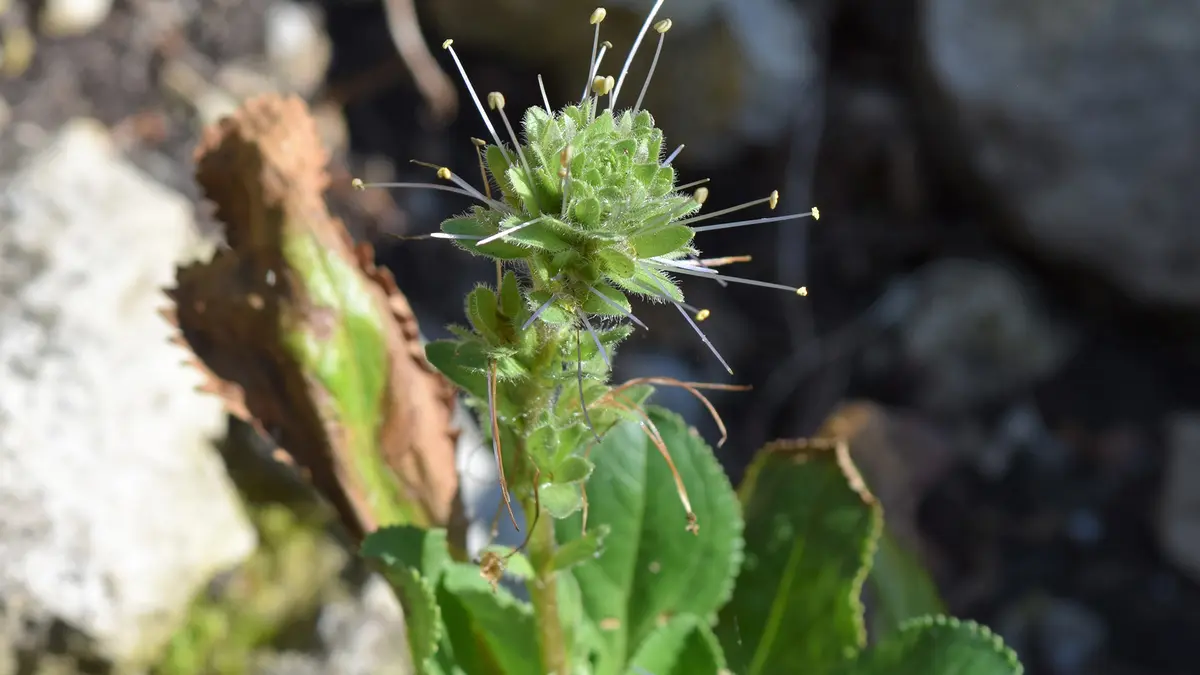
Why in news?
Farmers in Himachal Pradesh’s Mandi district are cultivating the threatened Himalayan herb Kutki. Nearly 180 farmers have joined a scientific cultivation programme. A new harvesting method leaves the mother plant alive in soil. This approach can supply markets while reducing pressure on wild plants.
Background
Kutki is a small perennial western Himalayan herb, meaning each plant survives beyond two years.
Its accepted name is Picrorhiza kurrooa Royle, although many Indian publications write Picrorhiza kurroa.
The plant belongs to Plantaginaceae and Lamiales, with a native range from north-eastern Pakistan into the western Himalayas.
Kutki grows in alpine and subalpine areas, usually from 2,700 to 4,500 metres under Indian guidance.
What does the name mean?
The genus name combines Greek roots for “bitter” and “root”, reflecting the plant’s intensely bitter underground parts.
Kutki is the widely used Indian common name, although regional names differ among Himalayan communities.
Understanding its underground parts
A root absorbs water and anchors a plant, but it normally has no nodes or buds.
A rhizome is a horizontal underground stem whose nodes can produce new shoots and roots.
A stolon is another horizontal stem, which usually creeps along or near the soil surface.
Kutki spreads through seeds, rhizomes, stolons and offsets, while medicinal material mainly comes from its underground parts.
Habitat requirements
- Kutki prefers cool and moist conditions in high Himalayan regions.
- It often grows on less-exposed slopes with suitable soil moisture.
- Porous soil helps horizontal rhizomes spread without waterlogging.
- Prolonged intense rain can damage plants through rot and poor aeration.
Why did wild populations decline?
Traditional medicinal collection and commercial demand encouraged repeated extraction from natural Himalayan habitats.
Collectors often uprooted whole plants, thereby removing both useful material and regenerative parts needed for future growth.
Slow alpine growth already limited natural recovery, while habitat change and unregulated collection created further pressure.
How did the new cultivation model develop?
The current work began during 2022 under the Department of Biotechnology-supported Himalayan Bioresource Mission.
The Himalayan Research Group trained farmers, developed planting material and tested the crop under local high-altitude conditions.
The improved method harvests selected stolons while leaving mother plants and remaining nodes for the next growth cycle.
Why is this method considered sustainable?
- The mother plant remains alive after carefully removing marketable material.
- Farmers can obtain repeated harvests without replanting every entire plot.
- Cultivated supply can reduce commercial collection from natural populations.
- High-value cultivation can support income in remote mountain villages.
- Farm records can improve traceability and legal trade compliance.
Conservation and trade status
| Framework | Status | What the status means |
|---|---|---|
| International Union for Conservation of Nature (IUCN) Red List | Endangered | The global assessment found a very high extinction risk in the wild. |
| Convention on International Trade in Endangered Species of Wild Fauna and Flora (CITES) | Appendix II since 18 September 1997 | International trade is controlled to prevent harmful over-exploitation. |
The listing covers whole or sliced roots and their parts. Its annotation excludes certain manufactured derivatives.
Medicinal use requires careful wording
Kutki has a long traditional medical history, but such use alone cannot prove every modern therapeutic claim.
Medicinal products need correct identification, quality control and safe dosage, without collecting wild plants for self-treatment.
Conclusion
Sustainable cultivation connects conservation with mountain livelihoods through traceable planting material, careful harvesting and reliable farmer support.