
Why in news?
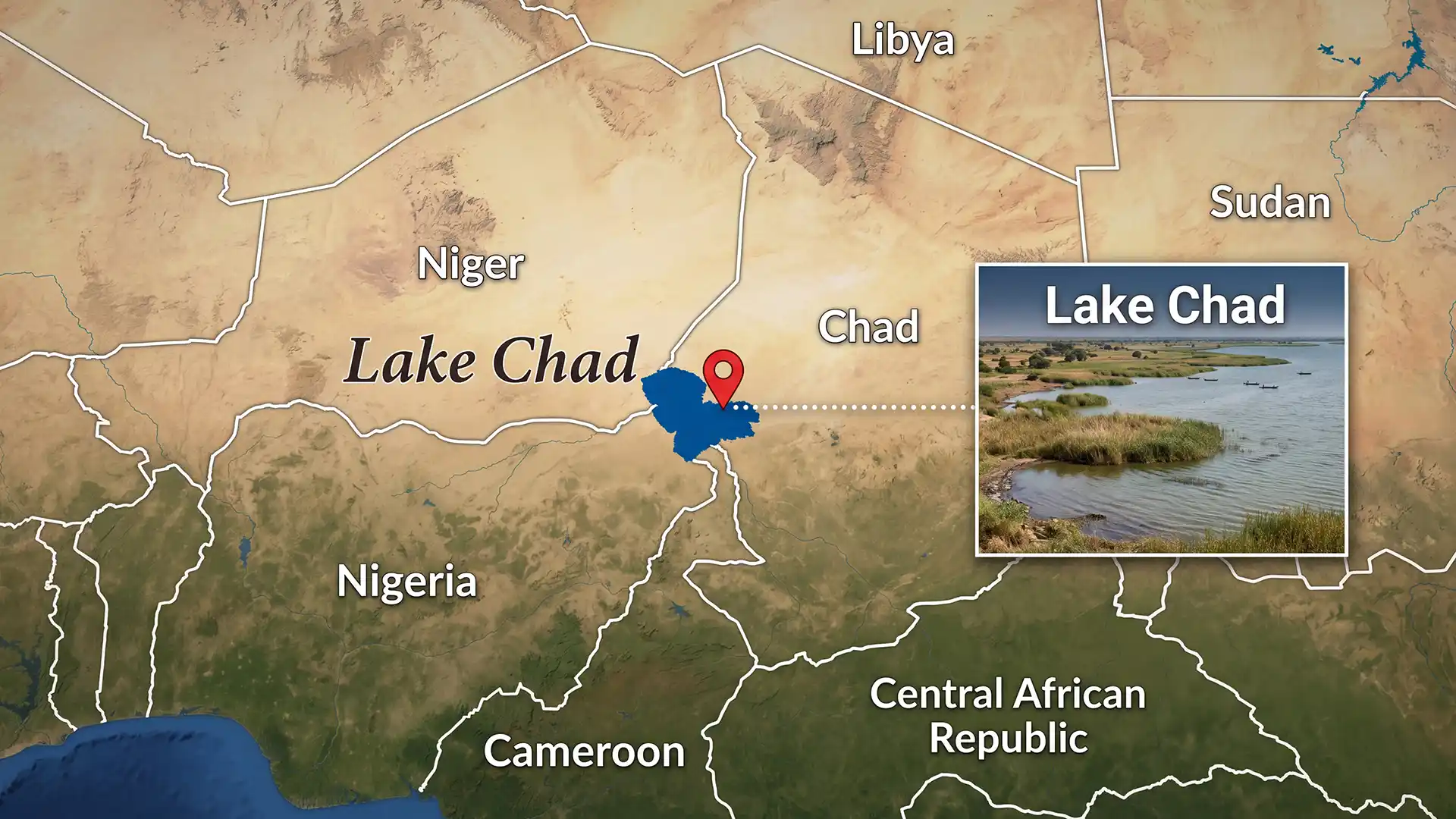
In early May 2026, militants linked to Boko Haram attacked a Chadian army post on Barka Tolorom Island in Lake Chad. The assault left 23 soldiers dead before security forces repelled the attackers. The incident underscores the long‑running insurgency around the lake and the difficulties faced by the countries that share its shores.
Background
Lake Chad lies in the Sahel, straddling the borders of Chad, Niger, Nigeria and Cameroon. Once among Africa’s largest lakes, it has shrunk dramatically in recent decades because of drought, climate change and unsustainable irrigation. The lake’s vast network of islands, swamps and reed beds provides refuge for fishing communities, pastoralists and wildlife. Unfortunately, these same features also offer hiding places for armed groups such as Boko Haram and its splinter Islamic State West Africa Province (ISWAP).
Lake Chad’s importance
- Water source: Around 30 million people depend on the lake for drinking water, farming and fishing. The seasonal flood plains support crops and livestock across a region with few other perennial rivers.
- Ecological hotspot: The lake’s marshes host hippos, crocodiles and numerous bird species. Migratory birds stop here during long journeys across Africa.
- Conflict zone: Boko Haram launched an insurgency in northeastern Nigeria in 2009 and later spread into neighbouring countries. Fighters use the lake’s islands as bases to raid villages, abduct civilians and attack security posts.
- Regional cooperation: The Multinational Joint Task Force (MNJTF), comprising troops from Chad, Cameroon, Niger, Nigeria and Benin, works to counter the militants. Yet security remains fragile and displaced communities struggle to return home.
What lies ahead
The latest attack highlights the need for a broader strategy that addresses both security and livelihoods. Restoring the lake’s health by managing water use and curbing climate change is as important as improving policing. Better access to education, markets and infrastructure could also provide alternatives for young people who otherwise risk recruitment by armed groups.

