

Why in news?
In early July 2026 Assam’s forest department conducted an eviction drive in Laokhowa Wildlife Sanctuary to remove illegal crop fields and fish ponds. Locals alleged that the operation involved excessive force and restrictions on journalists. The incident sparked debate about balancing conservation with the rights of communities.
Background
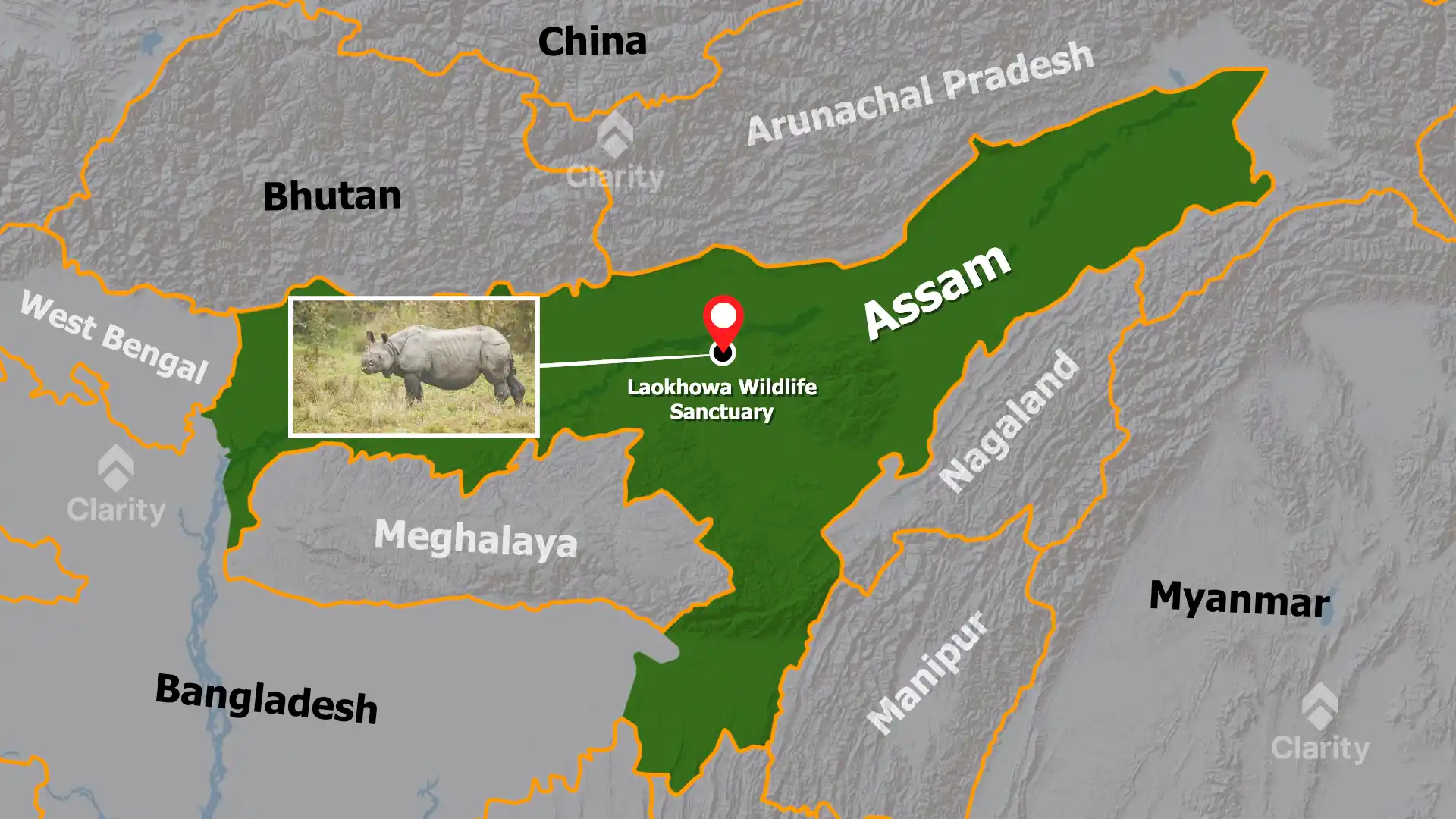
Laokhowa Wildlife Sanctuary lies on the southern bank of the Brahmaputra River in Nagaon district, Assam. Covering about 70 square kilometres, it forms a buffer zone for the Kaziranga Tiger Reserve along with the adjacent Burachapori sanctuary. The area consists of grasslands, woodlands and wetlands. It acts as a corridor linking Kaziranga with Orang and Pobitora sanctuaries, allowing animals to migrate during floods. The sanctuary is home to the greater one‑horned rhinoceros, wild water buffalo, Asian elephants, Royal Bengal tigers and more than 225 bird species. Migratory birds such as the critically endangered Bengal florican visit the grasslands, while the wetlands support fish and Gangetic dolphins.
Recent eviction drives
- Encroachments: Over the years parts of the sanctuary were converted into paddy fields and fisheries. Local farmers claim they had verbal approval from officials, but no written permission existed.
- Eviction actions: In February 2026 forest officials destroyed illegal crops using elephants. The July operation continued these efforts, targeting jute and rice fields. Heavy security was deployed, and journalists were kept away.
- Community concerns: Residents protested that the eviction disrupted livelihoods without offering compensation or rehabilitation. They also alleged use of excessive force by the authorities.
Ecological significance
- Habitat restoration: Removing illegal cultivation helps restore grasslands and wetlands that are essential for rhinos, buffalo and migratory birds.
- Wildlife corridors: Keeping the area free of settlements allows elephants and other animals to move between Kaziranga and neighbouring sanctuaries.
- Community involvement: Conservation groups urge authorities to involve local people in management and provide alternative livelihoods through eco‑tourism or sustainable agriculture.
Conclusion
The eviction drives in Laokhowa highlight the tension between protecting wildlife habitats and respecting the needs of communities. Long‑term success will depend on participatory conservation that restores ecosystems while ensuring fair compensation and livelihood options for affected families.