
Why in news?
A sustained outbreak of leaf spot disease has been troubling arecanut growers in Karnataka. To help farmers, the Central Plantation Crops Research Institute (CPCRI) and the Indian Council of Agricultural Research launched a three‑year demonstration programme in 2025 that teaches integrated disease management. By April 2026 the initiative had been running for almost a year, highlighting both the severity of the disease and the need for holistic control methods.
Background
Leaf spot is a general name for many plant diseases caused by fungi or bacteria. These microbes enter through natural openings or wounds and exploit the moist surface of a leaf. Spots begin as small discoloured lesions that enlarge over time, interrupting photosynthesis and causing leaves to yellow, wilt and drop prematurely. Although similar symptoms may arise from sunscald, chemical burns or nutrient deficiency, true leaf‑spot diseases spread quickly and can lead to severe defoliation.
Understanding the disease
- Caused by fungi or bacteria: Around 85 % of leaf‑spot diseases are fungal. In arecanut plantations in Karnataka, the main culprit has been a fungal strain closely related to Colletotrichum kahawae, which produces brown lesions with yellow margins that slowly engulf the fronds.
- Favourable conditions: Warm, humid weather and dense canopies encourage spore production and spread. Wind and rain can carry spores to neighbouring plants.
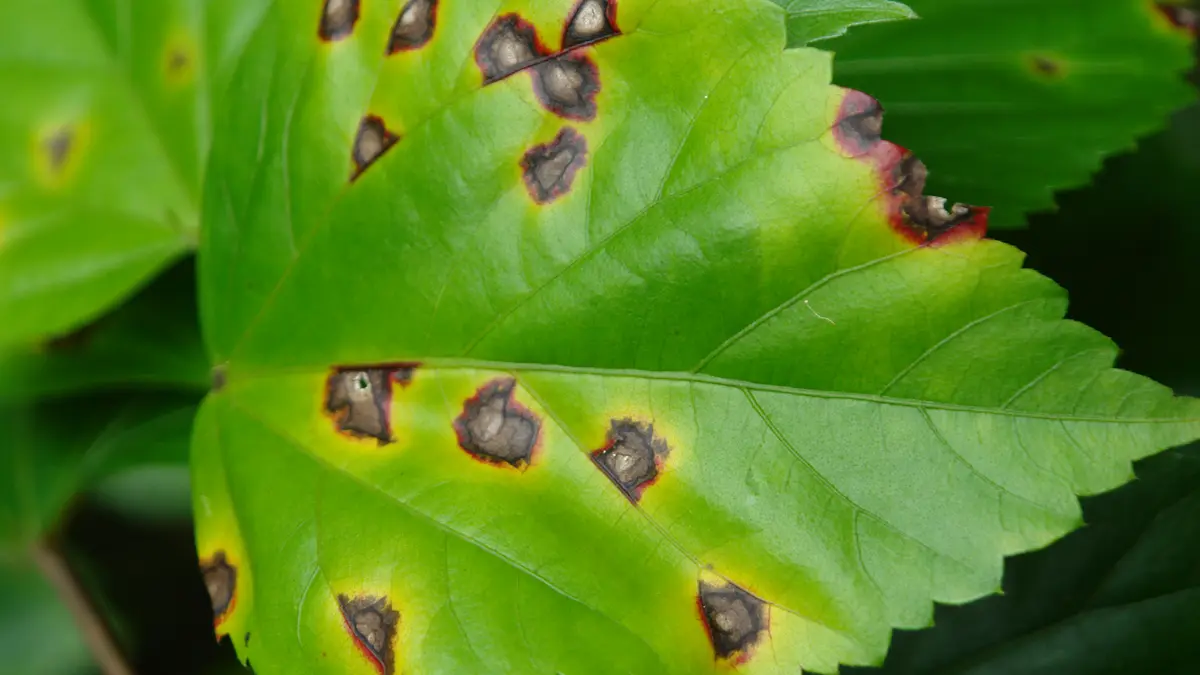
- Symptoms: The first signs are tiny black, brown or tan spots. In heavy infestations leaves turn yellow and dry out. Severe infections reduce yields and may kill young plants.
- Management approach: Farmers are advised to combine cultural practices (sanitation, pruning, wider spacing), resistant varieties, biological agents and judicious chemical sprays. Over‑reliance on fungicides alone can lead to resistance and environmental harm.
- Community demonstrations: CPCRI set up plots in several taluks of Karnataka to test integrated management. Early results show that better canopy ventilation and timely removal of infected leaves reduce disease severity, while balanced fertilisation improves plant resilience.
Significance and way forward
Leaf‑spot diseases threaten a wide range of crops, including cereals, vegetables, fruit trees and ornamentals. Improved surveillance and farmer education are essential, especially as climate change alters rainfall patterns and humidity. Integrated disease management, rather than single‑solution spraying, offers sustainable protection and safeguards livelihoods.
Sources: The Hindu

