
Why in news?
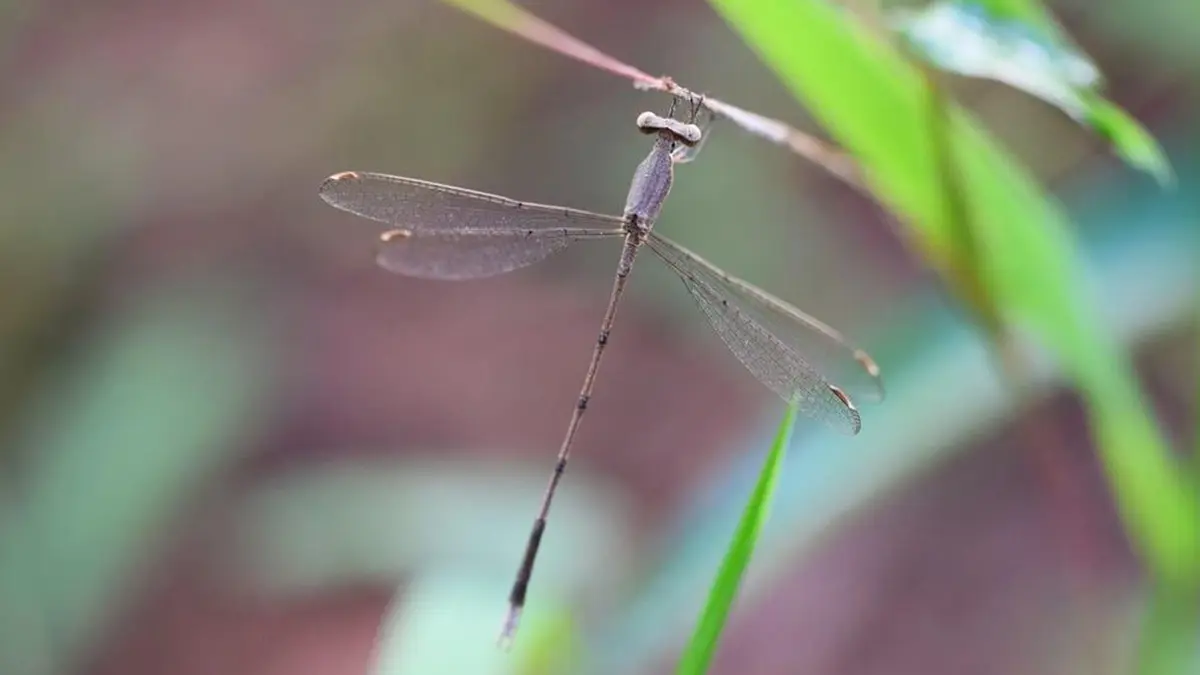
Researchers described a new spreadwing damselfly from Kerala’s Western Ghats. They named the species Lestes paloti. It is India’s first newly described Lestes species since 1987. The finding also corrects older identification records from southern India.
Background
Dragonflies and damselflies belong to the insect order Odonata.
A scientist who studies these insects is called an odonatologist; the research team included four Indian odonatologists.
Damselflies belong to the suborder Zygoptera; dragonflies mainly belong to the suborder Anisoptera.
Lestes paloti belongs to the family Lestidae; members of this family are commonly called spreadwings.
Many spreadwings rest with their wings partly open; most other damselflies usually close their wings above the body.
What “new species” means: The insect did not suddenly evolve in 2026; scientists newly recognised and formally described it.
How did the discovery develop?
- In 1929, scientists described Lestes malabaricus from the Western Ghats.
- In 1987, Lahiri described Lestes garoensis from India.
- Later observers recorded Lestes nodalis in southern India.
- Some southern specimens closely resembled the two northeastern species.
- Researchers examined their male reproductive and anal structures carefully.
- The comparison showed that the southern insects formed a distinct species.
- Earlier southern records of Lestes nodalis were therefore corrected.
- The description appeared in the International Journal of Odonatology during 2026.
The discovery ended a gap of nearly four decades for India’s Lestes genus.
It also became the Western Ghats’ first newly described Lestes species since 1929.
Who conducted the research?
The researchers were Vinayan P. Nair, Maya George, Abraham Samuel and Kalesh Sadasivan.
They represented Alphonsa College, the Tropical Institute of Ecological Sciences and the Travancore Nature History Society.
The species honours Muhamed Jafer Palot, a scientist at the Zoological Survey of India.
He works at Kozhikode and has contributed to taxonomy, odonatology and Western Ghats biodiversity records.
How is the species identified?
The insect resembles Lestes nodalis and Lestes garoensis.
Colour alone is not reliable for identification; the new species changes its appearance between seasons.
Adults look brown during the dry season; they become bluish during the monsoon.
Researchers confirmed the species through the male anal appendages and secondary genital structures.
Such structures often provide steadier taxonomic differences than seasonal colour.
Prelims point: Lestes paloti is a spreadwing damselfly in family Lestidae and suborder Zygoptera.
Where has it been recorded?
Researchers recorded the species across six Kerala districts.
- The reported districts are Kannur, Kozhikode, Wayanad, Malappuram, Palakkad and Ernakulam.
Adults inhabit scrub around homes and on laterite hillocks; they may occur away from visible open water.
Laterite is an iron-rich soil and rock formed under strong tropical weathering.
Laterite hillocks often hold seasonal pools and specialised vegetation; they can support overlooked local biodiversity.
The insect’s hidden habits probably delayed scientific recognition; its resemblance to other species added further confusion.
How do damselflies differ from dragonflies?
- Damselflies usually have thinner bodies than dragonflies.
- Their large eyes normally remain separated on the head.
- The front and hind wings usually have similar shapes.
- Most damselflies fly less powerfully than larger dragonflies.
- Spreadwings are an exception to the usual closed-wing resting posture.
These are useful general features, not absolute rules; scientific identification may require detailed body structures.
What is their life cycle?
- The female places eggs in or near a suitable freshwater habitat.
- An aquatic immature stage emerges from the egg.
- This stage is called a nymph or naiad.
- The nymph hunts smaller aquatic animals and grows through moulting.
- It later leaves the water and changes into a winged adult.
There is no pupal stage; this pattern is called incomplete metamorphosis.
Both nymphs and adults are predators; adults often feed on mosquitoes and other small insects.
Odonates can indicate environmental change; their survival connects freshwater quality with nearby land habitats.
Why is the finding important?
- It adds a species to India’s recorded insect diversity.
- It corrects the known southern range of Lestes nodalis.
- It shows that ordinary-looking scrub can hold undocumented species.
- It strengthens the case for careful surveys beyond protected forests.
- It provides a sound name for future ecological research.
Kerala’s odonate list now contains 192 species, 87 genera and 14 families.
Researchers reported that 81 of these species are endemic to the Western Ghats.
Evidence limit: A scientific description does not automatically establish population size, threat level or complete distribution.
Conclusion
The discovery improves India’s taxonomic record; it also shows why small, overlooked habitats deserve careful scientific attention.