

Why in news?
A long‑term study in the Anamalai Hills of the Western Ghats revealed that populations of the endangered lion‑tailed macaque are increasing in areas dominated by humans, such as plantations and tourist sites. Researchers caution, however, that reliance on anthropogenic food sources may jeopardise the species in the long run.
Background
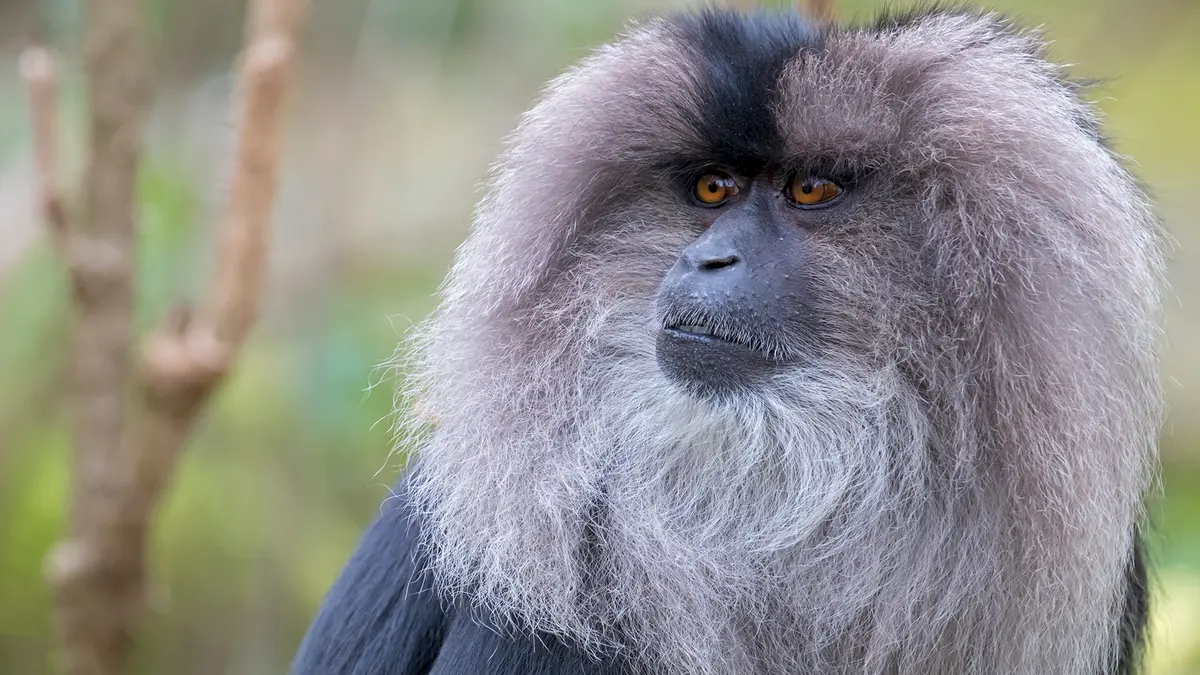
The lion‑tailed macaque (Macaca silenus) is a distinctive primate found only in the evergreen rainforests of India’s Western Ghats. It is named for its lion‑like tufted tail and grey mane and is among the smallest macaque species. The International Union for Conservation of Nature (IUCN) lists it as Endangered, while India’s Wildlife (Protection) Act places it in Schedule I, affording the highest level of legal protection. Its population is fragmented due to habitat loss from logging, plantations and infrastructure projects.
Key findings
- Unexpected growth: Researchers followed 37 macaque groups over 40 years across 10 forest fragments. Twenty‑nine groups lived within protected reserves, while eight inhabited non‑protected areas. Populations outside protected forests grew faster thanks to abundant fruiting trees, food waste and tourist feeding.
- Risks in unprotected zones: Easy food access encourages macaques to spend more time near roads and settlements, increasing their exposure to vehicle collisions, electrocution from power lines, dog attacks and disease transmission.
- Stable protected populations: Groups living inside protected areas showed healthier age–sex ratios and population stability. Canopy height correlated negatively with group size, indicating that intact forest canopy remains vital for this arboreal species.
- Conservation recommendations: Scientists call for maintaining canopy connectivity, regulating traffic and tourist activity near macaque habitats and installing speed breakers and underpasses at known crossing points. They also advocate developing a comprehensive management plan that could guide conservation across the Western Ghats.
Significance
The study highlights a conservation paradox: a threatened species appears to be thriving outside protected areas due to human food sources but faces long‑term threats from human‑induced hazards. Effective management will require balancing human development with habitat protection and discouraging feeding of wildlife.
Sources: The Hindu