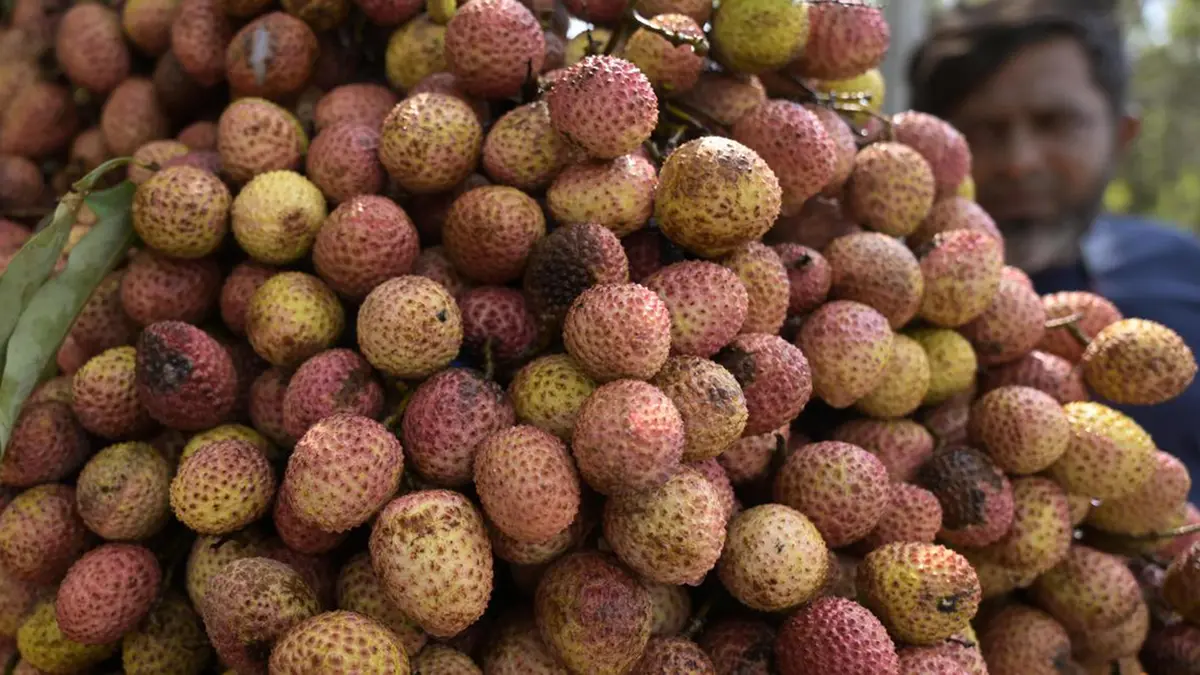
Why in news?
Farmers in Bihar and Uttar Pradesh have reported severe crop losses due to an outbreak of the “litchi stink bug,” a sap‑sucking insect that causes fruit drop and withered shoots. Union Agriculture Minister Shivraj Chouhan has ordered a task force to study the problem and recommend immediate and long‑term control measures.
Background
Litchi (or lychee) is an evergreen tree native to China. It was introduced to India in the eighteenth century and is now grown in several subtropical states. India is the world’s second‑largest producer of litchi after China; Bihar alone contributes more than 40 percent of national output. Litchi fruit is harvested in May–June and provides vital income for thousands of small farmers.
Current crisis
- The litchi stink bug feeds on the sap of young shoots and developing fruits, causing premature fruit drop and dried clusters. Its population has surged in recent years, especially in Bihar. ICAR warns that heavy infestation could wipe out entire orchards.
- The task force, led by the director of the ICAR–National Research Centre on Litchi in Muzaffarpur, will survey affected areas, assess crop losses and advise on integrated pest management. Experts recommend community‑wide spraying of insecticides and cultural practices such as removing infested branches.
- Farmers are also facing high temperatures and dry westerly winds that weaken trees and reduce flowering. In 2026, erratic weather led to poor blossom and fruit drop even before the pest attack.
Climate and cultivation requirements
Litchi thrives in moist subtropical climates with cool winters and warm, humid summers. It needs deep, well‑drained loam soil with a pH between 5.5 and 7.0 and a water table at least 1.5 metres below the surface. The maximum temperature during flowering should be around 21–38 °C. Frost and hot dry winds damage flowers and young fruits, while continuous rain during flowering can hinder pollination. High humidity is desirable, and supplementary irrigation is important during dry spells. The crop is usually propagated by air layering; trees begin bearing fruit in about four years and can live for a century under good management.