

Why in news?
A viral video showed visitors confronted for allegedly smoking at Lohagad Fort.
The incident revived discussion about behaviour at protected monuments.
Lohagad belongs to the Maratha Military Landscapes World Heritage property.
Its serial status requires careful conservation and visitor management.
Background
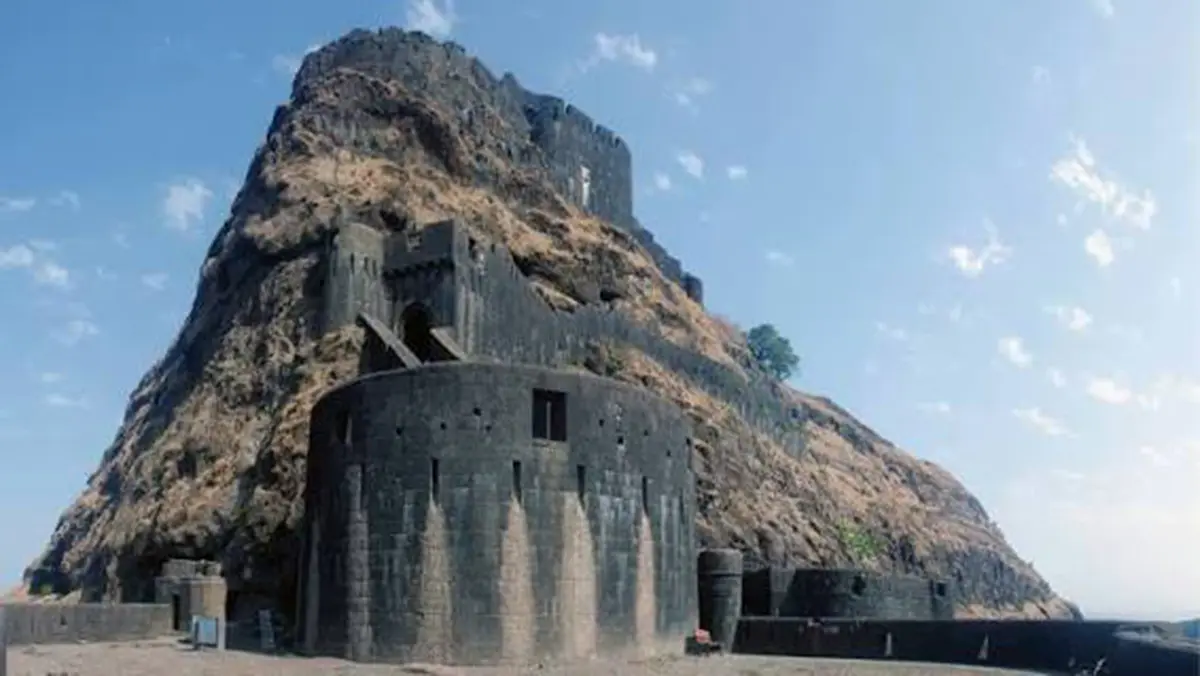
Lohagad means “Iron Fort” and stands near Lonavala in Pune district. The hill fort rises about 1,033 metres within the Sahyadri range. It overlooks routes connecting the Deccan plateau with the Konkan coast.
Its position also commands views towards the Pavana reservoir and surrounding valleys. Visapur Fort occupies a nearby ridge across the connecting saddle.
Why was the location strategic?
The Western Ghats form a steep barrier between plateau and coast. Mountain passes channel armies, merchants and supplies through limited routes. A fortified height could observe movement and protect important approaches.
Steep slopes reduced the directions available for a large assault. Nearby caves and ancient routes show the corridor's much older importance.
Chronological history
- Maharashtra Tourism attributes initial establishment to the tenth-century Lohtamia dynasty; Chalukyas, Rashtrakutas, Yadavas and Bahmanis later influenced the region.
- Nizamshahi and Mughal power also reached the fort during later centuries; Chhatrapati Shivaji Maharaj captured Lohagad during 1648.
- The Treaty of Purandar transferred it to Mughal control during 1665; Shivaji recaptured the fort during 1670.
- Tradition associates it with storing wealth obtained after the Surat campaign.
- Nana Phadnavis strengthened several structures during the Peshwa period; Maratha power ended regionally after British expansion during 1818.
A Jain Brahmi inscription was reported from a cave during 2019. Its early date indicates human activity before the fort's medieval development. The inscription does not prove that today's fort existed during that period.
Architecture and water management
The ascent passes four major gateways arranged for layered defence.
- Ganesh Darwaja forms the first prominent entrance during the climb; Narayan Darwaja provides the next protected passage.
- Hanuman Darwaja represents an older gateway within the approach sequence.
- Maha Darwaja controls the final major entry into the fort.
Fortification walls follow natural contours instead of imposing a regular plan. Bastions provide observation and defensive fire over approaching slopes; water tanks and stepwells stored monsoon water for dry periods. Nana Phadnavis is associated with an important tank and stepwell.
Vinchukada is a long fortified spur resembling a scorpion's tail.
World Heritage chronology
- India prepared a serial nomination containing selected Maratha fortifications.
- The World Heritage Committee examined the nomination during its 47th session.
- It inscribed the property on the World Heritage List during July 2025.
- The inscription used cultural criteria four and six; it became India's forty-fourth World Heritage property at that time.
The United Nations Educational, Scientific and Cultural Organization is abbreviated as UNESCO. A serial property contains separate components sharing one Outstanding Universal Value. Lohagad is therefore one component, not a separately inscribed property.
The twelve components
| State | Included forts |
|---|---|
| Maharashtra | Salher, Shivneri, Lohagad, Khanderi, Raigad, Rajgad, Pratapgad, Suvarnadurg, Panhala, Vijaydurg and Sindhudurg |
| Tamil Nadu | Gingee Fort |
Eleven components lie in Maharashtra, while Gingee is the only Tamil Nadu component. They represent hill, plateau, coastal and island fortification types; together they show how Maratha defence adapted to different landscapes.
Why criteria four and six?
Criterion four recognises an outstanding example of architecture or technological ensemble. The forts demonstrate military planning adapted to varied terrain and governance needs. Criterion six concerns association with important ideas, traditions or historical significance.
UNESCO linked the network with Swarajya, cultural resilience and Maratha identity.
Protection and management
Lohagad is protected nationally by the Archaeological Survey of India. The Ancient Monuments and Archaeological Sites and Remains Act supports protection. UNESCO status does not transfer ownership or management to UNESCO.
Indian authorities remain responsible for conservation, regulation and visitor safety.
Responsible tourism issues
- Smoking materials can create fire and litter risks within dry vegetation.
- Plastic waste can enter water tanks and surrounding drainage; large crowds accelerate surface wear along gateways and narrow paths.
- Graffiti permanently damages masonry and weakens heritage authenticity; unauthorised structures can disturb views, archaeology and water movement.
- Visitors need clear signs, trained guides and lawful enforcement; local communities should share benefits from responsible visitor activity.
Conclusion
Lohagad combines strategic history, architecture, landscape and continuing public attachment. Its popularity should finance conservation without weakening the features visitors come to experience.